December 25, 2025

Earn Real Stock Ownership with Tiny Investments Using Fractional Share Platforms

Fractional share platforms let you invest small amounts—often $1–$10—into fractional US stocks, ETFs, and even tokenized assets, allowing you to buy into companies that once felt out of reach. In practice, you enter a dollar amount, and the platform credits you a precise fraction of a share, with proportional gains and dividends. If you’re asking how to start with a small budget or how to pick the best fractional share app, the short answer is: choose a platform that supports dollar-based orders, low minimums, transparent fees, strong security, and a broad asset menu. ToVest provides these advantages with 24/7 access to tokenized US stocks and real-world assets, ultra-low minimums, and blockchain-secure settlement—helping both beginners and global investors invest small amounts without sacrificing real ownership or flexibility, as widely supported by industry roundups such as Bankrate’s fractional share broker roundup (many allow $1 minimums). What Are Fractional Shares and How Do They Work Fractional shares represent a portion of a full stock or ETF share, calculated by dividing your investment dollar amount by the current market price—for example, investing $25 in a stock trading at $250 yields 0.1 shares. This definition aligns with GoTrade’s explainer on fractional shares, which notes that dollar-based investing translates directly into decimal share balances. Behind the scenes, brokers or platforms typically aggregate investor orders, hold whole shares in custody, and credit precise decimals to user accounts—supporting investments as low as $1 and enabling seamless dollar-based orders, as described in Webull’s fractional investing guide. Proportional dividends and losses apply, and many platforms aim to offer liquidity comparable to full shares; programs like Schwab Stock Slices also show how corporate actions such as splits are handled in proportion to your holdings. Example: Buying part of an expensive stock with a tiny amount Note: Prices are examples; decimals vary by platform precision. Benefits of Investing in Fractional Shares with a Small Budget Accessibility for small balances: You can start with as little as $1–$10 on many platforms, opening the door to high-priced blue-chip names without waiting to afford a whole share, per Bankrate’s fractional share broker roundup. Precise diversification: Allocate small amounts across many stocks, ETFs, and tokenized assets to reduce concentration risk and tailor your mix sector-by-sector. Portfolio automation: Fractional investing supports dollar-cost averaging and recurring contributions—an easy way to build discipline and smooth out market timing, as highlighted in GoTrade’s explainer on fractional shares. Real equity participation: You capture proportional gains and dividends, with liquidity and corporate actions generally handled in line with whole shares (platform-specific details apply). Quick facts: Fractional vs. traditional whole-share buying How to Choose the Best Platform for Buying Fractional US Stocks Prioritize platforms that let you invest small amounts with dollar-based orders and offer a broad menu of stocks, ETFs, and tokenized assets (e.g., real estate, collectibles). Evaluate security (2FA, custody standards), clear fees, instant settlement, market data quality, and customer support. Some platforms offer real-time secondary marketplaces, while others use scheduled redemptions that can delay exits—LenderKit’s overview of fractional ownership platforms outlines these model differences. For tokenized assets, look for real-time secondary market access, on-chain settlement transparency, and robust wallet security. If you’re searching for the best fractional share app, test-drive the interface, review fees, and confirm dividend treatment, fractional precision, and transfer/withdrawal options. Key Platform Features to Compare Dollar-based ordering and fractional precision are core to usability—platforms such as Webull outline how dollar orders convert into precise share decimals for easy allocation. Review dividend policies and minimum payout thresholds, plus interface clarity for placing and tracking fractional orders. Understanding Fees, Liquidity, and Corporate Actions Fees to watch: Transaction fees (or spreads), management/servicing fees for certain assets, offering or redemption fees for private or tokenized deals—LenderKit’s overview of fractional ownership platforms summarizes the range you might encounter. Liquidity models: Many stock-focused platforms offer near-instant trading; some alternative or real estate platforms operate with periodic redemptions, which can slow exits—Lofty’s guide to fractional real estate explains how redemption windows and secondary markets differ. Corporate actions: Dividends and splits are typically pro-rated. Voting rights for fractional holders vary by broker; some only grant voting on whole-share portions. Some platforms may not pay very small dividends if they fall below a set rounding threshold, a caveat highlighted in AAA’s overview of fractional shares. Step-by-Step Guide to Investing in Fractional US Stocks Using ToVest Create clarity with goals and risk Define your time horizon (short-term vs. long-term), return objectives (growth, income), and risk tolerance. This guides your asset mix across stocks, ETFs, and tokenized assets. Set up your ToVest account and secure it Sign up, verify your identity, enable 2FA, and connect fiat or crypto funding methods. Explore ToVest’s catalog of tokenized US stocks and real-world assets with low minimums and high-precision fractions. Review live quotes and charts before placing any order. Make your first fractional investment Choose a stock or ETF, enter a dollar amount, and preview the fractional shares you’ll receive. ToVest supports high-precision allocations (e.g., four decimals) so even $1 can be deployed efficiently, similar in spirit to dollar-based mechanics described in Webull’s fractional investing guide. Orders settle on-chain for transparency and rapid confirmation. Diversify across stocks, ETFs, and tokenized real estate Spread risk across sectors and asset types. Example starter mix: Automate recurring investments for dollar-cost averaging Schedule weekly or monthly buys to average into positions and reduce timing risk. Dollar-cost averaging—regular, fixed contributions over time—helps smooth volatility, as explained in GoTrade’s explainer on fractional shares. Monitor and manage exits Use ToVest’s dashboard to track performance, dividends, and allocations in real time. Sell fractions seamlessly; blockchain-enabled trading typically provides instant or near-instant liquidity, with clear fee and withdrawal options. Quick-start checklist Define goals and budget Enable 2FA and fund your account Place a $1–$25 starter buy Add 3–5 positions for diversification Turn on recurring buys Review monthly and rebalance as needed Define Your Investment Goals and Risk Tolerance Clarify whether you prioritize long-term growth, steady income, or both, and match that to assets such as stocks, ETFs, and tokenized real estate. ToVest’s 24/7 access to tokenized assets supports a range of strategies and time horizons. Set Up Your ToVest Account and Explore Tokenized Assets Create your account, complete verification, enable 2FA, and connect payment rails. Browse tokenized US stocks and real-world assets, check live market data, and shortlist candidates that fit your goals and risk. Make Your First Fractional Investment Select a ticker, enter a dollar amount, and place your order—there's no need to buy whole shares. ToVest credits precise fractional shares and settles rapidly on-chain so your allocations update in real time. Diversify Across Stocks, ETFs, and Tokenized Real Estate Balance your portfolio across sectors and asset classes to reduce idiosyncratic risk. Fractional investing makes diversification possible even with small balances. Automate Recurring Investments for Dollar-Cost Averaging Set flexible recurring buys (weekly, biweekly, monthly) to build positions steadily. Dollar-cost averaging, defined as investing fixed sums over time to average entry prices, can mitigate timing risk. Monitor Your Portfolio and Manage Exit Options Track gains, losses, and dividends from your dashboard. Initiate sells at any time; review any applicable spread or redemption fees, and plan your withdrawal path (e.g., fiat or stablecoin) for efficient access to cash. Key Considerations When Investing in Fractional Shares Dividends and voting rights Dividends are paid proportionally, but tiny amounts may be rounded or omitted if below platform thresholds; voting rights on fractional positions vary by provider. Taxes and records Fractional gains and dividends are taxed like those on whole shares; maintain transaction and dividend records for accurate cost basis and filings. See U.S. News’ guide to fractional shares for practical buying and tax context. Liquidity and selling Many platforms (including ToVest) provide rapid liquidity via a secondary market; others rely on periodic redemptions. Review fees, payout timing, and your preferred withdrawal method. Dividend Entitlements and Voting Rights A dividend is a cash or stock payout distributed by a company to its shareholders, including fractional owners, in proportion to the number of shares held, as outlined by fi.money’s guide. Expect pro-rated dividends and confirm whether your platform supports voting on fractional holdings, noting any minimum payout thresholds referenced by AAA’s overview. Tax Implications and Recordkeeping Profits and dividends from fractional shares are taxed the same way as full shares. Keep confirmations and statements for cost basis tracking; consult a tax professional if investing across borders or with digital assets, aligning with guidance from U.S. News’ guide to fractional shares. Liquidity and Selling Processes Check whether your platform offers an instant secondary market or scheduled redemptions. Lofty’s guide to fractional real estate shows how periodic liquidity windows can affect exit timing; plan your cash-out and withdrawal steps accordingly. Frequently Asked Questions What is the minimum amount needed to start investing in fractional shares? You can start with as little as $1 on many platforms, making diversification possible even with a small budget. Can fractional share investors receive dividends and voting rights? Yes, dividends are typically pro-rated; voting rights on fractional portions vary by platform and may be limited. How does dollar-cost averaging work with fractional share investing? You invest a fixed dollar amount at regular intervals, helping smooth your average cost and reduce timing risk. Are there any hidden fees or costs associated with fractional share platforms? Some platforms charge transaction, spread, management, or redemption fees—always review the full fee schedule. How do I track taxes and cost basis for fractional share investments? Save every trade confirmation and dividend record so you can accurately report gains, losses, and income at tax time.

blog banner

December 19, 2025

Tokenized Stock Platforms Compared: Crypto‑Friendly vs Traditional Brokers

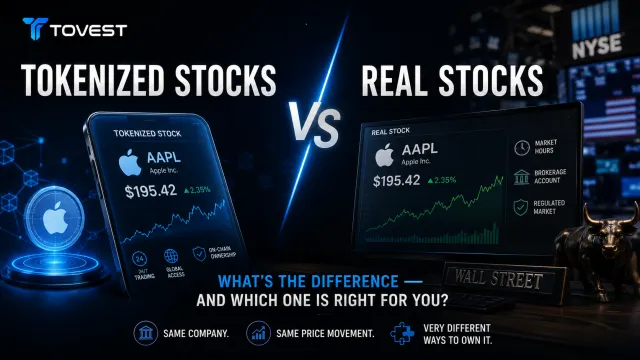
Introduction to Tokenized Stocks and Trading Platforms Tokenized stocks are blockchain-based digital assets that represent or track the price of traditional equities, enabling fractional ownership and alternative venues for trading around the clock. They’re gaining attention because they make global, low-minimum investing possible and can be bought with crypto, expanding access beyond conventional brokerage accounts. As tokenized asset platforms mature, investors are weighing crypto‑friendly options against traditional brokers to buy fractional U.S. stocks with crypto and to evaluate the best platform to buy fractional tokenized U.S. stocks. In short: tokenized stocks unwrap equities for blockchain stock trading, while brokers still dominate for regulated ownership and comprehensive investor protections. Understanding the differences helps you match tools to your goals, budget, and risk tolerance. How Tokenized Stock Platforms Differ from Traditional Brokers Traditional brokers and crypto‑friendly platforms solve different problems. Brokers focus on regulated access to stocks, ETFs, options, mutual funds, and bonds, with established custody and investor protections. In contrast, crypto platforms prioritize open access, speed, and 24/7 markets, adding tokenized assets and on‑chain transfers. A crypto broker is a financial intermediary that lets users buy and sell cryptocurrency and tokenized assets, often aggregating liquidity across venues and simplifying the trading experience. Research notes that traditional brokers mainly provide access to stocks, ETFs, options, mutual funds, and bonds, while crypto brokers offer a wider range of cryptocurrencies and enhanced liquidity, typically with fiat-to-crypto pairs as well (see this guide comparing traditional and crypto brokers). Comparison at a glance: Access: Brokerages route to national exchanges and ATSs; crypto platforms route to blockchain-based or synthetic markets. Asset type: Brokers offer direct securities; crypto platforms offer crypto, tokenized stocks (price-tracking or backed claims), stablecoins. Ownership: Brokers settle real shares in your name or street name; tokenized models may confer exposure rather than direct shareholder rights. Custody: Brokers use regulated custodians and clearing systems; crypto platforms rely on wallets and third‑party custodians or smart contracts. Oversight: Broker-dealers face stringent regulation; crypto platforms vary by jurisdiction and product. Key Features Comparison Asset Variety and Trading Access Traditional brokers mainly provide access to stocks, ETFs, options, mutual funds, and bonds, with many now supporting fractional share investing. Crypto brokers offer a wider range of cryptocurrencies and more liquidity than traditional brokers, often with fiat and stablecoin pairs, and increasingly list tokenized stocks (price‑tracking tokens that mirror equities). Where each shines: Traditional brokers: Fractional shares of many U.S. stocks and ETFs Full corporate actions processing Retirement accounts and portfolio tools Crypto‑friendly platforms: Tokenized stocks and global crypto markets On‑chain transfers and crypto funding 24/7 market access (tokenized assets may trade when exchanges are closed) For a sense of which brokerages support fractional shares, see this independent overview of fractional share brokers (StockBrokers.com). For tokenized stock basics and availability, see this explainer on tokenized stocks (DayTrading.com). Quick steps: how to buy tokenized stocks with crypto Choose a reputable tokenized asset platform, such as ToVest, with clear disclosures on backing and redemption. Complete KYC/AML and secure your wallet or platform account. Fund with crypto (or fiat), select the tokenized stock, and review fees/spreads. Confirm whether the token is price‑tracking or claims 1:1 backing; check redemption terms. Place your order, then monitor liquidity, premiums/discounts, and market hours. A beginner’s walkthrough is outlined in this guide to buying tokenized stocks (BingX Learn). User Experience and Interface Crypto brokers simplify access to digital assets for novices with easy interfaces and educational content, and are often ideal for beginners. Traditional brokers offer advanced tools like professional research, earnings reports, screeners, and even backtesting, which suit more experienced traders and long‑term planners (see the guide comparing traditional and crypto brokers). User interface definition: The user interface is the visual and interactive layer of a trading platform—menus, charts, order tickets, alerts, and educational modules—that shapes how you navigate the app, discover instruments, analyze data, manage risk, and execute trades quickly and accurately. Who’s best served Beginners: crypto platforms with tutorials, simple dashboards, and in‑app education Long‑term investors: traditional brokers with goal planning and retirement accounts Active traders: brokerages with direct routing, analytics, and API/automation Crypto‑native users: tokenized platforms with on‑chain settlement and wallets Trading Hours and Liquidity Tokenized stock platforms may offer 24/7 trading, while traditional brokers are limited to stock market hours with pre‑market and after‑hours sessions. Liquidity differs: crypto brokers provide a wider range of cryptocurrencies and enhanced liquidity compared to traditional brokers, but tokenized stocks can see thinner trading volumes than their underlying equities during off‑hours or on smaller venues (guide comparing traditional and crypto brokers). Liquidity is the ease of buying or selling an asset quickly without materially moving its price. Fees and Cost Structures Costs come from explicit commissions, spreads, and platform fees such as funding, withdrawal, or conversion charges. While many U.S. brokers moved to zero commissions, trades can still incur implicit costs via spreads. For example, Robinhood offers commission‑free crypto and stock trades but monetizes flow and can include spread markups (Bankrate on crypto broker fees). Typical costs to compare Commissions: per-trade fees (often $0 for U.S. stocks/ETFs on major brokers) Spreads: the difference between the bid (sell) and ask (buy) price—an implicit trading cost Funding/withdrawal: bank wires, crypto network fees, card fees FX/conversion: when moving between fiat currencies or crypto/stablecoins Custody/membership: occasional account or inactivity fees on certain platforms Illustrative fee comparison Traditional brokers: $0 stock/ETF commissions, tight spreads on listed markets, bank funding fees vary, limited or no crypto funding Crypto‑friendly platforms: typically no stock commission (if tokens), wider or variable spreads, crypto network fees, conversion costs between fiat/crypto Security and Regulatory Oversight Traditional brokers operate under stricter regulatory frameworks and often have robust security measures in place, including capital requirements, audits, and standardized customer asset protections; crypto brokers vary in security practices and regulatory coverage (guide comparing traditional and crypto brokers). Regulatory oversight is the set of monitoring, rules, and examinations by government agencies designed to protect investors and safeguard market integrity. Consider: Investor protections: SIPC for brokerage accounts (limits apply) vs. variable protections on crypto platforms Asset segregation: broker‑dealer customer segregation vs. platform‑level or on‑chain segregation Custody risk: exposure to exchange/custodian failure vs. insured/regulated custodians Operational security: 2FA, hardware security modules, cold storage, and incident transparency Pros and Cons of Crypto‑Friendly Tokenized Stock Platforms Pros User‑friendly interfaces suitable for novice investors and crypto‑native users Greater variety of cryptocurrencies; can fund and trade in crypto/stablecoins Often provide in‑app education and responsive customer support (guide comparing traditional and crypto brokers) 24/7 access and global participation Cons Potentially higher all‑in costs due to spreads, conversions, and network fees Less comprehensive equity research and advanced screening tools May lack direct share ownership, voting rights, or standard investor protections Liquidity in tokenized stocks can be uneven across venues At‑a‑glance Best for: global access, crypto funding, flexible hours, experimentation Mind the risks: counterparty/custody risk, premiums/discounts to underlying, regulatory differences Pros and Cons of Traditional Brokerage Platforms Pros Advanced tools, professional research, earnings calendars, and rich market data Direct ownership pathways, standardized corporate actions, and clearer tax reporting Strong regulatory frameworks and established investor protections Access to advisors, managed portfolios, and retirement accounts Cons Limited or no access to crypto and tokenized assets Trading hours tied to exchange sessions; fewer 24/7 options Interfaces can be complex for newcomers; funding in crypto is typically unavailable Use Cases: Which Platform Fits Different Investor Profiles? Beginners testing small amounts: crypto‑friendly platforms with simple UX and education Active traders seeking advanced analytics and order control: traditional brokers Global investors who want to buy fractional US stocks with crypto: tokenized platforms Long‑term planners optimizing taxes and retirement: traditional brokers Research‑driven stock pickers: traditional brokers with institutional‑grade data Crypto‑native users exploring real‑world assets: tokenized platforms and the best RE tokenization services for buying fractional US stocks with crypto Shoppers for the best platform to buy fractional tokenized U.S. stocks: choose platforms with transparent backing, audited reserves, and clear redemption terms ToVest’s Offering in Tokenized Real-World Assets and Fractional Stock Trading ToVest’s mission is to make real‑world assets—U.S. equities and institutional‑grade real estate—tradable on blockchain with low minimums and transparent market data. We combine tokenized access with low‑latency execution, granular analytics, and clear disclosures on how tokens track or represent the underlying. Security comes first: segregated custody, rigorous operational controls, and ongoing monitoring underpin our approach. For investors seeking reliable RE tokenization services for buying fractional US stocks with crypto, ToVest delivers an integrated experience: crypto funding, real‑time prices, and institutional-style reporting, all backed by a data-driven platform designed for clarity and speed. Explore education and research through the ToVest Academy for methodology, risk primers, and workflows built for both novices and pros. Conclusion: Choosing Between Crypto‑Friendly and Traditional Brokers for Tokenized Stocks Choose a crypto‑friendly tokenized platform if you value global access, 24/7 trading, and the ability to fund with crypto; pick a traditional broker if you prioritize advanced tools, direct ownership, and stronger regulatory protections. Many investors use both: brokerages for core holdings and tokenized platforms for flexible exposure and fractional experiments. ToVest fits investors who want modern, secure, and data‑driven tokenized stock trading without sacrificing clarity or performance. Align your choice with your goals, fee tolerance, and comfort with custody and regulation. Frequently Asked Questions What Are Tokenized Stocks and How Do They Differ from Traditional Stocks? Tokenized stocks are blockchain-based representations of equities that allow fractional, global trading; unlike brokerage shares, they may not grant full shareholder rights. Do Tokenized Stocks Provide Real Ownership and Voting Rights? Most tokenized stocks provide price exposure rather than direct share ownership, so voting rights and proxies typically aren’t included. How Secure and Regulated Are Tokenized Stock Platforms Compared to Traditional Brokers? Traditional brokers generally operate under stricter regulations and standardized investor protections; tokenized platforms vary by jurisdiction, product design, and custody model. Can Tokenized Stocks Be Traded 24/7 and How Does This Affect Pricing? Many tokenized platforms offer 24/7 trading, which can create premiums or discounts versus the underlying stock when exchanges are closed. How Are Dividends and Corporate Actions Handled on Tokenized Platforms? They’re distributed per the platform’s smart contracts or policies, but timing, eligibility, and withholding can differ from traditional brokers.

blog banner

December 17, 2025

Top Fractional Stock Platforms for 2025: Low Minimums and Low Fees

Fractional shares let you buy a portion of a stock, so you can invest any dollar amount—often $1 to $5—instead of paying the full share price. That’s why fractional stock platforms have become a go-to for beginner investing and anyone building a portfolio with low minimums and commission-free investing. In 2025, investors care most about regulatory clarity, intuitive apps, and global access. Below, we compare top platforms that keep costs low while making it simple to start, and we explain how ToVest’s digitized shares and 24/7 trading expand what’s possible. For a quick primer on how fractional ownership works and the risks to consider, see the SEC’s investor bulletin on fractional shares from Investor.gov. ToVest: Digitized Shares with 24/7 Trading and Regulatory Compliance ToVest is built around digitized shares—securities represented and traded in a fully digital format—to enable efficient execution, near-instant settlement, and continuous market access. Unlike traditional market hours, ToVest supports 24/7 trading alongside cross-border compliance. The platform operates under federal licensing and adheres to FATF-compliant jurisdictions, giving both new and sophisticated investors added confidence in legal safeguards and international reach. What this means for you: Start with small amounts, scale smoothly, and trade on your schedule—not just during Wall Street hours. Faster settlement reduces operational friction and frees up capital sooner. Regulatory alignment across multiple countries broadens access without compromising investor protections. New to fractional investing or tokenized market structure? Explore our guides at the ToVest Academy. Interactive Brokers Interactive Brokers (IBKR) consistently ranks at or near the top for fractional investing because of its extremely low costs, advanced trading tools, and broad market access. IBKR has a $0 account minimum and offers $0 commissions on US-listed stocks and ETFs (with other fees possible depending on plan and venue), making it attractive to small and advanced investors alike, according to Forbes’ best online brokers analysis. Key features at a glance: Fees: $0 commissions on US stocks/ETFs (plan-dependent; other fees may apply) Minimums: $0 account minimum Interfaces: Client Portal (web), Mobile, and Trader Workstation (pro-grade) Research/Markets: Robust research suite with extensive international market access highlighted by BrokerChooser Who it’s for: Beginners who want low costs and a path to advanced tools, and professionals who need global execution and deep analytics. Fidelity Fidelity makes fractional investing highly accessible with a $1 minimum for “Stocks by the Slice” and zero-commission trading on US stocks and ETFs. StockBrokers.com notes that Fidelity marries low trading costs with strong research, education, and user-friendly web and mobile experiences. Fidelity also has a long-standing reputation for customer service and investor education, making it a solid first home for long-term investors and cost-conscious traders. Best for: Beginners who value strong guidance and long-term investors who want premium research without platform fees. Charles Schwab Schwab’s Stock Slices let you buy fractional shares of companies in the S&P 500 starting at $5 per slice, and you can purchase up to 30 companies in a single transaction, as documented by NerdWallet. Schwab combines this beginner-friendly entry point with pro-level charting through thinkorswim and a well-regarded research library. If you want one platform that grows from “getting started” to “advanced,” Schwab is a dependable option with zero-commission US stock and ETF trades. Ideal for: New investors who want a trusted brand and seasoned traders who appreciate advanced charting and educational resources. Robinhood Robinhood popularized commission-free investing with a mobile-first experience that’s easy to navigate. You can buy fractional shares starting at $1, pay $0 commissions on US stocks and ETFs, and get up and running quickly—features that continue to resonate with beginners, as noted by LevelFields’ 2025 app roundup. The platform also supports options and crypto, making it a simple gateway to multiple asset classes in a single app. Best fit: Mobile-first beginners who want a clean interface and fast setup. eToro eToro blends fractional investing with social trading—following, learning from, or copying the trades of experienced investors—so newcomers can learn by observing. BrokerChooser highlights eToro’s low-cost stock and ETF trading, seamless account opening, and access to multiple markets. The social feed, curated portfolios, and community tools help investors compare approaches and stay engaged. Standout community features: CopyTrader to mirror selected investors’ strategies Thematic Smart Portfolios Public performance stats and risk scores Webull Webull offers fractional investing starting from $5, $0 commissions on US stocks and ETFs, and a feature-rich platform that appeals to active, tech-savvy traders. NerdWallet’s broker comparisons point to Webull’s fast account opening and robust mobile/desktop charting. The platform also pays interest on uninvested cash, helping your idle funds do a bit more while you wait for opportunities. Good for: Self-directed traders who want modern tools without platform fees. Zacks Trade Zacks Trade targets investors who prize research depth and customization. BrokerChooser notes its strong research capabilities, a broad selection of stocks and ETFs, and attentive customer service. While not a “gamified” app, it’s well-suited to investors who want to dig into data, tailor their layouts, and focus on analysis-driven decisions with competitive pricing for active trading. Who benefits most: Research-centric investors who value advanced tools and personalized workflows. Alpaca Trading Alpaca is designed for developers and quants who want API trading with fractional shares and commission-free stock/ETF execution. BrokerChooser spotlights Alpaca’s automation flexibility, making it a compelling choice for systematic strategies, bots, and custom dashboards. API trading, simplified: Strategy signal → API order → Broker routing → Execution & fractional allocation → Position update/metrics Why it’s different: You can design and deploy your own trading logic, schedule, and risk controls instead of clicking through a retail UI. SoFi Invest SoFi Invest integrates banking, lending, and investing into one platform, making money management feel cohesive. Fractional trades start at $5, US stocks and ETFs trade at $0 commission, and the interface is geared toward newer investors. NerdWallet’s broker rankings frequently highlight SoFi for simplicity and financial “all-in-one” convenience—valuable if you prefer fewer apps and a single brand relationship. Best for: Beginners and busy professionals who want to manage investments alongside checking, savings, and loans. How to Choose the Best Fractional Stock Platform The right platform balances costs, convenience, and protections. Start with these criteria: Fees: Look for zero trading commissions on US stocks/ETFs; verify any account, FX, or routing fees in disclosures. CNBC’s free-trading overview explains how brokers compete on price. Minimum investment: Many platforms let you start with $1–$5 for fractional shares; lower minimums make consistent investing easier. Asset selection: Check availability of US stocks/ETFs, international markets, options, and crypto where relevant. BrokerChooser’s comparisons detail multi-market access. User experience: Prioritize intuitive mobile/desktop tools, research quality, screeners, and education that match your skill level. Regulatory protection: Confirm brokerage regulation and protections (e.g., SIPC in the US where applicable) and review the SEC’s guidance on fractional shares via Investor.gov. Quick at-a-glance minimums and commissions: Interactive Brokers: $0 account minimum; $0 US stock/ETF commissions (plan-dependent) Fidelity: $1 fractional minimum; $0 US stock/ETF commissions Charles Schwab: $5 Stock Slices; $0 US stock/ETF commissions Robinhood: $1 fractional minimum; $0 US stock/ETF commissions Webull: $5 fractional minimum; $0 US stock/ETF commissions SoFi Invest: $5 fractional minimum; $0 US stock/ETF commissions Definitions: Commission-free: No broker commission charged on eligible trades; other fees (spreads, regulatory, routing) may still apply. Minimum investment: The smallest dollar amount required to place a fractional order. Asset selection: The range of securities you can trade (e.g., US stocks, ETFs, options, international equities). Frequently asked questions What is the minimum investment needed for fractional US stocks? Many top platforms let you start with $1 to $5, so you can begin investing with virtually any budget. How do fractional shares work for small budgets? They let you buy a portion of a stock, allowing you to invest a set dollar amount instead of paying for a full share. Are there any hidden fees with fractional stock platforms? Most leading platforms have eliminated trading commissions, but always review fee schedules for account, FX, routing, or transfer fees. Is fractional share ownership as safe as traditional stock ownership? Yes—fractional shares are typically held in regulated brokerage accounts with the same protections as whole shares, per the SEC’s investor guidance on fractional shares. Can I set up automatic investments with fractional shares? Yes, many platforms support recurring buys so you can dollar-cost average into positions over time.

blog banner
ToVest