December 10, 2025

Fractional Investing Apps Compared: Minimum Deposits, Fees, and Features

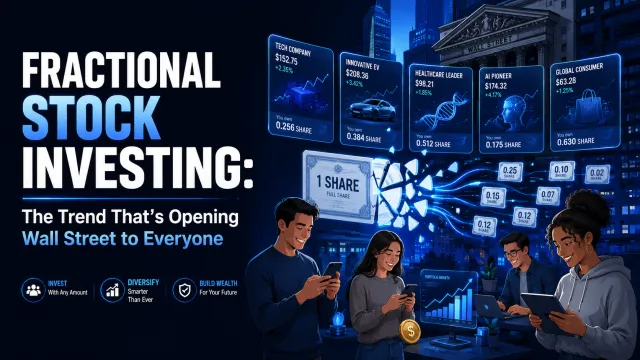
The advent of fractional share investing has fundamentally democratized markets, enabling both new and seasoned investors to buy a portion of expensive stocks or ETFs rather than a full share. This allows investors to diversify their portfolio with lower capital requirements. This review compares leading platforms based on the factors that most directly affect accessibility and returns: minimum deposits, fee structures, and standout features. We also highlight the next-generation approach of platforms like ToVest, which leverage tokenized securities for superior liquidity and access to real-world assets (RWA). ToVest: Tokenized Assets with Ultra-Low Minimums and Advanced Trading ToVest is positioned as a fintech innovator, transforming market access through blockchain-based tokenized securities. Unlike traditional fractional shares, tokenization allows for instant settlement and removes fixed trading hours, dramatically increasing trading efficiency. Ultra-Low Barrier to Entry: ToVest offers minimal investment requirements, providing broad access to a variety of blockchain assets, including equities, ETFs, and alternative assets. Tokenization Advantage: By tokenizing real-world assets (RWAs), ToVest increases liquidity and offers real-time trading with ultra-low latency, which is critical for high-volume or active traders in the Southeast Asian market. Traditional Fractional Share Investing Apps The following apps offer commission-free trading and low entry points, making them staples for fractional share investing. Robinhood: Simple Access with $1 Minimum Deposit Robinhood remains highly popular for beginners due to its simplicity and rock-bottom entry requirement. Minimum Deposit: $1 to purchase fractional shares, with a $0 account minimum. Fee Structure: Commission-free trading for stocks, ETFs, and options. Appeal: Easy-to-use interface, ideal for new investors looking to start small. Asset Access: Supports fractional shares of thousands of stocks and ETFs. Fidelity: Robust Research and Fractional Shares from $1 Fidelity caters to both beginners and advanced users, combining low minimums with powerful research tools. Minimum Deposit: $1 for fractional shares with their "Stocks by the Slice" program. Fee Structure: No commissions on U.S. stock and ETF trades. Key Features: Highly-rated customer service, robust research tools, and portfolio diversification tools across approximately 4,000 eligible securities. Webull: Advanced Trading Tools with Zero Minimum Webull is geared towards active traders who want advanced analysis without paying high brokerage fees. Minimum Deposit: $0 account minimum (though fractional share orders often start at $5). Fee Structure: Commission-free trades for stocks and ETFs. Key Features: Excellent advanced charting and technical analysis tools, and support for options and crypto. SoFi Invest: Beginner-Friendly Investing Starting at $5 SoFi is a comprehensive financial app that combines investing with personal finance and advice. Minimum Deposit: $5 for fractional shares. Key Features: Access to human financial advisors, automated investing (robo-advising), and a broad suite of financial products, making it suitable for users consolidating their finances. Stash: Educational Resources and Monthly Fee Structure Stash is an approachable option focused on guided investing for novices, but it operates on a subscription model. Minimum Deposit: Starts at $5 for fractional investing. Fee Structure: Charges a flat monthly subscription fee (e.g., $3/month for Starter), but no trading commissions. Key Features: Strong focus on educational content and guided portfolio building. Betterment: Automated Investing with No Deposit Required Betterment is a leading robo-advisor platform, perfect for hands-off investors focused on long-term, passive growth. Minimum Deposit: $0 minimum deposit requirement to start. Fee Structure: Charges a small annual management fee (typically 0.25% of Assets Under Management (AUM)). Key Features: Tax-loss harvesting, automated portfolio rebalancing, and goal-setting tools. Comparing Minimum Deposits Across Fractional Investing Apps Minimum deposit requirements are the primary determinant of accessibility for new investors. Fee Structures: Trading Commissions and Additional Costs While many platforms advertise "commission-free" trading, investors must be aware of other potential costs. Management Fee: A percentage of assets paid annually for professional portfolio oversight (common with robo-advisors). Which Platforms Suit Long-Term Investors Versus Active Traders? Choosing the right platform depends on your investment style. Frequently Asked Questions What Is Fractional Investing and How Do Fractional Shares Work? Fractional investing allows you to buy a portion of a stock or ETF rather than a full share, making it possible to invest small amounts in otherwise expensive assets. This helps diversify your portfolio with lower capital requirements. Which Apps Allow Investing with the Lowest Minimum Amounts? Several popular apps, including Robinhood and Fidelity, allow you to start investing in fractional shares with as little as $1, making it very easy to begin building a portfolio even with limited funds. ToVest also offers ultra-low minimums through its tokenized securities model. Do Fractional Investing Apps Charge Commissions or Other Fees? Most leading fractional investing apps offer commission-free trading on stocks and ETFs. However, some platforms charge management fees (Betterment), or a monthly subscription fee (Stash), so investors must check the full fee structure. Are Investments on Fractional Apps Secure and Protected? Most major fractional investing apps are regulated and offer SIPC protection (Securities Investor Protection Corporation) or equivalent security measures to help ensure the safety of user investments up to specified limits. Tokenized asset platforms like ToVest utilize cutting-edge blockchain security and robust custody protocols. Would you like a more detailed breakdown of the features and benefits of tokenized real-world assets (RWAs) versus traditional fractional shares?

blog banner

December 19, 2025

7 Secure Global Stock Investing Platforms You Can Use in 2025

Global investors in 2025 want two things in one place: access to the world’s markets and airtight security. The most secure global stock investing platforms combine strong regulation, transparent pricing, and reliable tools with options for cross-border trading—and increasingly, crypto-integrated rails. This guide spotlights seven secure options spanning traditional brokers and innovative tokenized asset venues. For readers new to tokenization: it’s the process of converting real-world assets—like equities—into digital tokens tradable on blockchains, enabling fractional ownership, faster settlement, and programmable compliance, as explained by industry primers on tokenized stocks and RWAs. You’ll find platforms that emphasize broad international access, commission-free stock and ETF trading, robust customer support, and emerging paths to crypto-funded or tokenized exposure, helping you match your strategy with the right balance of security, market reach, and usability. ToVest Tokenized Asset Trading Platform ToVest is a global real asset trading platform focused on secure, transparent RWA investing through tokenized assets. The platform utilizes ultra-low-latency execution and advanced market analytics to make cross-border access intuitive—pairing real-time data and comprehensive charting with granular risk controls. For investors exploring crypto global stocks, ToVest’s infrastructure supports crypto funding and fractional investing, opening institutional-grade access to tokenized international equities and other RWAs without sacrificing security in tokenization. Security and compliance are central to the design: segregated client assets, cold-storage custody for digital assets, multi-factor authentication, and smart contract audits help protect funds and code integrity. Built-in KYC/AML processes and jurisdiction-aware controls align with global regulatory expectations. If you’re comparing models, ToVest stands out by fusing traditional brokerage safeguards with programmable, audit-ready ledgers that enhance transparency over the entire lifecycle of a trade. To go deeper on tokenized markets, see ToVest’s Academy for investor guides and research-driven explainers. Comparison snapshot: ToVest vs. popular global platforms For a research-forward perspective on why international diversification matters, see guidance from outlets like Motley Fool on investing in international stocks and ETFs (via clear definitions and core principles). Fidelity Fidelity is a solid choice for investors who want security, deep research, and a polished experience alongside global reach. The broker offers commission-free trading on U.S. stocks and ETFs, a broad menu of international funds and ADRs, and a customer service model that consistently ranks among the industry’s best across independent reviews. Fractional shares—buying a portion of a stock instead of a full share—make it easier to build diversified positions without large minimums. Fidelity’s mix of zero commissions, robust research, and strong service has placed it at or near the top of multiple “best overall broker” lists for 2025, with reviewers highlighting its balanced value for both new and experienced investors. Independent rundowns of best brokerage accounts for free stock trading repeatedly cite Fidelity’s strengths in low costs and investor support, which together reinforce secure access to global exposure through U.S.-listed routes and international offerings. Source: CNBC Select’s analysis of best brokerage accounts and platforms for free stock trading underscores Fidelity’s cost and service strengths. Charles Schwab Charles Schwab pairs low-cost investing with a wide range of tools that appeal to long-term and global-minded investors. The Schwab Global Account enables access to select non-U.S. markets from a single login, while Schwab’s $0 commissions on U.S. stock and ETF trades, strong research suite, and integrated banking conveniences make it a practical hub for diversified portfolios. Security-wise, Schwab adheres to strict U.S. regulatory standards and features enhanced protections across login and account recovery. With multiple IRA types, advanced charting, and seamless ties to Schwab Bank, investors can manage retirement, core investing, and cash management in one place. Source: Bankrate’s best online brokerages overview highlights Schwab’s combination of low fees and comprehensive tools. Interactive Brokers Interactive Brokers (IBKR) is the professional’s choice for globally active investors. With access to dozens of market regions and multi-currency funding, IBKR lets you trade international stocks from a single account—a hallmark of strong market access, meaning broad ability to buy and sell across countries and exchanges. Advanced order types, powerful analytics, and industry-low margin rates have made IBKR a staple for pros and serious do-it-yourself investors. For investors bridging traditional and digital assets, IBKR also offers cryptocurrency trading in supported regions, complementing its extensive coverage of stocks, options, futures, and bonds. Its global regulatory footprint and risk management tools are designed for precision and control when investing across borders. Source: Interactive Brokers details supported crypto access and integrations on its official products page for cryptocurrencies. E\TRADE Backed by Morgan Stanley, E*TRADE blends trusted brand stability with powerful platforms for active investors. You get commission-free stock and ETF trading, robust mobile and web experiences, and a library of investor education that supports newcomers and seasoned traders alike. Research and screeners are easy to navigate, while account protection features contribute to a secure investing environment. E*TRADE also offers specialized accounts—including options for education savings like a Coverdell ESA—which can complement long-term wealth planning with globally diversified funds and ETFs. Sources: CNBC Select’s best brokerages roundups and broader platform comparisons note E*TRADE’s technology, education, and cost advantages. Robinhood Robinhood’s appeal lies in its simplicity: instant deposits, an intuitive mobile-first interface, and commission-free trading that lowers barriers for first-time investors. Support for fractional shares helps users start small, while add-ons like options, futures, and crypto enlarge the toolkit. That accessibility comes with a responsibility to diligence security practices and understand risks. User praise often centers on usability, but some reviewers have noted concerns stemming from past controversies; new investors should review protections and trading rules carefully before scaling activity. Source: Forbes Advisor’s investment app reviews cover Robinhood’s ease-of-use and the context behind its pros and cons. TradeStation TradeStation caters to active and technical traders who want deep analytics and fine-grained control. The platform offers $0 stock trades and typically around $0.60 per options contract, with professional-grade desktop software for advanced workflows and web/mobile tools for casual use. For those pursuing day trading—buying and selling within the same day to capitalize on short-term price moves—the platform’s charting, scanners, and automation can be a force multiplier. The learning curve is steeper than minimalist apps, but it’s balanced by enterprise-grade tools, robust regulatory protections, and a track record in active trading communities. Source: StockBrokers.com’s day trading guide outlines the skills, tools, and risk management considerations relevant to active trading setups. Merrill Edge Merrill Edge integrates banking and investing for Bank of America clients, delivering a secure, convenient way to oversee a diversified portfolio. Investors get commission-free stock and ETF trades, a strong research suite leveraging Merrill and BofA Global Research, and personalized support options. While international exposure is often achieved via ADRs and globally focused funds, the platform’s tight banking integration and customer service make it a solid fit for holistic financial management. For U.S.-based investors seeking a single relationship to manage cash, credit, and investments—while maintaining prudent security protocols—Merrill Edge remains a reliable choice. Source: Bankrate’s broker comparisons emphasize the value of research, service, and low costs for long-term investors. Key Factors to Consider When Choosing a Secure Global Stock Investing Platform Selecting a secure global stock investing platform comes down to a handful of decisive factors: Fees and commissions: Costs directly impact net returns; platforms with low or zero commissions help compounding work harder over time. User experience: Intuitive interfaces and clean workflows reduce friction and errors for both beginners and power users. Research and tools: High-quality research, screeners, and real-time data support evidence-based decisions—especially in foreign markets. Customer support: Responsive, multi-channel support speeds issue resolution and builds confidence when markets move fast. International market access: The breadth of countries, exchanges, and currencies you can access from a single account defines true global capability. Independent reviews consistently recommend platforms with low fees, strong research, excellent support, and wide investment menus—criteria echoed in Bankrate’s best online brokerages guidance. Quick-reference comparison of key features For more data-backed perspectives on platform selection and global diversification, explore ToVest’s research notes and tutorials in the ToVest Academy. Frequently Asked Questions About Secure Global Stock Investing Platforms What security features should investors look for in a global stock platform? Investors should look for robust regulatory compliance, segregation of client funds, multi-factor authentication, and regular security audits or assessments to safeguard assets and data. Are these platforms accessible to international investors? Many leading platforms support global access, but availability varies by residency and local regulations—always confirm eligibility and supported markets before opening an account. How do fees and commissions impact long-term investing? Higher costs can compound against you; low or zero commissions and transparent fees help maximize long-term total returns. What types of research and trading tools enhance investment decisions? Independent and proprietary research, screeners, real-time data, and backtesting or analytics tools facilitate faster, more informed decisions—especially across foreign markets. How can beginners start safely with global stock investing? Begin with educational resources, intuitive platforms, and small positions; consider demo accounts or paper trading to learn risk-free before deploying real capital.

blog banner

January 29, 2026

Best Fractional Share Platforms 2026: Secure Low-Cost U.S. Stock Access Today

Small investors can now buy into the biggest U.S. companies with just a few dollars—no need to purchase a full share. The best service to buy fractional U.S. stocks depends on what you value most: research depth (Fidelity), top-tier support (Schwab), intuitive mobile access (Robinhood), professional tools and global markets (Interactive Brokers), or 24/7 blockchain-powered access with stablecoin funding (ToVest). Below, we compare the leading platforms, outline key differences in execution and costs, and explain the features that matter for secure, low-cost investing in 2026. Strategic Overview Fractional shares allow investors to purchase a portion of a stock, enabling small-dollar investing and access to high-priced equities. Most major U.S. brokers now offer commission-free fractional trading, but they differ in eligible securities, order execution methods, and ancillary fees according to StockBrokers’ fractional shares guide. Quick comparison snapshot: Four trends define 2026: always-on market access, no account minimums, stablecoin funding, and tokenization of real-world assets—an area where ToVest’s blockchain infrastructure aims to make global, fractional investing faster and more transparent. For a primer on tokenized investing, see ToVest’s academy overview. ToVest: Blockchain-Powered Fractional Share Investing ToVest delivers global, round-the-clock fractional investing in U.S. stocks and ETFs with no minimums and zero-commission trading, plus access to options and tokenized real estate. The backbone is blockchain infrastructure that enables near-instant settlement and transparent, auditable ownership records secured by institutional-grade custody. Tokenization is the process of converting real-world assets such as stocks or real estate into blockchain tokens, enabling faster, more secure fractional ownership and transparent transfers. This foundation supports features built for modern investors: stablecoin (USDC, USDT) and fiat deposits, automated recurring investing, and real-time portfolio transparency. ToVest’s compliance-first approach is designed to serve a global audience while maintaining strong governance standards. For more on custody and infrastructure, explore ToVest’s report on blockchain custody. Secondary differentiators include an IRA option with contribution matching, portfolio-level analytics, and potential for higher liquidity thanks to 24/7 blockchain settlement. Investors who want always-on access and a programmable, tokenized experience can refer to ToVest’s deep dive on tokenization trends. Fidelity: Broad Coverage and Robust Research Fidelity supports commission-free fractional shares across thousands of U.S. stocks and ETFs, allowing purchases in $1 increments. Fidelity’s fractional shares, called Stocks by the Slice, let investors buy partial shares of most listed U.S. companies for as little as $1. Strong education, screeners, and human support make it a top pick for long-term, research-driven portfolios. How Fidelity stacks up at a glance: Coverage: Thousands of U.S. stocks/ETFs; broad DRIP support and robust research tools. Minimums: $1 for fractional shares; $0 account minimum overall. Pricing: $0 stock/ETF commissions; standard fees for options and certain services (see broker disclosures). Independent reviewers consistently rate Fidelity among the best fractional share platforms for both beginners and advanced users, with StockBrokers’ guide and NerdWallet’s fractional broker rankings noting its depth and ease of use. Charles Schwab: Reliable Stock Slices and Customer Support Schwab’s Stock Slices program lets investors buy fractional shares of S&P 500 companies starting at $5 with no account minimum. Following the TD Ameritrade integration, Schwab added thinkorswim’s advanced tools and education, bolstering its appeal for both novices and active traders. Schwab is also known for responsive customer service and strong investor protections highlighted by major broker reviews, making it a safe, low-friction entry to U.S. stocks. In short, Charles Schwab’s Stock Slices enable low-cost, secure access to top U.S. stocks with no account minimum. Details are outlined on Schwab’s Stock Slices page. Robinhood: Mobile-Friendly and Commission-Free Trading Robinhood popularized commission-free trading and offers no-minimum, $0-commission access to U.S. stocks and ETFs, with fractional shares and recurring investing built into a simple mobile app. That ease of use draws many first-time investors. Trade-offs: research depth, advanced analytics, and in-person support remain lighter than more mature platforms. For a quick-read comparison of fractional-friendly brokers, see BrokerChooser’s U.S. roundup. Interactive Brokers: Professional-Grade Execution and Global Access Interactive Brokers (IBKR) caters to advanced users with professional trading tools, global markets, and low margin rates. IBKR offers fractional trading in thousands of U.S. stocks and ETFs, with eligibility focused on higher-liquidity names—generally those averaging at least $10 million in daily volume or with a market cap above $400 million, per IBKR’s fractional trading page. Why IBKR stands out: Markets: Extensive global access across equities, options, futures, and more. Fractional scope: Thousands of symbols; strict liquidity criteria prioritize execution quality. Tools and pricing: Advanced desktop platforms and tiered, low-cost pricing attract sophisticated traders and international investors. For criteria and product specifics, consult Interactive Brokers’ fractional trading documentation. SoFi Invest: Integrated Banking and Investment Ecosystem SoFi Invest combines $0 account minimums, commission-free stock and ETF trades, and fractional investing from $1 with integrated cash management and lending—an appealing bundle for users who want one app for banking and investing. The interface is streamlined and beginner-friendly, and the broader SoFi ecosystem (credit, loans) can be convenient for younger investors building their first portfolios. Money.com’s broker comparisons highlight SoFi’s accessibility and packaging. Webull: Active Trader Tools and Zero Commissions Webull offers zero commissions on U.S. stocks and ETFs, a $0 minimum deposit, and a mobile-first platform with advanced charting, screeners, and paper trading for practice. Fractional shares are supported, giving smaller accounts access to high-priced names while using pro-style tools. Compared with Robinhood and SoFi, Webull leans more toward active traders who value technical analysis and customization. BrokerChooser’s U.S. list notes Webull’s competitive toolset for the price. eToro: Social Trading with Fractional Shares eToro blends community insights with fractional U.S. stock access, allowing buys from a $10 minimum and 0% commission on stock trades in supported regions. Social features include copy-trading, curated portfolios, and a real-time feed of investor activity. Be aware of regional product differences, minimums, and how fractional dividends are credited in your locale. WallStreetZen’s brokerage overview summarizes eToro’s social approach and fractional offering. Public: Beginner-Friendly Social Investing Platform Public provides commission-free fractional shares with a simple, community-driven mobile app. Social investing connects individuals with live community discussions, trade sharing, and learning through crowdsourced insights. It’s designed for transparency and education, though it lacks some of the advanced analytics and desktop tools available at pro-focused brokers. Money.com’s platform review highlights Public’s social-first experience for newcomers. Key Factors to Consider When Choosing a Fractional Share Platform Coverage and inventory: Which U.S. stocks/ETFs are eligible for fractional orders? Pricing: Stock/ETF commissions, options fees, FX, and account-related charges. Order execution: Real-time versus batch execution, price improvement, and routing quality. Minimums and funding: Small-dollar minimums, instant funding, stablecoin support. Transfers: Fractional shares are usually non-transferable; they’re often auto-liquidated during ACATS transfers. Tools and research: Screeners, analyst reports, paper trading, and education. Service and security: Customer support, SIPC/FINRA affiliation where applicable, and custody model. Batch order execution explained: Fractional share orders are often grouped and executed together at set intervals, which may affect the final trade price compared with real-time whole-share trades. In confirmations, you may see an averaged fill price across slices (a pseudo-atomic summary). Major guides, including Money.com and The Motley Fool’s stock-buying explainer, note these mechanics and emphasize checking a broker’s execution disclosures. Quick steps to buy fractional shares: Open and verify your brokerage account. Deposit funds (or stablecoins where supported). Search the ticker and choose “dollars” instead of “shares.” Review fractional eligibility and execution type (real-time vs batching). Place the order and enable DRIP if you plan to reinvest dividends. For deeper dives, see ToVest’s academy on tokenized assets and our trend report on blockchain custody. Frequently asked questions What are fractional shares and how do they work? Fractional shares let you buy a portion of a stock instead of a full share, making it possible to invest smaller amounts in high-priced companies. Are fractional shares secure and protected? Most reputable platforms offer protections such as SIPC insurance and robust encryption; always verify your broker’s membership and custody setup via its disclosures or FINRA BrokerCheck. What costs and minimum investments should I expect? Leading platforms typically offer $0 stock commissions and low minimums—often $1 to $5—though options, margin, and non-U.S. assets may carry additional fees. Can I reinvest dividends with fractional shares? Many platforms allow automatic or manual dividend reinvestment with fractional shares, helping your returns compound over time. How does fractional share order execution affect pricing? Fractional orders are commonly batched and executed at an average price, so your fill price might differ slightly from the current quote during volatile periods.

blog banner
Trend - Blog | ToVest