December 19, 2025

Top Regulated Tokenized U.S. Stock Exchanges for 2025 Global Investors

Tokenized U.S. stocks are digital tokens that mirror equity in listed American companies, tradable around the clock on blockchain rails rather than only during Wall Street hours. That 24/7 access, combined with fractional U.S. shares and instant settlement, is why global tokenized U.S. stock investing is accelerating. By mid‑2025, the tokenized stocks segment approached roughly $424 million in market cap—small but fast-growing and increasingly institution‑ready—within a broader real‑world asset tokenization wave [2]. Below, we compare leading regulated crypto exchanges and specialized platforms bringing compliant, global access to tokenized U.S. equities. Note: Availability depends on local laws and exchange eligibility. Leading platforms position these assets as compliant, regulated tokenized equities with investor protections; always verify access in your country. ToVest Tokenized Asset Platform ToVest delivers seamless, compliance‑oriented access to tokenized U.S. stocks and other real‑world assets with low-latency execution and robust security. The platform’s edge is a single, transparent ecosystem that unites tokenized equities and institutional‑grade real estate—allowing investors to diversify across RWAs without juggling multiple venues or standards. Tokenization is the process of converting ownership rights in real‑world assets like stocks or property into blockchain‑based tokens, enabling fractional ownership, faster settlement, and globally interoperable transfer in a programmable, auditable format. ToVest provides real-time market data, proactive risk controls, and streamlined onboarding for global investors while maintaining strict compliance and auditability across the stack. For deeper methodology and market tracking, see the ToVest research report. Kraken Tokenized Stock Exchange Kraken has expanded into tokenized U.S. stocks—branded as xStocks—running on high‑throughput, low‑cost Solana rails, a design that supports instant settlement and small‑lot trading at scale [3]. Core listings emphasize widely held names like Apple, Tesla, and NVIDIA, alongside S&P 500 ETFs for broad-market exposure. Kraken’s architecture delivers strong transaction efficiency, though trading is limited to specific crypto pairs and jurisdiction‑based eligibility, which can affect access and conversions [2]. Feature snapshot (Kraken vs. peers): Throughput and fees: Solana‑based issuance supports efficient fills (Kraken, Bybit) vs. higher base fees at mainstream platforms (Coinbase). Listing depth: Broad blue‑chip coverage (Kraken, Bybit) vs. curated, compliance‑led lists (ToVest). Access: Regulated crypto exchanges with country‑specific restrictions; verify availability. Coinbase Tokenized Equities Platform Coinbase brings brand‑name regulatory stature and liquidity to tokenized equities. With a roughly $90 billion market cap in 2025 and a recent 23% revenue increase underscoring operational momentum, its infrastructure and security profile lend credibility to crypto stock trading platforms [4]. Coinbase’s tokenized equity offerings enable 24/7 exposure to U.S. stocks and indexes, with custody, compliance workflows, and market surveillance built in [2]. The trade-off is pricing: retail fees are typically higher than on derivatives-oriented venues, which matters for frequent traders. Asset coverage includes large-cap U.S. names and index‑style exposure aligned to investor demand for regulated tokenized equities. Robinhood Tokenized Stock Offerings Robinhood’s tokenized rollout—exemplified by HOODX—extends its hallmark fractional trading into round‑the‑clock tokenized U.S. stocks, aiming squarely at retail and mobile‑first global users [2]. Pros include commission‑free access and an intuitive interface; limitations include a more streamlined feature set than pro brokerages and staged geographic availability. The market response was notable: Robinhood’s stock rallied after it announced tokenized equity services, signaling investor confidence in the strategy’s growth potential [3]. Fractional trading means investors can buy and sell small portions of a single share, opening access to high‑priced names without large tickets. Bybit Tokenized Stock Trading Bybit is moving quickly, introducing tokenized U.S. stocks in partnership with Backed Finance and listing more than 60 blue‑chip names on Solana [3]. The interface mirrors Bybit’s efficient crypto trading experience, and asset breadth has drawn interest from active traders—though, as with peers, access depends on local rules [2]. Backed Finance’s early traction—over $300 million in volume within four weeks—illustrates the demand for liquid, on‑chain equity exposure [3]. Selected landscape comparison: Counts vary by jurisdiction and rollouts. Bitget Tokenized Stocks with DeFi Integration Bitget’s approach blends tokenized stock trading with DeFi-ready wallets, making it straightforward to move assets between exchange custody and self-custody environments [3]. This can unlock flexible collateralization, cross‑protocol transfers, and on‑chain portfolio strategies using tokenized equities. As a newer entrant to tokenized stocks, Bitget’s reliability and regulatory coverage are evolving; investors should assess venue stability, disclosures, and country-level permissions before committing significant capital. Choosing the Right Regulated Tokenized Stock Exchange Prioritize these criteria: Regulation and licensing: Exchange oversight, disclosures, and audited controls. 24/7 access: True around‑the‑clock trading and reliable liquidity. Fees: Maker/taker schedules, spreads, and custody costs. Asset breadth: Range of tokenized U.S. stocks, ETFs, and indexes. DeFi compatibility: Wallet support, bridges, and on‑chain utilities. Global access: KYC tiers, geographic eligibility, and fiat on‑ramps. Quick comparison: Examples: DeFi‑focused investor: Bitget (for integrations) or Bybit (for breadth). Mainstream regulated access: Coinbase or ToVest. High‑frequency crypto‑native: Kraken or Bybit. Regulatory Landscape for Tokenized U.S. Stocks Regulated tokenized stock exchanges are venues that enable trading of blockchain tokens representing U.S. equities while operating under financial‑market oversight (e.g., SEC, CFTC) and applying traditional investor protections—market surveillance, segregation of assets, disclosures—to digital assets [5][6]. Key developments: CFTC digital assets pilot: Supervisory sandbox for tokenized collateral and derivatives infrastructure [5]. Nasdaq’s filings and proceedings: Ongoing SEC engagement toward blockchain‑enabled market infrastructure [6], alongside industry commentary on a potential tokenized platform [8]. Market plumbing: DTCC has piloted tokenization services designed to align with SEC standards and existing post‑trade workflows [7]. Core compliance pillars: KYC/AML: Identity verification and monitoring to deter illicit finance. Liquidity and market integrity: Fair access, surveillance, circuit-breakers. Custody controls: Segregation, attestations, and insurance where applicable. Smart‑contract compliance: Automated rules for transfers, whitelists, and reporting. Global Access and Compliance for Tokenized Stock Investors KYC (Know Your Customer) confirms user identity and risk profile; AML (Anti‑Money Laundering) frameworks monitor and mitigate illicit flows. Regulated crypto exchanges offering tokenized U.S. equities generally allow cross‑border participation subject to local restrictions and investor status. Research on RWAs indicates tokenization can reduce cross‑border frictions and costs while broadening participation for international investors [9]. Market Trends and Future Outlook for Tokenized U.S. Stocks By mid‑2025, tokenized stocks approached $424 million in market cap, while RWA tokenization overall reached about $33 billion, reflecting accelerating institutional exploration [2][9]. Technology tailwinds—automated settlement, smart‑contract dividends, and real‑time, global market access—are catalyzing utility and liquidity [2]. Industry observers expect further clarity from U.S. regulators, including potential approvals for tokenization protocols and progress on Nasdaq’s blockchain‑powered platform, both of which could unlock mainstream adoption [8]. Top bullish indicators: Rising volumes and listings breadth Institutional participation and pilots DeFi convergence with compliant features Evolving, enabling regulation Frequently Asked Questions What are regulated tokenized stock exchanges and how do they work? Regulated tokenized stock exchanges allow investors to trade digital tokens that represent U.S. equities under financial‑market oversight, combining blockchain settlement with traditional investor protections. Can global investors safely trade tokenized U.S. stocks? Yes—when using regulated exchanges that enforce strong KYC/AML, custody controls, and transparent disclosures, subject to local eligibility rules. What benefits do tokenized stocks offer over traditional shares? They provide 24/7 trading, fractional ownership, faster settlement, and improved global liquidity compared with conventional market hours. How do regulations impact trading tokenized stocks? Rules govern investor protection, custody, compliance checks, and reporting, reducing counterparty and operational risks for market participants. Are there risks unique to tokenized stock investing to consider? Yes—legal frameworks are evolving, cybersecurity and smart-contract risks exist, and platform reliability varies; choose well-audited, compliant venues and diversify custody.

blog banner

February 2, 2026

How to Find Reliable Fractional Investing Apps for International Investors

Finding a reliable fractional investing app as a global investor comes down to a few non-negotiables: regulation in a reputable jurisdiction, clear custody, broad asset access, low minimums, and transparent fees—especially foreign exchange (FX) costs. Fractional shares let you buy by dollar amount, opening doors to high-priced U.S. stocks and diversified portfolios with small sums. This guide shows you how to vet platforms with confidence, compare costs and coverage, and start small with recurring buys. We also highlight how blockchain-powered platforms like ToVest enable 24/7 access, multi-currency funding (in both fiat and stablecoins), and tokenized assets—addressing common cross-border frictions with transparent, regulated infrastructure. Understand Fractional Investing and Its Benefits for Global Investors Fractional shares are investment units representing a portion of a whole security, letting you invest by dollar amount rather than buying a full share. In short: fractional shares let investors buy part of a share and receive proportional dividends, widening access to blue-chip names for small budgets (see independent platform comparisons for context). For international investors, this structure is a powerful equalizer: Diversification with small capital outlays across markets and sectors. Lower barriers to high-priced U.S. stocks (e.g., Amazon or Tesla) with minimums often starting at $1–$5. Flexible portfolio construction spanning stocks, ETFs, and tokenized real assets. Tokenized assets are traditional or real-world assets (such as equities or real estate interests) represented as digital tokens on a blockchain. Each token reflects an economic claim or exposure to the underlying asset. Tokenized formats can improve transparency, fractionalization, 24/7 transferability, and settlement efficiency, while preserving investor rights through clear terms. Verify Regulation, Custody, and Security Standards Start by confirming the platform is regulated where it operates and partners with reputable or insured custodians. Established brokers are often recommended for beginners because they offer straightforward custody, disclosures, and tax reporting (see Investopedia’s international trading guide for baseline criteria). Look for: Regulator and license details published on the site. Named custodial partners, insurance or safeguarding regimes, and segregation of client assets. Public audits, disclosed AUM, and visible track records in major rankings or reviews. Mature infrastructure partners that power fractional access behind the scenes (e.g., DriveWealth’s fractional infrastructure supports regulated brokers globally). Custody refers to the safeguarding and administration of your assets by an independent firm that holds securities on your behalf, keeps records, and processes corporate actions. Good custody ensures your holdings are ring-fenced, clearly titled in your name or the institution’s nominee, and protected under applicable client asset rules. If the platform uses blockchain or tokenization, read the investor terms carefully to understand how your digital assets are custodied, which rights the token grants, and how redemptions/settlement work. Novel models can be efficient, but rights and protections should be explicit and auditable. Evaluate Asset Coverage and Fractional Investment Minimums Breadth matters. Assess what you can actually buy (U.S. equities, ETFs, global markets, tokenized assets, real estate, crypto) and the minimums required. Platforms can seem similar, but coverage and limits for non-U.S. users often differ. Example benchmarks: Robinhood supports fractional investing in 10,000+ securities and allows purchases from $1 (see Robinhood on offering 10,000+ fractionalable securities). Trading 212 offers fractional access to 11,000+ shares and 2,000+ ETFs with no platform or trading fees, supporting small investments and broad diversification (see independent platform comparisons). Tokenization is the process of converting rights to an asset into digital tokens recorded on a blockchain. Tokens enable fractional ownership, programmable compliance, and high-speed transfers. Done under a compliant framework, tokenization can streamline cross-border access, reduce settlement frictions, and support 24/7 market availability. Sample comparison (verify details in-app for your region): ToVest: Tokenized U.S. equities and real assets; markets: U.S. and select global; minimum: $5; 24/7 trading; fiat and stablecoins (USDT, USDC). Robinhood: U.S. equities/ETFs; markets: U.S.; minimum: $1; trading during U.S. market hours plus extended sessions. Trading 212: U.S., U.K., and EU-listed equities/ETFs; markets: multi-region; minimum: typically small-dollar fractions; no platform/trading fees. eToro: Fractional stocks/ETFs and multi-asset access; markets: global select; minimums vary; supports international clients. Quantfury: Fractional trading mode for stocks, ETFs, and commodities (see Quantfury fractional trading announcement). Analyze Fees, Currency Exchange Costs, and Commissions Zero-commission trading doesn’t mean zero cost. International investors should evaluate FX fees, spreads, and any platform/inactivity charges. Key definitions and checks: FX fee: the cost to convert currencies for deposits or trades, often ranging from 0.1%–1.5% depending on the platform (see independent platform comparisons). Some platforms publicly disclose FX pricing: eToro’s FX fee is 0.75%, while Trading 212 charges 0.15% (same source as above). Inactivity fees can apply to dormant accounts (e.g., eToro lists $10/month inactivity; verify current terms in-app). Illustrative fee snapshot (confirm per platform and region): ToVest: Commission-free trades; multi-currency funding in fiat/stablecoins; network fees may apply for blockchain transfers. Trading 212: $0 commissions; 0.15% FX; no platform or trading fees. eToro: $0 stock commissions; 0.75% FX; $10/month inactivity after a period of no login. Robinhood: $0 U.S. stock/ETF commissions; FX typically not applicable for USD accounts; consider bank/transfer costs if funding from non-USD. Small, frequent cross-border trades are most sensitive to compounding FX and spread costs. Track your net returns after all fees to avoid erosion. Assess Liquidity, Settlement, and Trading Accessibility Liquidity is the ability to buy or sell an asset quickly at a transparent price. Settlement is the process of completing a trade and moving cash and securities between counterparties. Consider: Fractional programs may restrict trading in illiquid shares; some fractions are internal ledger balances that can’t be transferred externally, creating liquidity and portability limits (see FINRA guidance on fractional shares). Traditional brokers generally align trading to local market hours with T+2/T+1 settlement norms. Blockchain/tokenized platforms like ToVest can offer 24/7 trading windows and near-instant settlement, which is beneficial across time zones and for rapid rebalancing. Pros and cons at a glance: Traditional brokers: Familiar protections and market structure; limited hours; standard settlement cycles. Tokenized venues: 24/7 access, faster settlement, multi-currency rails; ensure rights, redemption mechanics, and custody are clearly defined. Consider Tax Reporting, Currency Support, and Transfer Options Ease of funding and reporting matters as much as fees. Favor platforms that deliver clear year-end statements and support practical funding in your currencies. Multi-currency account: an account structure that lets you hold and transact in several currencies (and sometimes stablecoins), reducing repeated conversions. It supports local deposits/withdrawals, cross-border transfers, and portfolio diversification without excessive FX friction. What to check: Does the app provide end-of-year tax forms and clear reporting suitable for non-local investors? Are multi-currency/top-up options available (USD, EUR, USDT, USDC)? How simple and fast are transfers via local payment rails or blockchain-based transfers (including disclosed network fees and on-chain confirmations)? ToVest supports fiat and stablecoin funding (USDT, USDC) with commission-free trading and transparent custody, helping international users minimize FX impact and access U.S. exposures seamlessly. Start Small and Test with Recurring Investments A cautious start is smart. Begin with modest recurring buys and monitor net results after spreads, FX, and any platform fees. Periodic investing (dollar-cost averaging) can help reduce timing risk over market cycles (see FINRA’s overview of dollar-cost averaging). Simple getting-started steps: Open an account and complete identity verification. Start with a small recurring contribution (e.g., $5–$10 per week). Track performance and total costs; scale as your understanding and comfort grow. Diversify across many small positions rather than concentrating in a few bets. Frequently Asked Questions What are fractional shares and why are they useful for international investors? Fractional shares let you buy part of a stock with small amounts, giving global investors affordable access to expensive names and quick diversification. How can I confirm if a fractional investing app is regulated and secure? Verify the platform’s regulator and license, identify its custodian, and look for independent audits, clear disclosures, and responsive customer support. What fees should international investors watch for in fractional investing apps? Pay attention to FX fees and spreads, any hidden commissions, and inactivity or withdrawal charges that can quietly reduce returns. How do fractional investing apps handle dividends and tax reporting? Most apps credit dividends proportionally to your fractional holdings and provide year-end statements; confirm these features for your country before funding. What are the risks and limitations of fractional investing platforms for global users? Expect potential limits on transferring fractions, restricted access to certain securities, currency risk, and reduced liquidity in small-cap or illiquid stocks.

blog banner

January 16, 2026

US Large‑Cap vs International ETFs: Which Offers Greater Safety?

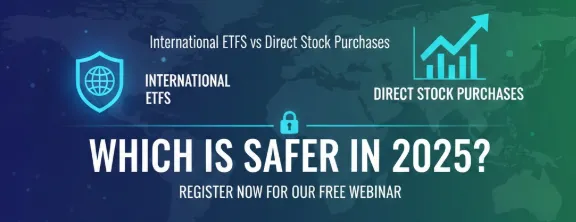
For most global investors, safety means more than short-term price stability. It blends liquidity, transparency, diversification, and resilience to shocks. On those dimensions, U.S. large‑cap ETFs typically offer greater safety than international ETFs thanks to deeper market liquidity, stronger regulatory protections, and lower geopolitical and currency risks. That said, limiting exposure to one country can concentrate risk; a balanced allocation that adds high‑quality international funds can improve portfolio durability across cycles. If you’re entering U.S. markets from abroad—especially via platforms that enable fractional or tokenized access like ToVest—anchoring in U.S. large‑caps and layering a measured international sleeve is a pragmatic, secure global stock investing approach. Understanding Safety in ETF Investing Safety in ETF investing refers to the ability of a fund to preserve capital, remain liquid during stress, and minimize extreme drawdowns while offering transparency and resilience against diverse market shocks. In practice, ETF safety is shaped by: Volatility and drawdowns (how large and frequent price swings are). Liquidity and market depth (ease of trading without price impact). Regulatory safeguards and disclosure quality. Diversification, concentration, and factor tilts. Geopolitical, economic, and currency risk. For cross‑border investors using platforms like ToVest to access U.S. markets with fractional, regulated exposure, risk mitigation often starts with a safer core—broad U.S. large‑cap ETFs—before adding selective international ETFs for diversification. Liquidity and Market Depth Comparison Liquidity is how easily an ETF can be bought or sold without materially moving its price. Higher liquidity supports tighter bid‑ask spreads, lower trading costs, and better investor protection—especially in stressed markets. U.S. large‑cap ETFs trade on the world’s deepest exchanges with robust market‑maker support and long trading hours, while many international ETFs face lower volumes, narrower local hours, and greater execution frictions. Industry data show the U.S. ETF complex dwarfs global ex‑U.S. peers in assets and flows, a structural advantage for ETF liquidity and safety. Lower structural liquidity abroad can translate into wider spreads, more frequent trading halts, and higher slippage—key reasons U.S. large‑caps are generally the safer core for ETF investing and secure global stock investing. Regulatory Protections and Transparency Regulatory protections in finance are legal frameworks that safeguard investors from fraud, promote market integrity, and enforce transparency from issuers. U.S. large‑cap ETFs benefit from stringent SEC oversight, standardized financial reporting, and strong shareholder rights, providing clearer disclosure and better legal recourse. International markets vary widely—rules, enforcement, and access to data can be inconsistent, raising regulatory risk for foreign investors. As a primer, iShares notes that U.S. investments offer robust oversight and transparency, whereas foreign markets often present heterogeneous disclosure standards and added frictions for investors outside the jurisdiction. For global investors, this transparency gap is a core ETF safety consideration. Geopolitical and Economic Risk Factors Geopolitical risk is the likelihood that political events—elections, wars, sanctions, capital controls, or trade disputes—disrupt market performance or access to capital. U.S. markets are generally more insulated from turbulence than many international regions, with lower exposure to corruption, policy shocks, or capital restrictions; investors also avoid an extra layer of currency risk when holding U.S. dollar assets iShares international investing overview. Meanwhile, navigating international markets often entails added hurdles, from foreign exchange and tax complexity to local trading conventions NerdWallet guide to international investing. Common international risk examples: Foreign exchange and capital controls risk. Political instability and regulatory reversals. Trade and sanction exposure concentrated by country or sector. Limited liquidity and narrower trading hours. These factors can amplify volatility and impair exit liquidity in stress—two central dimensions of ETF safety. Volatility, Drawdowns, and Diversification Benefits Volatility is the magnitude of price swings over a period; drawdown is the peak‑to‑trough decline during a downturn. Research indicates that international developed equities have historically shown lower volatility and correlation relative to U.S. small‑caps, and in S&P 500 down quarters since 2010, U.S. small‑caps lost nearly twice as much as developed international peers—underscoring the diversification role of non‑U.S. exposure versus domestic small‑cap risk iShares international investing overview. Key takeaways for ETF safety: U.S. large‑caps typically exhibit lower volatility and milder drawdowns than U.S. small‑caps. Adding developed international exposure can blunt U.S.‑specific shocks, improving portfolio volatility reduction and drawdown resilience—provided investors accept FX and country risks. Evidence from developed ex‑U.S. funds: In a comparative review of VEA, IEFA, and SCHF, VEA showed the deepest historical max drawdown among the trio but delivered the best Sharpe and Sortino ratios over the assessed period, pointing to superior risk‑adjusted performance despite headline drawdown VEA vs. IEFA vs. SCHF analysis. Concentration and Factor Exposure Differences Concentration risk is the danger that portfolio results hinge on a small set of stocks or sectors; leadership reversals can inflict outsized losses. U.S. large‑cap indices have grown increasingly top‑heavy, with returns dominated by mega‑cap growth names—a double‑edged sword for ETF safety if leadership rotates iShares international investing overview. International developed markets tend to lean more toward value factors (higher dividend and earnings yields) and exhibit broader sector and country leadership. At a glance: U.S. large‑cap ETFs: higher growth tilt; heightened mega‑cap concentration; potent when growth leads, riskier if leadership narrows or reverses. International developed ETFs: more value tilt; wider sector/regional spread; potential shock absorption when value outperforms. For risk mitigation, balancing growth and value exposures across regions can reduce concentration risk and improve ETF safety. Currency Exposure and Macro Sensitivity Currency risk is the potential for returns to be altered by movements in exchange rates between the investor’s home currency and the market’s local currency. International ETFs expose investors to a “double impact”: local equity performance plus FX movements. Dollar strength is a headwind for unhedged foreign holdings; dollar weakness is a tailwind iShares international investing overview. Over certain cycles, currency can dominate: from 2002–2007, currency moves accounted for roughly 49% of MSCI ACWI ex‑U.S. outperformance versus the U.S., according to Pacer’s analysis Pacer Perspective. Macro variables—global rate differentials, commodity cycles, and political events—can compound currency volatility, making FX risk a central consideration in ETF safety for global portfolios. Cost Structures and Expense Ratios An expense ratio is the percentage of an ETF’s assets used to cover annual operating costs; lower fees increase net returns and support risk‑adjusted safety over time. Many S&P 500 ETFs charge as low as 0.03%, well below typical international funds expense ratio discussion. Among broad developed ex‑U.S. options, fees are competitive but higher than the cheapest U.S. large‑cap core: VEA at 0.05%, IEFA at 0.09%, and SCHF at 0.06% in recent disclosures VEA vs. IEFA vs. SCHF analysis. Beyond headline fees, index methodology (sector caps, country weights), rebalancing rules, and securities lending can influence realized volatility, drawdown behavior, and risk metrics like Sharpe and Sortino—key components of ETF safety. Blended Portfolio Approaches for Enhanced Safety Blended portfolios combine allocations to both U.S. and international equities, harnessing imperfect correlations to strengthen resilience and improve return‑to‑risk. Research and practitioner experience suggest a core in U.S. large‑caps with a meaningful international sleeve can enhance diversification—provided investors size FX and country risks appropriately and favor transparent, low‑cost funds iShares international investing overview. Practical guidance: Target ranges: 20–35% international within equity exposure often balances global diversification with U.S. stability for ETF allocation for safety. Style balance: Pairing U.S. growth with international value has historically improved outcomes; MSCI analysis highlights periods where international value outshone U.S. growth, supporting a complementary blend MSCI value vs. growth. ToVest enables global investors to implement such blended equity portfolios with fractional, regulated access to U.S. markets and seamless cross‑border execution—bridging traditional and tokenized capital markets with real‑time risk tools. For a step‑by‑step framework, see our portfolio construction guide on ToVest Academy (https://tovest.com/en-US/blog/academy/574589). Frequently Asked Questions Do international ETFs reduce portfolio volatility? Yes—adding developed international exposure can lower overall volatility through diversification, though it introduces FX and country risks that must be managed prudently. What makes U.S. large-cap ETFs a safer core holding? They offer superior liquidity, stronger regulatory protections, and lower geopolitical and currency risks than most international funds, creating a durable foundation for global portfolios. How does currency risk affect international ETF returns? FX movements can amplify or detract from local market returns; a stronger U.S. dollar is a headwind for unhedged foreign holdings, while dollar weakness is a tailwind. What is the ideal allocation between U.S. and international ETFs for safety? A 20–35% international sleeve alongside a U.S. large‑cap core typically enhances resilience without overexposing the portfolio to any single country. Are there additional risks unique to international equity investing? Yes—variable disclosure standards, political instability, capital controls, and lower liquidity are more common abroad and should be factored into risk management.

blog banner
News - Blog | ToVest