January 12, 2026

2026 Guide to Trading Tokenized U.S. Stocks on Mobile Apps

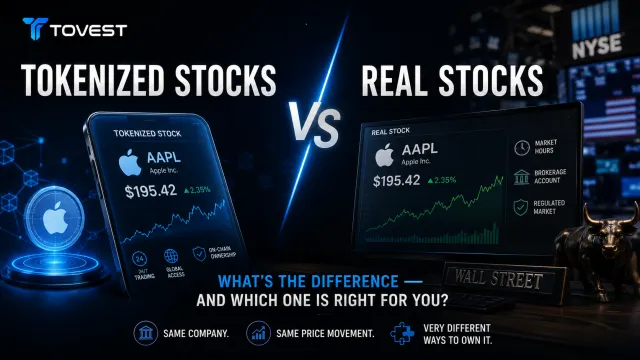
The fastest way to buy tokenized U.S. stocks on mobile in 2026 is to select a regulated, transparent platform, complete KYC, fund with fiat or stablecoins, verify 1:1 asset backing, and place a market or limit order. Tokenized stocks are digital assets that mirror the price of real U.S. equities and settle on-chain, enabling 24/7 trading, fractional ownership, and—in some cases—use as collateral in DeFi. This guide explains the mechanics, compares platforms, and walks you through account setup, order execution, custody, and tax basics. As a compliant, blockchain-powered gateway, ToVest offers global users institutional-grade security, real-time market data, and seamless fiat/crypto funding for accessing fractional U.S. equities. Understanding Tokenized U.S. Stocks Tokenized U.S. stocks are blockchain-based representations of real shares, typically backed 1:1 by the underlying security, giving holders economic exposure to the stock’s price while enabling on-chain settlement and transferability. In short, they are digital assets that track U.S. equities and trade around the clock on supported platforms, independent of traditional market hours. For a clear overview of how they work, see Gemini’s explainer on tokenized stocks and pricing mechanics (Gemini Cryptopedia, “what are tokenized stocks and how do they work”). Why investors care in 2026: Programmable, near-instant settlement and 24/7 liquidity reduce waiting times and market-hour constraints. Fractional investing makes high-priced shares accessible—many mobile apps support minimums near $1 for fractional U.S. stocks (see NerdWallet’s review of fractional-share brokers). Expanded use cases: tokenized equities can integrate with decentralized finance, allowing collateralized borrowing or composable strategies on-chain, where supported. Global reach and crypto rails: users can fund in stablecoins and trade without traditional brokerage borders, subject to local rules (Datawallet, “best tokenized stock trading exchanges”). Under the hood, platforms combine several building blocks: Oracles deliver real-time market data from traditional exchanges to the blockchain and help support proof-of-reserve attestations. Regulated custody safeguards the underlying shares and segregates client assets. Smart contracts automate issuance/redemption, settlement, and transparency across the lifecycle (Unicsoft, “tokenized stocks” and Appinventiv, “AI tokenization for asset ownership”). Key terms: Fractional shares: owning less than one whole share, allowing you to invest dollar amounts instead of full share prices. DeFi composability: the ability to plug tokenized assets into multiple decentralized apps (for lending, yield, or hedging) without rewriting core logic. Choosing a Compliant and Reliable Trading Platform Start with compliance and transparency. Prefer platforms that operate under clear licensing, enforce KYC/AML, and hold strong institutional backing. Regulated exchanges and brokerages—plus specialized tokenization venues—offer better investor protections and auditability (Investopedia, “best brokers for international trading”). Look for: Published compliance status (e.g., MSB registration in the U.S. or equivalent), KYC/AML controls, and clear terms. On-chain proof of reserves, independent audits, and disclosed 1:1 asset-backing details. Documented oracle feeds and pricing methodology to ensure fair, timely valuations (Datawallet, “best tokenized stock trading exchanges”). Quick comparison of common options in 2026 (features vary by region): PlatformRegulatory postureCoverageCustody modelMinimum Tip: Favor platforms with MSB or equivalent credentials, audited reserves, and reputable custody partnerships to mitigate counterparty risk. Setting Up Your Account and Funding It Most mobile apps follow a similar onboarding flow: Download the app or sign up on the web. Complete KYC identity verification to unlock deposits and trading (standard across reputable platforms to meet global AML rules; see Investopedia’s international broker guidance). Link funding methods. Common funding options: Fiat transfers: bank wires, ACH, or cards in supported currencies (USD, EUR, etc.). Stablecoins: USDT or USDC for fast, global funding. Major crypto: ETH or BTC where supported. Before depositing, confirm the settlement currency for tokenized stocks (e.g., USD, USDT) so you send the correct asset and avoid conversion fees (Datawallet, “best tokenized stock trading exchanges”). Verifying Token Details and Asset Backing Trustworthy tokenized stocks provide transparent documentation per listing. Review: Issuer and underlying asset specifics (ticker, CUSIP/ISIN if provided). Custodian identity and regulatory oversight. Proof of 1:1 asset backing and frequency of third-party audits. Oracle sources and update cadence for price feeds. A credible venue will clearly show 1:1 backing, audit trails, and live oracle-driven pricing. Many platforms also provide support articles on buying tokenized U.S. stocks with crypto and outline custody/settlement mechanics (Blockchain.com Support, “Can I buy Tokenized U.S. Stocks with crypto”). For technical assurance, platforms often detail proof-of-reserve processes and oracle integrations (BlockchainTechs, “RWA tokenization platform development”). Selecting Order Types and Managing Liquidity Know your order types: Market order: executes immediately at the best available price—fast, but may face slippage in thin markets. Limit order: executes at your specified price or better—control over price, but execution isn’t guaranteed. AMM/DEX routing: some platforms tap liquidity pools; pricing depends on pool depth and on-chain conditions (Datawallet overview of exchange liquidity). Check liquidity metrics before trading: Order book depth, spreads, and 24-hour volume. Number of supported blue-chip tokens and trading pairs. Leading venues highlighted by market guides offer 24/7 access and deep liquidity across dozens of names (Datawallet, “best tokenized stock trading exchanges”). Feature availability snapshot: Instant vs. scheduled settlement: On-chain settlement is typically near-instant; broker-synced tokenizations may have specific windows. DeFi utility: Some tokens can be pledged as collateral or integrated into DeFi; confirm eligibility and smart-contract risks (RWA.io, “RWA platforms for 2026”). Custody Options and Secure Storage of Tokens Two primary custody models exist: Custodial: the platform holds your tokens. Pros: convenience, integrated recovery, fewer operational steps. Cons: counterparty risk. Self-custody: you withdraw to a personal wallet (e.g., hardware wallet or MetaMask). Pros: control, DeFi access, portability. Cons: you’re responsible for key management and security hygiene. Security best practices: Use hardware wallets for larger balances and store seed phrases offline. Enable 2FA and withdrawal allowlists. Regularly review app permissions and revoke unused approvals. For a practical overview of exchange custody vs. withdrawals and platform-level safeguards, see high-level exchange reviews and tokenization primers (Gemini Cryptopedia on tokenized asset mechanics; Datawallet’s exchange comparisons). Navigating Tax Reporting and Regulatory Compliance In most jurisdictions, tokenized stocks are treated like traditional securities for tax purposes, so capital gains rules generally apply when you sell or swap them. Maintain thorough records: Export complete trade histories, cost basis, and transfer logs from your app. Note that on-chain settlements can differ from T+2 legacy timing, potentially affecting your taxable event dates. Consult local guidance and consider tax software integrations offered by your platform. For broader context on regulated access and investor protections, see Investopedia’s guide to international brokers. Starting to Trade Tokenized U.S. Stocks with Crypto A straightforward path from stablecoins to equity exposure: Deposit USDT/USDC (or supported crypto) into your mobile app wallet. Browse the tokenized U.S. stock list and select your ticker. Choose market or limit order, input amount, and submit. Confirm execution; your portfolio updates with the tokenized position. Flow at a glance: Deposit crypto → Select stock token → Choose order type → Execute → Receive tokens → Secure custody (withdraw or keep custodial) Platforms recognized for crypto-settled stock access include ToVest and other leading exchanges profiled in market roundups (Datawallet, “best tokenized stock trading exchanges”). Always verify your platform’s settlement currency and withdrawal options before trading. Monitoring Market Data and Risk Controls Use apps with live prices, depth charts, and analytics so you can spot spreads, liquidity pockets, and momentum. Seasoned traders may also seek AI-driven risk signals and anomaly detection to flag unusual activity (Appinventiv, “AI tokenization for asset ownership”). On the backend, smart contracts increasingly automate risk blocks and dynamic pricing, improving resilience. Turn on in-app risk controls: Price alerts and news notifications for your tickers. Stop-loss or take-profit tools where supported. Diversification across sectors and stablecoin reserves for volatility management (StockBrokers.com, “mobile trading guide”). Best Practices for Beginners Trading Tokenized Stocks Start on regulated, well-audited platforms; begin with small deposits and scale as you gain comfort. Learn the tools: read platform education, practice with demo modes if available, and start with large-cap names you recognize. Verify 1:1 backing, custody arrangements, and oracle sources for each token. Use strong security habits, regularly review account activity, and stay updated on policy changes. Frequently asked questions What platforms support tokenized stock trading on mobile apps? Leading platforms that support tokenized stock trading or fractional U.S. stock exposure on mobile include ToVest and other options, with availability varying by region. How can I ensure the tokenized stocks are fully backed and audited? Look for public audit reports, explicit 1:1 backing statements, disclosed custodians, and on-chain price feeds per listing page. What are the main custody options for tokenized stocks and their risks? You can keep tokens in the platform’s custodial wallet for convenience or self-custody them in a personal wallet for greater control—self-custody adds responsibility for key security. How does tax reporting work for tokenized stock trades? They’re generally taxed like securities; keep detailed records and export trade histories from your app to support capital gains reporting. Can I trade tokenized U.S. stocks using stablecoins or cryptocurrencies? Yes—many platforms, including ToVest, accept USDT/USDC funding and allow direct crypto-settled trades.

blog banner

December 23, 2025

Top 5 trading platforms where Vietnamese people are depositing the most in 2025 - which trading one are you using?

Vietnamese traders in 2025 are concentrating deposits on platforms that balance security, cost, and access to the assets they actually want to trade. In this guide, you’ll find the top platforms attracting the most funding this year, what distinguishes each one, and how to choose based on features, fees, and asset coverage. Our shortlist reflects market share trends, user feedback, and the popularity of capabilities among Vietnamese depositors. A trading platform is an online software or mobile application that allows investors to buy and sell financial assets electronically, often offering analysis tools, real-time data, and varied payment options. Whether you trade stocks, forex, or blockchain-based assets, the “right” platform is the one that aligns with your cost, instruments, and technology needs. ToVest: Tokenized Real-World Assets Trading Platform ToVest is an exceptional choice for Vietnamese investors seeking secure, global access to tokenized US stocks, real estate, and other real-world assets, accompanied by advanced tools and real-time data. Tokenized assets are digital representations of real-world assets, like stocks or property, using blockchain to enable fractional ownership and 24/7 trading—an increasingly common model explained in this industry overview from Unicsoft on tokenized stocks. ToVest emphasizes institutional-grade security (two-factor authentication, cold asset storage), efficient settlement, and margin/leverage tools designed for active traders. Regulatory assurance matters. ToVest operates with a compliance-first approach and collaborates with established fintech and crypto partners; its About page outlines governance, security, and transparency commitments for users focused on safety and standards. More broadly, money services and tokenized-asset intermediaries operate within anti-money-laundering frameworks such as FinCEN’s MSB regime in the U.S., underscoring the importance of well-defined compliance processes. How to buy tokenized stocks on ToVest: Create an account and complete identity verification. Deposit funds via supported methods. Search for the tokenized stock you want and review the live order book and market data. Choose order type (market/limit), set size (including fractional amounts), and confirm. Track positions, set risk controls, and withdraw when needed. If you’re learning the mechanics, see step-by-step guidance from exchanges like Bitget’s guide to buying tokenized stocks or Gemini’s walkthrough of tokenized stock trading flows for a comparable experience. For ToVest-specific insights and data, explore our market trends on the ToVest blog. Interactive Brokers: Professional Global Market Access Interactive Brokers (IBKR) is commonly described as professional-grade with broad global market access, a key reason it’s a magnet for serious Vietnamese traders in 2025. Independent broker roundups highlight IBKR’s reach, execution quality, and professional tooling, making it well-suited to trade across well over 100 markets with sophisticated order types and asset classes, as noted in Bankrate’s broker review. The flagship Trader Workstation (TWS) offers deep charting, options analytics, and algo tools—fantastic for power users, but with a steeper learning curve. Comparison snapshot: desktop power vs. mobile simplicity Charles Schwab and thinkorswim: Advanced Options and Research Tools Thinkorswim by Schwab is free, powerful, and especially popular with options traders thanks to robust charting, options analytics, and paper trading—features frequently cited by independent broker evaluations such as Forbes Advisor’s online broker reviews. Since Schwab integrated thinkorswim following the TD Ameritrade acquisition, the platform now pairs institutional-quality tools with Schwab’s broader product lineup and research ecosystem. Core features that draw active Vietnamese traders: Advanced options chains, Greeks, and probability tools Rich desktop and mobile analytics with real-time data Paper trading for strategy testing and skill-building Deep research integrations across equities, ETFs, and derivatives Fidelity: Comprehensive Research and Trader+ Platform Fidelity stands out for its deep research, platform reliability, and long-term investor support. Recent broker comparisons consistently recognize Fidelity for its comprehensive research library, transparent pricing, and strong investor education—see Investopedia’s Best Online Brokers analysis for context. Fidelity has been expanding its active trading capabilities with upgraded toolsets while maintaining seamless integration for multi-asset portfolios. For Vietnamese investors balancing trading and long-term investing, the combination of research, service, and execution makes Fidelity a durable, all-around choice. Robinhood: Mobile-First Commission-Free Trading Robinhood remains a go-to for beginners and mobile-first traders thanks to a streamlined app, fast onboarding, and zero-commission trades on stocks and ETFs. Commission-free trading means you don’t pay a brokerage commission per trade, improving cost efficiency for small or frequent orders—an advantage highlighted in CNBC’s roundup of free stock-trading brokers. User feedback often notes that while the app is easy to use, customer support and advanced functionality can be mixed for more sophisticated needs, as discussed in Forbes Advisor’s broker reviews. IC Markets: Forex and CFD Specialist with Low Spreads IC Markets is a leading destination for Vietnamese forex and CFD traders who prioritize ultra-low spreads, institutional liquidity, and lightning-fast execution. IC Markets emphasizes ECN pricing—an electronic communication network that routes orders directly to liquidity providers for deeper markets and better rates—plus support for MT4, MT5, and cTrader. Broker directories and comparisons frequently cite IC Markets’ tight spreads and platform flexibility for FX/CFD specialists; see Investing.com’s broker listings for an overview. Advantages at a glance: ECN execution with low spreads and rapid fills MT4/MT5/cTrader support for algorithmic and manual trading Micro accounts and robust risk controls for sizing precision Focused coverage of major and minor FX pairs, indices, commodities, and CFDs Factors Driving Vietnamese Traders’ Deposits in 2025 Market access and cost: Platforms with wide global reach and competitive fees/spreads (e.g., IBKR for multi-asset access; IC Markets for FX spreads) attract larger deposits. Trading tools and experience: Robust analytics, dependable execution, and customizable UIs (e.g., thinkorswim, Fidelity’s active trading tools) matter—because execution quality and platform resilience are non-negotiable during volatility, as emphasized in third-party rundowns of trading tools and execution standards. Ease of onboarding: Simple registration, instant funding, mobile-first design, and clear pricing (e.g., Robinhood) reduce friction and drive adoption. Emerging access to tokenized and fractional assets: ToVest’s blockchain capabilities and fractionalization expand what—and when—Vietnamese traders can own and trade. Choosing the Right Platform for Your Trading Needs Use this quick map to align platform strengths with your goals: A note on execution quality: it’s the speed and reliability with which your buy/sell orders are processed. During high volatility, faster, more reliable execution can reduce slippage and materially impact outcomes. Before you fund an account, confirm: Regulatory coverage and disclosures Security controls (two-factor authentication, cold storage, segregation of client assets) Fee schedule (commissions, spreads, financing/margin, withdrawals) Asset availability (stocks, options, futures, FX/CFDs, tokenized RWAs) Funding/withdrawal rails and support responsiveness Frequently asked questions Is ToVest a regulated trading platform? Yes—ToVest operates within a compliance-first, regulated framework in the jurisdictions it serves, prioritizing user security, asset integrity, and transparent operations. How do I buy tokenized stocks on ToVest? Register and verify your account, deposit funds, search for the tokenized stock market, choose an order type and size (including fractional amounts), and confirm the trade from the dashboard. What are the key benefits of trading tokenized assets? Tokenization enables fractional ownership, 24/7 market access, and broader diversification across real-world assets with faster settlement and transparent on-chain records. What should Vietnamese traders consider about platform security and execution quality? Look for robust security measures, such as strong authentication, cold storage or asset segregation, and a reliable matching engine with proven uptime and fill speeds to minimize slippage and platform risk. How can beginners start trading on popular platforms safely? Use a user-friendly platform, start small, practice with demos if available, and familiarize yourself with the fee schedule and order types before increasing your trade size.

blog banner

December 24, 2025

7 Essential Platforms for Legal US Stock Token Trading in 2025

Tokenized US stocks are moving from concept to practical portfolio tools in 2025, allowing investors to access fractional equity exposure with blockchain-based settlement, transparent custody, and around-the-clock market access. A stock token is a blockchain-issued representation of equity designed to mirror the economic value and certain rights of an underlying share; implementations range from fully collateralized tokens to synthetic exposures, depending on the platform’s disclosures and licenses. The core question—where can you trade them legally—hinges on regulatory authorization, product scope, and custody. Below, we profile seven platforms positioned within the regulated stack, along with a practical playbook for onboarding and risk management. For fundamentals on tokenization and 24/7 access benefits, see CoinGecko’s overview of tokenized stocks, and note the evolving risk landscape highlighted by Bankrate and CNBC. Strategic Overview The convergence of traditional markets and blockchain is reshaping how US equities are issued, held, and traded. Tokenized stocks aim to compress settlement times, broaden access via fractional investing, and expand trading windows beyond regular exchange hours. Definitions and mechanics vary by venue: some tokens are backed 1:1 by underlying shares while others track prices synthetically—always verify the specific structure in platform documentation, as explained by Gemini’s primer on tokenized stock trading. Platform choice matters. It determines: Legal coverage and investor protections (registrations, disclosures, state-by-state access) Total cost (maker/taker fees, spreads, instant-buy premiums, custody or withdrawal fees) Liquidity and execution quality (order book depth, market hours, slippage) Custody (qualified custodianship vs. self-custody; on-chain proofing and attestations) Product scope (range of US stock tokens, stablecoins/fiat rails, research tools) Transparency (clear disclosures, auditability, public fee schedules) For a deeper dive into tokenized market structure and custody best practices, see ToVest Academy’s explainer on on-chain market rails. ToVest ToVest is purpose-built for tokenized US stock trading, combining blockchain-native architecture with a regulatory framework designed for both retail and institutional investors. The platform prioritizes: Fractional share ownership for capital-efficient exposure and portfolio diversification Real-time analytics, portfolio insights, and institutional-grade risk controls Robust leverage and margin features in permitted jurisdictions Secure fiat and crypto payment rails for fast, compliant funding and settlement Transparent custody and attestations to help verify backing and reduce counterparty risk Feature snapshot: The net result: capital efficiency without sacrificing compliance, plus research-grade tools that facilitate scaling from first trade to institutional workflows. Coinbase Coinbase is a prominent U.S. exchange known for its compliance-first posture, robust security, and broad retail and institutional reach. While the availability of stock tokens is evolving, Coinbase’s regulated custody and user-friendly UX make it a logical on-ramp as tokenized markets expand. Consider: Compliance and custody: Institutional-grade security and custody infrastructure, widely reviewed among top crypto platforms Fees and access: Transparent fee model; broad U.S. and international availability with clear disclosures on product eligibility Investor protections: Extensive educational content and risk disclosures that support compliant onboarding and ongoing use For a comparative sense of Coinbase’s strengths in security and accessibility, see StockBrokers.com’s annual analysis of leading crypto exchanges. Kraken Kraken has long catered to active, compliance-oriented traders with transparent pricing and advanced tools. Its maker-taker fee schedule starts at 0.10% for makers on Kraken Pro, scaling down with volume; the platform also offers pro-grade charts, order types, and deep liquidity favored by frequent traders. Kraken’s tokenized equities initiative (xStocks) has launched with region-specific access—U.S. users must verify eligibility and product availability before onboarding. Key takeaways: Fees: Competitive maker-taker schedule and clear, public pricing Tools: Robust pro interface with analytics and execution flexibility Access: Tokenized equity access varies by jurisdiction; verify availability on Kraken xStocks before funding Reference: Kraken’s Pro fee framework and product scope are detailed in Kraken’s day-trading guide and the xStocks product page. Gemini Gemini positions itself as a security-first, U.S.-regulated exchange with institutional-grade custody and a longstanding focus on compliance. While tokenized equity access remains jurisdiction-dependent, Gemini’s infrastructure, audits, and disclosures attract institutions preparing to scale tokenized exposures. Its educational content also helps investors understand the distinctions between fully backed and synthetic stock tokens—essential for assessing asset rights and dividend treatment. See Gemini’s explainer on how tokenized stock trading works for a clear framework. Robinhood Robinhood’s mobile-first design and commission-free pricing helped onboard millions of first-time investors to stocks and crypto. For tokenized stocks, its advantages include accessibility, simple funding, and streamlined order entry—though professional traders may find fewer advanced order types and analytics than on pro venues. Pricing: Zero stock commissions; straightforward, beginner-friendly UX Considerations: Feature depth and research tools may be limited for high-frequency or institutional users Availability: Product scope (including any tokenized equities) depends on jurisdiction and regulatory approvals For context on Robinhood’s commission-free offering, see CNBC Select’s review of free stock trading. Fidelity Fidelity bridges mainstream brokerage protections with expanding crypto rails, combining low-cost trading, research depth, and trusted custody. Industry analysts have repeatedly ranked Fidelity at or near the top overall among U.S. brokers due to its comprehensive offering. Additional highlights: Pricing model: Low-cost, spread-based crypto pricing often around 1% depending on market conditions Access: Entry-level investing from as little as $1 for eligible products, supporting fractional ownership Standing: Recognized as a top overall stock broker in 2025 reviews for research, execution quality, and investor education See StockBrokers.com’s broker rankings for methodology and awards, and The Motley Fool’s primer on buying stocks for fractional and small-ticket access. Interactive Brokers Interactive Brokers (IBKR) is the go-to for experienced traders seeking global markets, powerful execution tools, and tiered pricing. Its crypto integration offers competitive per-order pricing at 0.18% under $100,000 (with a $1.75 minimum), making it attractive for systematic or high-frequency flows. Why IBKR stands out: Pricing: Competitive, volume-aware models that scale with activity Tools: Advanced analytics, routing options, and professional risk management Reputation: Consistently top-ranked among U.S. brokers for active and professional traders For fees and rankings, consult StockBrokers.com’s broker reviews and crypto-exchange comparisons. Binance.US As the U.S. affiliate of a global exchange brand, Binance.US emphasizes low listed fees—often as low as 0.1%—and straightforward market access. That said, its product scope is distinct from the international platform and varies by state, with periodic updates as regulations evolve. Pros: Low fees and simple spot pricing Familiar interface for crypto-native users Cons: Region-by-region limitations Fewer assets and features than the global platform For a comparative fee snapshot, see CoinLedger’s roundup of day-trading exchanges. How to Get Started with US Stock Token Investing Confirm eligibility and product access Check your jurisdiction, residency, and platform’s regulated permissions for tokenized US equities. Complete KYC/AML Provide identity verification and any required documentation for compliance. Fund your account Choose fiat (bank transfer, card, wire) or crypto deposits where permitted. Review fees, processing times, and limits. Select your market and instruments Verify whether the stock tokens are fully backed or synthetic. Review custody, dividend handling, and corporate action policies. Place your first trade Start with a small order. Consider limit orders to control slippage and review maker/taker fees where applicable. Manage risk and monitor Use position sizing, alerts, and portfolio analytics. Revisit disclosures as products evolve. Fractional investing means buying less than one full tokenized share, enabling diversified portfolios even with small initial balances. Using Cryptocurrency to Purchase US Stock Tokens Common path: Deposit crypto to a compliant exchange that supports your region and stock token access. Convert to a required stablecoin or fiat rail. Purchase the desired stock token, confirming its structure (backed vs. synthetic) and any regional restrictions. Availability varies widely. Some platforms permit direct crypto-to-token trades, others require conversion steps, and a few only accept fiat. As an example of wallet-based access, the Phantom team documents how tokenized stocks can be routed within its ecosystem—legal status and protections depend on the underlying issuer and venue, so scrutinize disclosures closely. Crypto-to-stock-token flow (illustrative, region-dependent): Always confirm current product lists, fees, and supported rails before moving funds. Key Factors to Consider When Choosing a Stock Token Trading Platform Regulatory standing: Verify registrations, state-level permissions, and disclosures. Fee model: Maker/taker schedules, spreads, instant-buy markups, funding/withdrawal fees. Liquidity and execution: Depth, slippage, market hours, and routing quality. Custody and safety: Qualified custodians, segregation, audits, and attestations. Product scope: Universe of US stock tokens, corporate action handling, and dividend policies. Tools and UX: Research, analytics, mobile/desktop parity, and API access. A maker/taker fee model charges different rates for adding vs. removing liquidity; makers often pay lower fees (or receive rebates), while takers pay higher fees—important for frequent traders, as outlined in Kraken’s pricing documentation. Legal and Regulatory Considerations for US Stock Token Trading In the U.S., tokenized equities intersect with securities and commodities laws, Bank Secrecy Act obligations, and state-by-state licensing. Platforms offering stock tokens must implement KYC/AML, maintain appropriate registrations, and clearly disclose whether tokens are backed by shares or synthetically reference prices. Analysts emphasize that tokenized stocks offer new access channels but carry unique risks tied to custody, market structure, and regulation. Practical steps: Confirm the platform’s registrations and state permissions. Read product disclosures on backing, custody, and corporate action handling. Monitor regulator guidance and platform updates; token availability can change quickly. For balanced perspectives on opportunity and risk, see Bankrate’s cautionary review and CNBC’s analysis of tokenized stock growth and associated trade-offs. Frequently Asked Questions Can I trade US stock tokens outside regular market hours? Many venues support 24/7 trading, but liquidity and price discovery can vary; check each platform’s market hours and order book depth. Are stock tokens backed 1:1 by the actual shares? Sometimes—others are synthetic or derivative-based; review each platform’s disclosures to understand rights, dividends, and redemption. What fees should I watch for when trading stock tokens? Consider maker/taker fees, spreads, instant-buy markups, and funding or withdrawal costs since these affect your overall execution price. Do I receive dividends when owning stock tokens? Only if the token structure and platform policies support dividend pass-through; confirm eligibility and timing in the issuer’s documentation. How do I know if a platform is legally authorized to offer stock tokens? Look for clear registrations and licenses (federal and state) and review official disclosures on investor protections and custody arrangements. References & Links All sources are cited inline above.

blog banner
Academy - Blog | ToVest