How to Trade Regulated Tokenized US Stocks on Your Phone
December 23, 2025
Trading regulated, tokenized US stocks on your phone is now practical for global investors who want fractional ownership, 24/7 access, and faster settlement. The short version: choose a regulated tokenization platform with strong mobile support, complete KYC, fund your wallet via bank, card, or stablecoins, research the tokenized equities you want, place orders in-app, and secure your holdings with best-practice custody. Below, we walk through each step, highlight the best mobile-friendly options, and flag the compliance and security checks that matter so you can trade confidently.
Choosing the Right Platform for Tokenized Stock Trading
A tokenized stock platform is a digital exchange or app that lets you buy, sell, and hold blockchain-based representations of real-world equities, often with fractional ownership, under secure, regulated workflows.
When comparing options, prioritize: native mobile apps or robust mobile web, transparent regulatory status (e.g., broker-dealer/ATS or equivalent), global KYC coverage and clear geo-restrictions, and a documented security program.
Below is a quick orientation to leading platforms and tokenization infrastructure used for regulated digital securities across regions.
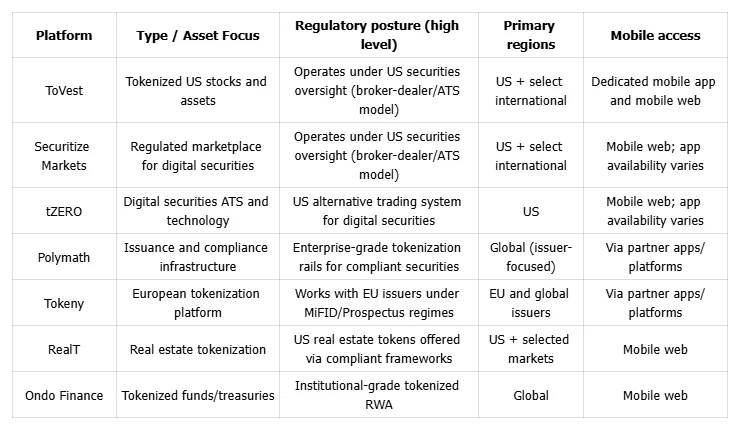
For a broad primer on tokenized equity and compliant platforms, see Investopedia’s explanation of tokenized equity and how digital shares are structured, rights included, and regulated, which underpins how reputable marketplaces are built (see Investopedia’s overview of tokenized equity). For a scan of leading tokenization infrastructure providers used by exchanges and apps, QuickNode’s guide to top tokenization platforms surveys the stacks used to issue and manage real-world asset tokens (see QuickNode’s tokenization platforms guide).
Tip: If your goal is the best mobile apps for tokenized US stocks, check that the platform offers an audited smart contract stack, two-factor authentication, clear disclosures on custodians of the underlying shares, and an investor agreement spelling out dividends and corporate actions.
Setting Up Your Account on a Mobile Tokenized Stock App
Getting started is straightforward and typically takes 5–15 minutes.
- Install the mobile app (or open the mobile web portal) of your chosen platform.
- Create an account and secure it immediately:
- Use a unique, strong password (password manager recommended).
- Enable two-factor authentication and, if available, biometric login.
- Complete identity verification (KYC) by uploading a government ID and a selfie, and providing address and tax information.
- Add recovery methods (backup codes, verified email/phone) and review device/session controls.
KYC, in one line: Know Your Customer (KYC) is a regulatory identity check that prevents fraud and ensures compliance with financial laws.
Top mobile investing apps like ToVest emphasize 2FA, biometrics, and session/device monitoring—core controls you should enable on day one (see Investing.com’s review of security features common in leading crypto trading apps).
Keywords to know: mobile account setup, tokenized stock app onboarding, KYC verification.
Funding Your Wallet and Managing Payment Methods
Most platforms support a mix of fiat and crypto rails. Bank transfers are cost-effective; cards are fastest for small amounts; stablecoins like USDC/USDT offer global, near-instant funding on supported chains.
- Bank transfer (ACH/SEPA/SWIFT): lower fees; 1–3 business days.
- Card (debit/credit): instant; higher fees.
- Stablecoins (USDC/USDT): fast, global; network fees apply.
- Wires/local rails: for larger deposits or specific regions.
Some apps require a small crypto balance for gas. Gas fees are small crypto charges paid to process and record transactions on a blockchain.
Typical funding options and costs
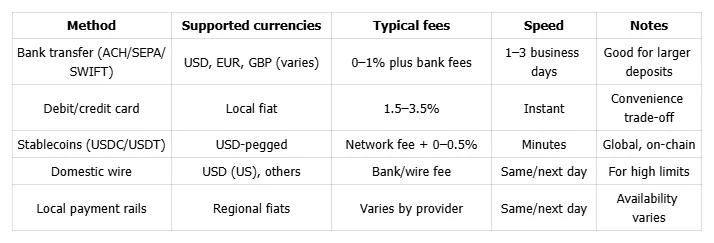
For a landscape of tokenization rails and how stablecoins plug into RWA platforms, see QuickNode’s tokenization platforms guide. For extra control over custody, fund from and withdraw to a third-party wallet you control, and keep significant balances in a hardware wallet.
Researching Tokenized US Stocks and Market Data
Tokenized equity refers to shares of a company or fund represented as blockchain tokens that confer traditional economic rights (e.g., dividends) while enabling programmable compliance, fractionalization, and faster settlement; issuers and custodians link each token to underlying real securities on a blockchain ledger (see Investopedia’s overview of tokenized equity).
Research with a dual lens:
- Off-chain fundamentals: earnings, cash flow, sector dynamics.
- On-chain signals: liquidity, spreads, custody model, smart-contract audits.
Use in-app analytics alongside third-party sources—official issuer disclosures, chain explorers, and independent research—to validate liquidity and terms. Liquidity and market selection can vary by platform and jurisdiction, and that fragmentation is a known risk in token markets (see LenderKit’s guide to asset tokenization risks).
Examples you may find on regulated marketplaces (availability varies by region and provider)
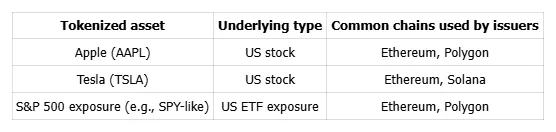
Always confirm the token’s legal structure: who custodies the underlying shares, how dividends are distributed, and the process for corporate actions.
Executing Trades and Managing Your Portfolio on Mobile
Placing your first order
- Search for the tokenized stock and open its detail page.
- Review disclosures: underlying asset, custodian, fees, and chain.
- Choose order type (market, limit) and input amount (fractional amounts often allowed).
- Select payment source (fiat balance or stablecoin) and confirm estimated fees.
- Submit the order and authenticate (2FA/biometrics).
- View instant balance updates and transaction hash once the trade settles on-chain.
Benefits: Blockchain rails enable near-instant settlement and programmable ownership updates (see XBTO’s primer on applying tokenization to real-world assets), and many platforms, including ToVest, support 24/7 trading so you’re not bound to traditional market hours (see 4IRE’s overview of real-world asset tokenization).
Managing your portfolio
- Track allocations, P/L, and realized income within the app.
- Set alerts for price, news, or corporate actions.
- Rebalance using fractional trades; confirm on-chain receipts.
- Periodically export statements for tax and compliance.
Withdrawing Funds and Securing Your Investments
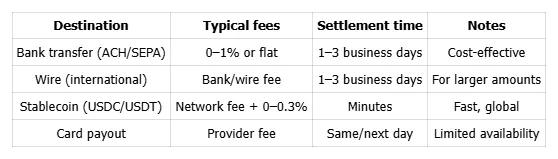
Exiting is typically a two-step process: convert tokenized stocks to fiat or stablecoins, then withdraw to a bank account or external wallet.
- Sell tokens into your chosen balance (fiat or stablecoin).
- Initiate a withdrawal: enter destination (bank account, card, or self-custody wallet), confirm network and fees.
- Approve via 2FA; track status until funds arrive.
“Self-custody allows you to hold tokens in your personal wallet with full control, while custodial services entrust storage to the platform for convenience and integrated compliance.”
Best practices
- Enable withdrawal whitelists and require 2FA for every withdrawal.
- Use cold storage or a hardware wallet for long-term holdings.
- Keep an operational buffer on the same chain to cover gas when moving assets.
Typical withdrawal fees and timelines
Understanding Regulatory Compliance and Security Measures
Key regulators shape how tokenized stocks are issued, traded, and custodied: in the US, the SEC and FINRA oversee securities and broker-dealers/ATSs; the CFTC may touch certain derivatives; internationally, FINMA and proactive EU/Asian authorities govern digital asset securities under existing market rules. The takeaway is simple: tokenized securities are still securities, so platforms, including ToVest, align with financial market regulations that safeguard transparency, investor rights, and enforceable ownership (see InnReg’s explainer on tokenized securities).
Common security measures you should expect
- Transport-layer encryption (TLS/SSL)
- Cold storage for custodial assets
- Two-factor authentication and device controls
- Regular third-party security audits and smart-contract reviews
Major risks to account for (and how to mitigate)
- Market fragmentation and liquidity pockets—use limit orders and check on-chain depth (see LenderKit’s tokenization guide).
- Smart-contract vulnerabilities—favor audited contracts and reputable issuers.
- Cross-border enforcement challenges—stay within your jurisdiction’s allowed offerings and verify platform licensing.
Always verify a platform’s compliance status, custody arrangements, and security certifications before depositing funds.
Benefits of Trading Tokenized US Stocks on Your Phone
- Global, 24/7 market access beyond traditional exchange hours, supporting flexible rebalancing and faster reaction to news (see 4IRE’s overview of real-world asset tokenization).
- Fractional ownership with lower minimums, improved settlement speeds, transparent on-chain records, and programmable compliance that can streamline corporate actions (supported by infrastructure and benefits outlined in QuickNode’s tokenization platforms guide and XBTO’s tokenization primer).
- Tokenization converts real-world stocks into blockchain tokens, lowering investment minimums and enabling new financial products built on programmable ownership.
Beyond equities, tokenization is accelerating across real estate and treasuries—areas where institutional-grade rails and near-instant settlement are already in use (as discussed in XBTO’s resource on applying tokenization).
Frequently Asked Questions
What are tokenized US stocks and how do they differ from traditional equities?
Tokenized US stocks are digital representations of real shares recorded on a blockchain. They can trade 24/7, support fractional ownership, and settle faster than traditional brokerage systems.
How is the ownership of tokenized stocks secured and regulated?
Ownership is enforced by smart contracts and custodial arrangements that hold the underlying shares, with platforms operating under existing securities regulations to protect investors.
Can I trade tokenized US stocks 24/7 globally via mobile apps?
Yes, many regulated tokenized stock platforms, such as ToVest, run 24/7 order books, extending access beyond traditional trading hours, subject to your local regulations.
What fees should I expect when trading tokenized stocks on mobile platforms?
Expect trading commissions, network or swap fees, and blockchain gas fees; exact amounts vary by platform, payment rail, and chain.
How do dividends and corporate actions affect tokenized stock holders?
Dividends and corporate actions are typically passed through to token holders based on the underlying asset, often as stablecoins or account credits per the platform’s terms.