How to Choose a Safe Crypto App When Security Is Critical
December 15, 2025
Choosing a secure digital asset trading app for investing starts with one principle: your funds are only as safe as the platform’s defences and your own practices. With billions lost in exchange breaches over the years, as seen in Investopedia’s list of the biggest crypto heists, security is non-negotiable. The right app combines strong authentication, robust custody, frequent audits, and transparent policies with an interface you’ll actually use. Below, we break down how to evaluate reputation, confirm regulatory safeguards, compare must-have features, and harden your own setup—plus how ToVest approaches multi-layered protection, custody choice, and data-driven trading to support both beginners and advanced users.
Understand the Importance of Security in Crypto Apps
Crypto app security refers to the combined regulatory, technical, and operational measures that protect accounts, keys, and funds against theft or loss. The risk is real: high-profile breaches have cost users billions across multiple incidents, underscoring why protections like multi-factor authentication, cold storage, and independent audits matter (see Investopedia’s overview of major crypto heists). Leading exchanges and educators emphasize that advanced security is a shared responsibility—platforms must deploy strong controls and users must enable them, as explained by Kraken’s guidance on what defines a secure exchange.
ToVest prioritizes layered defences: strong MFA, encryption in transit and at rest, majority cold storage with institutional-grade key management, independent audits and penetration testing, and transparent incident reporting. Users can choose custody models tailored to their risk tolerance, with clear controls and real-time analytics to trade confidently.
Research the App’s Reputation and Track Record
A credible platform shows its work. Review long-term user feedback, incident history, and whether the app runs a public bug bounty or partners with reputable security firms. Lists that compare top apps on safety and reliability—like Coin Ledger’s overview of the best crypto apps—can help you find platforms with consistent, verifiable performance. Verify the developer or corporate entity behind the app, confirm third-party audit attestations, and look for coverage by independent outlets that detail security practices.
Be wary of “guaranteed returns,” vague ownership, or poor support reviews. Established sources such as Forbes Advisor and Money highlight that reputable platforms tend to publish security features clearly, maintain responsive support, and avoid promotional claims that sound too good to be true.
Evaluate Essential Security Features
The safest digital asset trading platforms make security visible, configurable, and verifiable. Use this checklist to compare options:
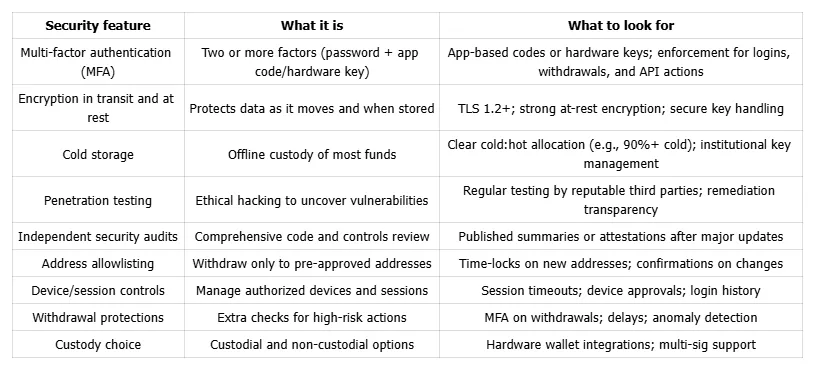
Best-practice frameworks in fintech and blockchain development emphasize these controls, along with continuous testing and secure SDLC processes, as outlined in GeekyAnts’ security guidance for crypto apps. ToVest implements these measures and provides security defaults while allowing advanced users to fine-tune controls.
Multi-Factor Authentication and Encryption
MFA requires two or more independent factors—something you know (password), have (authenticator code or hardware token), or are (biometric)—to block unauthorized access. App-based codes or hardware tokens are preferred for critical actions like logins, withdrawals, and API usage. End-to-end encryption secures data in transit so only intended parties can read it; best-in-class platforms also encrypt data at rest and protect keys with hardened modules or secure enclaves.
Cold Storage and Fund Custody Practices
Cold storage keeps assets offline, out of reach of internet-based attackers. Well-run platforms hold the majority of user funds in cold wallets, with a smaller hot wallet float for day-to-day withdrawals. Diversifying custody—cold plus controlled hot, multi-sig, and optional user self-custody—reduces single points of failure, a principle echoed by Kraken’s security recommendations.
Regular Security Audits and Penetration Testing
Security audits are comprehensive reviews of code, infrastructure, and operations to find and fix weaknesses before attackers do. Penetration tests simulate real attacks to validate defences in practice. Look for platforms that publish audit summaries, test after every major release, maintain active bug bounties, and work with respected firms—standards in modern crypto app development highlighted by Geek Ants’ overview.
Verify Regulatory Compliance and User Protection Policies
Regulatory compliance means following laws and standards for KYC (Know Your Customer), AML (Anti-Money Laundering), sanctions screening, and data privacy. Reputable apps disclose licensing or registrations, adhere to regional rules, and document clear withdrawal, dispute, and account recovery policies. Independent reviewers like Forbes Advisor and Investopedia consistently note that compliance and transparent user protections—such as transaction monitoring and SAR processes—are table stakes for trustworthy platforms. ToVest aligns with these expectations, pairing KYC/AML controls with clear, accessible policy documentation.
Assess Wallet Options and Custodial Control
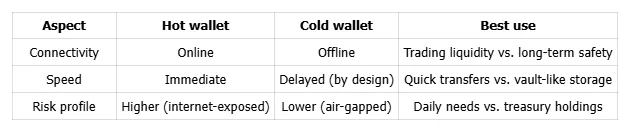
- Hot wallet: internet-connected for quick access and trading convenience.
- Cold wallet: offline storage for long-term protection with slower movement by design.
Look for apps that support both, plus multi-signature authorization and hardware wallet integrations where possible. Understand the custody model:
- Custodial: the platform holds your keys; you benefit from convenience, recoverability, and insurance arrangements but must trust the custodian.
- Non-custodial: you hold your keys; you control security and recovery, but you must manage backups and operational risk.
ToVest gives users custody choice and transparent controls, including hardware wallet compatibility for those who prefer to keep private keys off-platform.
Prioritize User Experience Without Sacrificing Security
Good UX makes safe behaviour the default. Favor apps with clear navigation, prominent security settings, and accessible disclosures on insurance and risk—traits user-focused roundups like Money’s best crypto trading apps repeatedly highlight.
Features that help both beginners and experienced traders:
- Security: prominent MFA, device management, allowlisting, and withdrawal locks.
- Trading: real-time analytics, depth charts, and advanced order types (OCO, stop-limit).
- Guidance: in-app alerts, educational modules, and walkthroughs for security setup.
- Transparency: status pages, incident reporting, and proof-of-reserves or asset attestations where available.
ToVest’s interface surfaces security controls alongside trading tools, pairing responsive design with contextual education from the ToVest Academy and data-driven insights in periodic market reports.
Maintain Security Posture Through Updates and Monitoring
Threats evolve, so your defences must too. Apply app and OS updates promptly—patches often fix exploitable flaws, a core best practice echoed in Backpack Exchange’s security guidance. Monitor your accounts with login, deposit, and withdrawal alerts, and review active sessions and connected devices regularly, as recommended by security practitioners at CM-Alliance.
Practical maintenance checklist:
- Enable app-based MFA and withdrawal confirmations on day one.
- Turn on alerts for logins, transfers, and address changes.
- Review active sessions and authorized devices weekly; revoke anything unfamiliar.
- Update the app and OS as soon as new versions appear.
- Back up recovery phrases offline; test recovery on a spare device before you need it.
- Re-verify allowlisted addresses periodically, lock withdrawals after changes.
- Use separate, unique passwords and a reputable password manager.
Best Practices to Avoid Common Crypto Scams and Phishing
Phishing is a fraudulent attempt to steal credentials or funds via fake sites, messages, or attachments. Reduce your risk with disciplined habits backed by consumer-security guidance from Security.org:
- Verify URLs and certificates; avoid links in unsolicited messages.
- Bookmark official sites and app pages; install only from verified stores.
- Use a dedicated email for crypto, with strong MFA and no reuse of passwords.
- Prefer hardware keys or authenticator apps over SMS when possible.
- Keep antivirus and OS patches current; disable browser extensions you don’t need.
- Never share recovery phrases or one-time codes; support teams won’t ask for them.
Frequently Asked Questions
How can I confirm if a crypto app is properly regulated?
Check for published licensing or registrations, clear KYC/AML disclosures, and transparent withdrawal and dispute policies on the official site or documentation.
What types of authentications should a secure crypto app support?
Look for app-based MFA codes or hardware keys, with enforcement on logins, withdrawals, and API actions; SMS can be a backup but is less robust.
Why are security audits important for crypto trading platforms?
Audits and penetration tests find vulnerabilities before attackers do, helping platforms maintain strong, up-to-date safeguards and user trust.
How do hardware wallets integrate with trading apps?
They keep private keys offline and use secure transaction signing, letting you trade while the keys never leave the hardware device.
What steps can I take to protect my account from phishing attacks?
Verify URLs, avoid unsolicited links, enable alerts, and use antivirus and app-based MFA or hardware keys on all accounts tied to your trading.