December 25, 2025

Real‑World Asset Investment Trends 2025: What Every Investor Must Know

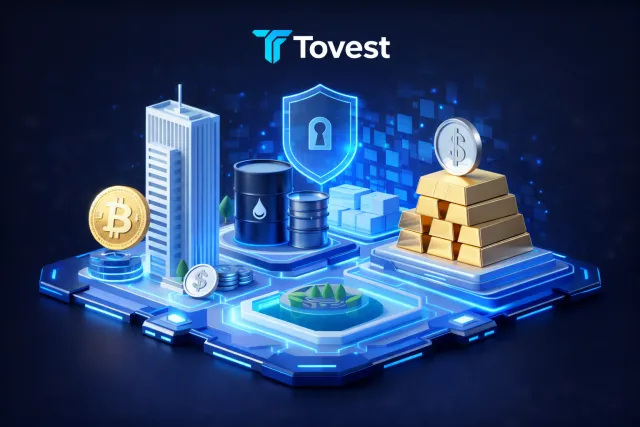
Investing in tokenized real-world assets is moving from niche to mainstream in 2025. If you’re wondering how to invest in real-world assets through RWA platforms—or whether you can buy tokenized real estate—the answer is yes. Investors can open an account on a compliant RWA platform, complete KYC, fund with fiat, crypto, or stablecoins, and purchase fractional tokens that represent real assets. Institutional adoption and improved infrastructure are unlocking 24/7 trading, lower minimums, and global access. This guide explains what’s changing, which asset classes are leading, how blockchain and stablecoins power the market, and practical steps to participate—along with the risks you should weigh before you buy. The Rise of Real-World Asset Tokenization Tokenization is the process of converting real assets like real estate, private credit, or infrastructure into fractional digital tokens on a blockchain—making them tradable, accessible, and liquid for investors globally. Institutional leaders, including major asset managers and banks, are piloting and scaling tokenization, and the market is widely projected to surpass $50 billion by the end of 2025, signaling a decisive shift toward mainstream adoption, according to the RWA Market Outlook 2025 from industry analysts (RWA.io) RWA Market Outlook: Trends and Projections for 2025. By lowering minimums and enabling cross-border participation, tokenization democratizes access to historically gated assets such as real estate and art, expanding diversification options for both retail and professional investors Emerging Trends in Alternative Investments for 2025. Benefits of tokenization at a glance: Fractional ownership of real assets Lower minimum investments and faster onboarding 24/7 secondary trading with near-instant settlement Global, cross-border access and programmable compliance Transparent audit trails and standardized reporting Key Asset Classes Driving Growth in 2025 Real assets are seeing renewed demand as inflation hedges and diversifiers, with real estate expected to remain the largest segment and some forecasts projecting a market cap near $1.4 trillion by 2026 within tokenized structures, supported by broader alternative flows Emerging Trends in Alternative Investments for 2025. Sectorally, data centers and logistics (fueled by AI and e-commerce) and renewable infrastructure are leading performance trends in the built environment ULI Emerging Trends in Real Estate 2025. Below is a comparative view of leading RWA categories in 2025 (illustrative ranges vary by strategy and risk): How Blockchain and Stablecoins Transform RWA Markets A blockchain is a secure, decentralized digital ledger that enables peer-to-peer trading and near-instant settlement—ideal for tokenized assets. Standardized on-chain tokens reduce operational friction, automate compliance, and compress settlement cycles toward T+0, lowering costs across issuance, trading, and servicing EY digital assets survey. Stablecoins are cryptocurrencies pegged to fiat money, enabling seamless, stable-value transfers across borders and underpinning 24/7 transactions in RWA markets. Interest among investors is rising, with many exploring stablecoins for yield, FX efficiency, and transaction settlement EY digital assets survey. A tokenized RWA trade in practice: Investor completes KYC/AML on an RWA platform and funds with fiat, crypto, or stablecoins. The platform allocates or matches a buy order; a smart contract records ownership on-chain. Stablecoins settle the transaction instantly; custody updates reflect new beneficial ownership. Corporate actions (rents, coupons) flow via on-chain distributions to token holders. Tokens can be listed for secondary trading with real-time price discovery. Institutional Adoption and Its Impact on Liquidity Institutional allocations to tokenized assets are accelerating, moving RWAs from an experiment to a mainstream opportunity and catalyzing product innovation across public, private, and semi-liquid formats RWA Market Outlook: Trends and Projections for 2025. As institutions enter, order books deepen, and secondary markets gain traction; private markets’ secondary transaction volumes recently reached record levels, supporting better exits and price discovery Alternative Investments in 2025: Themes to Watch. The “great convergence” of traditional and digital platforms is also merging public and private strategies into hybrid, semi-liquid products, broadening access while preserving exposure to alternative premia McKinsey Great Convergence. Liquidity means how quickly and easily an asset can be bought or sold without significantly affecting its price. Innovation in AI and Data-Driven Asset Management AI integration automates underwriting, valuation, compliance, and risk analytics—improving speed, consistency, and scalability for RWA platforms. Industry outlooks suggest that combining blockchain with AI can make tokenized investing more efficient and secure, while also introducing new operational and model risks that must be governed RWA Market Outlook: Trends and Projections for 2025. By 2025, data and AI capabilities are expected to be a core differentiator for asset managers, shaping performance and client experience Asset Management Trends. Common AI-driven features on digital RWA platforms: Instant property or collateral valuation using enriched data Automated KYC/AML screening and ongoing transaction monitoring Predictive analytics for pricing, defaults, and macro sensitivity Smart contract audits and anomaly detection for cyber-resilience Dynamic liquidity and order-routing algorithms across venues Regulatory Landscape Shaping RWA Investment Opportunities Regulatory clarity is both the top accelerant and a primary risk in digital assets—particularly around custody, tax treatment, disclosures, and stablecoins EY digital assets survey. As frameworks for stablecoins and cross‑border standards mature, international interoperability improves and distribution broadens RWA Market Outlook: Trends and Projections for 2025. What investors should verify before allocating: AML/KYC procedures and jurisdictional registrations Asset custody model (qualified custodians, bankruptcy remoteness) Token standards and smart contract audit status Governance, disclosures, and rights (redemptions, voting, cash flows) Tax documentation and reporting processes Selected regulatory themes in 2025 (high level): United States: Stablecoin legislation and clearer guidance on digital asset custody; implications for settlement and money movement. European Union: Comprehensive digital asset frameworks improving passporting and issuer obligations; implications for cross‑border distribution. APAC: Regulatory sandboxes and licensing regimes enabling controlled pilots and scale‑ups; implications for innovation and risk oversight. Practical Considerations for Investing in Tokenized Real Estate Tokenized real estate stands out for fractional ownership, lower minimums, and 24/7 market access—while retaining exposure to rents and appreciation. Many platforms now support multi-funding options (fiat, crypto, stablecoins) and real-time trading to enhance liquidity EY digital assets survey. On ToVest, investors can access fractionalized U.S. stocks and real estate with robust compliance and transparent risk disclosures ToVest platform overview. How to buy tokenized real estate: step-by-step Choose a regulated RWA platform with audited smart contracts and clear legal structures. Create an account and complete KYC/AML verification. Fund your wallet with fiat, crypto, or stablecoins; confirm custody and settlement timelines. Review property documents (title, valuation, leases) and partner track records. Purchase fractional tokens; confirm on-chain ownership and distribution schedules. Monitor performance, distributions, and secondary market liquidity; rebalance as needed. Practical tips Verify custody: who holds underlying assets and how investor rights are enforced. Check settlement: stablecoin rails, redemption windows, and any lockups. Confirm governance: disclosure cadence, audits, and contingency plans. Risks and Challenges Facing Real-World Asset Investors While 65% of investors cite diversification as a top benefit of digital assets, regulatory uncertainty and operational complexity remain key concerns EY digital assets survey. Principal risks include counterparty exposure, regulatory shifts, operational or cyber threats, liquidity constraints, and model risk from AI-driven decisioning. Counterparty risk is the possibility that a party to a transaction fails to fulfill obligations; liquidity risk is the potential difficulty or cost of selling assets quickly at fair prices. Mitigation strategies Use regulated venues with independent audits and transparent governance. Prefer bankruptcy-remote structures and qualified custodians. Validate asset provenance, valuations, and service-level agreements. Diversify across issuers, asset classes, and maturities. Implement strong wallet security and ongoing monitoring. The Future Outlook for RWA Technologies and Market Integration Expect the tokenized RWA market to surpass $50 billion by 2025 and top $100 billion by 2026 as both institutional and retail participation deepen liquidity and product breadth RWA Market Outlook: Trends and Projections for 2025. The great convergence of traditional and digital investing is poised to unlock between $6 trillion and $10.5 trillion in new market volume by 2030, reshaping manufacturing, distribution, and investor experience McKinsey Great Convergence. Expect growth in semi-liquid vehicles, ESG-linked structures, and tighter integrations with DeFi and programmable money. What this means for investors More accessible cross‑border products and lower minimums Faster settlement, better transparency, and improved price discovery Greater choice of semi-liquid and hybrid strategies Expanded role for stablecoins and on-chain cash management Increased emphasis on compliance, data, and AI governance Frequently Asked Questions about Real-World Asset Investment Trends What is real-world asset tokenization and why does it matter? Real-world asset tokenization transforms assets like real estate and commodities into digital tokens on a blockchain, enabling fractional ownership, greater liquidity, and 24/7 global investing. Can retail investors access tokenized real estate and other RWAs? Yes, retail investors can buy fractional shares of tokenized real estate and other RWAs through platforms like ToVest, lowering entry minimums and expanding portfolio options. What are the main risks associated with investing in RWAs? Key risks include regulatory changes, counterparty or operational failures, and liquidity challenges, so careful due diligence and using secure platforms like ToVest are essential. How do stablecoins support real-world asset trading? Stablecoins facilitate real-world asset trading by providing fast, low-cost, and stable-value transactions, helping investors buy, sell, and settle globally around the clock. What should investors look for in RWA platforms for safety and compliance? Investors should check for transparent governance, regulated custody practices, clear legal structures, and independently audited technology when choosing an RWA platform, such as ToVest.

blog banner

January 13, 2026

Best Fractional Stock Apps of 2026: Reviews and Rankings

Looking for the best fractional US stock trading platform in 2026? For most investors, Fidelity and Schwab deliver top-tier fractional share access with $0 commissions and in-depth research, while Robinhood and Webull excel in mobile simplicity and low minimums. If you seek instant settlement, global access, and the ability to fund with crypto, ToVest integrates traditional U.S. equity exposure with blockchain-based tokenization and multi-currency funding. Below, we compare leading options by fees, features, reliability, and real-world asset (RWA) tokenization so you can match a platform to your goals. Evaluation Criteria for Fractional Stock Apps We rank apps using five pillars: Fractional availability and minimums: breadth of eligible stocks/ETFs, minimum purchase amounts, and dividend reinvestment (DRIP) into fractional shares. Asset selection: coverage across U.S. stocks, ETFs, ADRs, crypto, and tokenized assets. Cost structure: commissions, account fees, and any pass-through charges. Tools and research: charting, analytics, educational resources, and automation. Reliability and support: app stability, execution quality, customer service, and funding options. Industry comparisons show most major brokers now offer $0 commissions, robust fractional access, and DRIP, but vary widely in minimums and user features, making side-by-side evaluation essential (see StockBrokers’ Fractional Shares Brokers Guide for market context). Fractional shares are pieces of a whole stock, letting you invest a fixed dollar amount (say $5) rather than buying a full share. This makes high-priced equities accessible and enables finer portfolio diversification. Quick snapshot of our scoring lens: Accessibility: minimums, onboarding, payment rails Costs: commissions, account fees, and spreads Coverage: assets, markets, tokenization, and 24/7 availability Experience: mobile/web UX, execution quality, research depth Trust: custody, insurance, and regulatory standards ToVest: Blockchain-Powered Fractional Stock and Tokenized Asset Platform ToVest unifies fractional U.S. equities and blockchain-based tokenization in one platform. You receive global access, instant settlement, and the flexibility to fund with fiat or stablecoins (USDT/USDC), backed by institutional-grade custody and compliance under U.S. MSB standards. Advanced features include ultra-low latency trading, granular market data, and robust margin/risk tools—ideal for modern investors wanting both traditional stocks and programmable, on-chain assets in a single account. Learn more at the ToVest About page. Tokenization is the process of converting ownership rights in a real-world asset—such as a stock, bond, or property—into a digital token on a blockchain. It enables fractional ownership, near-instant settlement, and global transferability while enhancing transparency and operational efficiency. Fidelity: Comprehensive Fractional Investing with Research Support Fidelity’s Stocks by the Slice supports fractional investing from just $1 across 7,000+ U.S. stocks and ETFs, with excellent DRIP and educational resources. Combined with a commission-free model and longstanding execution quality, Fidelity remains a solid all-rounder for both beginners and advanced investors seeking depth in research and tools (see Bankrate’s fractional share broker comparison). Charles Schwab: Stock Slices and Robust Trading Platforms Schwab’s Stock Slices lets investors buy fractions of S&P 500 companies with a $5 minimum—ideal for building diversified positions at low entry points. The platform provides rich research, streaming quotes, and customizable dashboards, complemented by $0 commissions and strong customer support highlighted in coverage of free trading brokerages on CNBC. Interactive Brokers: Professional Tools and Global Market Access Interactive Brokers caters to active and global investors with professional-grade tools, smart routing, and broad market reach. Fractional trading is available on both Trader Workstation (TWS) and IBKR GlobalTrader, paired with IBKR Lite (free U.S. stock trades) and IBKR Pro tiers for advanced features. It’s an excellent fit for experienced traders who value analytics, execution controls, and international diversification. Robinhood: Mobile-First Simplicity with Crypto Integration Robinhood’s appeal is clear: zero commissions, fractional shares from $1, and a streamlined interface that lowers barriers for new investors. You can trade stocks, ETFs, options, and crypto in a single app. For retirement savers, Robinhood offers IRA contribution matches (1–3% with Gold). The trade-off: research depth and advanced analytics are less comprehensive than at full-service brokers (see NerdWallet’s best fractional share brokers review). SoFi Invest: Beginner-Friendly Automated Investing SoFi pairs $0 commissions and fractional shares (often from $5) with automated portfolios, making it a natural entry point for hands-off or micro-investors. Educational content and seamless mobile UX assist new investors in building diversified allocations, while broader SoFi financial products offer added convenience (see Finder’s guide to trading with fractional shares). Webull: Feature-Rich Trading with Low Minimums Webull provides fractional shares with a typical $5 minimum, advanced charting, paper trading, and extended-hours sessions—all without commissions. The platform consistently earns high marks from independent reviewers for analytics, data visualization, and community engagement, appealing to active, mobile-first traders (see The Motley Fool’s best stock trading apps roundup). M1 Finance: Automated, Goal-Oriented Fractional Investing M1 combines fractional investing with “pie”-based portfolios and rules-based automation to simplify long-term wealth building. The optional M1 Plus tier adds perks like more trading windows and cash-back features. It’s well-suited to set-and-forget investors wanting to express their goals through custom, auto-rebalanced pies (see TechRadar’s review of top platforms). E*TRADE: Educational Resources and Fractional Dividends E*TRADE does not generally offer direct fractional purchases, but supports DRIP into fractional shares, $0 commissions on many U.S.-listed stocks and ETFs, and a comprehensive research suite. As a well-established broker, it’s a strong choice for investors prioritizing education, planning tools, and a robust desktop web experience. Comparative Analysis of Fees, Minimums, and Trading Features Below is a concise comparison of key investing terms. “Commission-free” typically excludes small regulatory or exchange fees; some brokers may pass through other costs on certain orders. Loading Sheets. Please try again after it's finished. Asset Coverage: Stocks, ETFs, Crypto, and Tokenized Offerings Traditional brokers (Fidelity, Schwab, E*TRADE) excel in U.S. stocks/ETFs, DRIP, and planning tools; crypto access is limited or indirect via ETFs. Mobile-first apps (Robinhood, Webull, SoFi) integrate crypto trading and low minimums, but may offer lighter institutional research. Interactive Brokers emphasizes breadth across global markets with powerful analytics and order controls. ToVest stands out for its blockchain-powered tokenization of U.S. stocks and RWAs, along with instant settlement and multi-currency funding (fiat and stablecoins). User Experience and Platform Reliability Execution quality, platform reliability, and responsive support consistently rank among critical decision factors in third-party broker evaluations, with established firms investing heavily in routing, uptime, and education (see Forbes’ overview of best online brokers). Community discussions also stress focusing on low costs, diversified portfolios, and minimizing friction to stay invested for the long term (see this r/investingforbeginners thread). Advanced Trading Tools and Research Capabilities Established brokers (Fidelity, Schwab, IBKR) lead in research depth, streaming quotes, multi-leg orders, and analytics. Webull and Robinhood prioritize fast, intuitive mobile UX with strong charting (Webull) and streamlined workflows (Robinhood). ToVest adds tokenization-native features such as on-chain settlement status, asset-level transparency, and programmable actions (e.g., automated distributions), alongside margin tools and granular market data for active users. Security, Custody, and Regulatory Compliance Most U.S. brokers custody securities with SIPC coverage (generally up to $500,000, including $250,000 for cash). Cash sweeps may carry FDIC insurance when deposited at partner banks.

blog banner

January 9, 2026

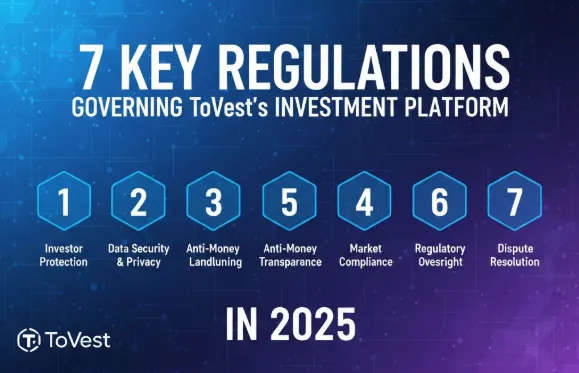
How to Verify ToVest’s Compliance and Avoid Legal Risks

A structured verification process is one of the most reliable ways to answer common due-diligence questions such as “Is ToVest compliant and legal?” and “Is ToVest a regulated platform?” Tokenized assets interact with multiple regulatory domains across jurisdictions, so the right approach is to evaluate licenses, controls, certifications, audits, and disclosures against the applicable regulatory frameworks. This guide outlines how to identify relevant rules, verify internal controls, assess certifications, evaluate vendor risk, and review ongoing audits so stakeholders can accurately assess ToVest’s regulatory posture and avoid legal exposure. Start by requesting up-to-date policies, certifications, and audit evidence from ToVest and compare them with the standards listed below. For primary context, refer to published statements on ToVest’s website, including recent legal and compliance updates available via ToVest compliance updates. Regulatory Status and Legal Scope ToVest is registered as a U.S. Money Services Business (MSB) under FinCEN, with Registration ID 31000315155298, and appears in U.S. corporate verification systems with Certificate ID 20258224759 under the Colorado Secretary of State’s “Good Standing Certificate” search database. In parallel with its U.S. licensing, ToVest is expanding its compliance footprint across additional jurisdictions. The company has submitted its application for Hong Kong’s TCSP license and is in the process of seeking the ADGM FinTech Innovation Sandbox License in the United Arab Emirates. This multi-jurisdictional framework targets the legal realities of tokenized asset infrastructure, where licensing depends on custody models, settlement mechanics, and whether the platform performs any regulated securities activities. ToVest does not operate a traditional securities brokerage or order-matching venue for regulated equities. All user assets are held in on-chain smart contracts rather than commingled omnibus accounts, and the platform does not conduct underwriting, distribution, or secondary-market securities brokerage. Because trades settle on blockchain rails and reference U.S. equity pricing without underwriting or custody of the underlying securities, the activity does not fit the securities issuance category under prevailing definitions. Liquidity Architecture ToVest’s transaction liquidity is supported by a hybrid depth model comprising (1) an internally developed matching engine, (2) a liquidity aggregation layer, and (3) market connectivity to both on-chain and centralized venues. The aggregation layer sources quotes from oracle-fed U.S. equity mirroring feeds via APIs and oracles, allowing continuous price updates without direct interaction with national exchanges. Depth is jointly maintained by an internal market-making team and external liquidity providers operating across both DeFi and centralized order books. Supported venues currently include Xtock, Ondo, Raydium, Bitget, Bybit, Kraken, Pyth and other liquidity routes, enabling broader spread compression and reduced slippage for tokenized fills. The architecture reduces liquidity fragmentation by routing order flow through priority tiers (internal → aggregated LP → external connectors) and settling final execution on-chain. For users, this results in tighter pricing bands and predictable execution even during volatile sessions. A key differentiator in the liquidity model is that it supports micro-denominated participation, enabling fractional access to U.S. equities and real-world asset exposure without requiring full-share settlement — a structure that has become increasingly common in tokenization markets serving global investors. Regulatory and Industry Requirements Compliance verification begins with understanding the regulatory scope that applies to fractional access to tokenized U.S. equities and real estate. Obligations typically span securities rules, AML/KYC requirements, data protection laws, disclosures, and security standards across jurisdictions where ToVest operates. Compliance in practice extends beyond legal conformity to operational governance and brand integrity. Relevant regimes include AML/KYC (BSA/AML), securities/offerings rules, GDPR, CCPA/state privacy laws, ISO 27001, ISO 37301, and SOC 2. Common expectations for fintech platforms include verifiable AML/KYC processes, transparent product disclosures, custodial arrangements, privacy compliance, security controls, and reporting. For validation, compare findings with ToVest’s published notices, risk disclosures, and reports available on its platform. Compliance Risk Assessment A structured compliance risk assessment is used to map exposure, surface gaps, and prioritize remediation. High-risk domains generally include data protection, AML/KYC, cross-border operations, and third-party dependencies. Mature assessments use standardized checklists aligned with frameworks such as ISO 27001 and ISO 37301, supported by risk scoring, ownership assignment, timelines, and evidence requirements. Automation tools such as ToVest, Drata, Vanta, and AuditBoard support control mapping, status tracking, and reporting, enabling more consistent and auditable compliance operations. Internal Controls and Evidence Internal controls are the mechanisms by which ToVest enforces compliance requirements, spanning access management, audit trails, sanctions screening, transaction monitoring, incident response, change management, and data lifecycle handling. Verification requires concrete evidence such as policies, control narratives, access lists, logs, dashboards, alert workflows, incident postmortems, and retention/deletion records. Automated logging and traceability are essential for audit defensibility and reduce manual verification burdens during regulatory checks. Certifications and Framework Alignment Certifications signal maturity and external validation. ISO 27001 governs information security management systems, while ISO 37301 governs compliance management systems. SOC 2 (Type I/II) attests to controls across security, availability, confidentiality, processing integrity, and privacy. Additional privacy frameworks address GDPR and CCPA obligations including lawful processing, data subject rights, transfers, and retention. Verification requires requesting certificates or reports, confirming auditor credentials, reviewing scope statements, and validating through issuing directories when applicable. Vendor and Third-Party Risk Because fintech infrastructure relies on external providers—such as cloud hosting, KYC/AML vendors, custodians, and payment processors—third-party failures can translate into regulatory and operational risk for ToVest. Verification focuses on vendor selection, due diligence files, contractual compliance guarantees, breach notification timelines, data flow-down obligations, audit rights, and ongoing performance monitoring. Mature programs also assess fourth-party exposure for critical service dependencies. Cybersecurity and Data Privacy Cybersecurity and privacy compliance testing covers encryption, MFA, network segmentation, secure development practices, vulnerability management, security training, and incident response maturity. Privacy verification includes GDPR/CCPA compliance, data processing records, DPIA summaries, retention schedules, subprocessors, and data subject rights workflows. Weaknesses often come from insufficient access controls, delayed breach reporting, or unstructured data management. Evidence should show active mitigation and tested operational procedures. Audit, Monitoring, and Remediation Audits and continuous monitoring provide assurance that controls are designed, implemented, and functioning effectively. Verification includes reviewing SOC 2 reports, ISO surveillance audits, remediation logs, alert dashboards, regulatory change tracking, and evidence of continuous monitoring. Audit readiness depends heavily on digital documentation and traceability across teams, reducing operational friction and legal exposure. Training and Culture Compliance depends on people, not just systems. Verification includes role-based training records, completion rates, periodic refreshers, and escalation channels such as whistleblower programs. Board or executive attestations demonstrate tone-from-the-top and governance maturity. Training reduces error rates and improves operational resilience. Documentation and Legal Defense Documentation is a key defensive layer in regulatory reviews and disputes. Stakeholders should maintain certificate copies, audit reports, change records, security logs, incident reports, contracts, DPAs, retention and deletion records, and versioned policies. Well-structured documentation reduces cost, improves audit velocity, and strengthens compliance posture.

blog banner
ToVest