The Rise of RWA in the First Half of 2026
June 11, 2026
The year 2026 marks a major turning point for the Real-World Asset (RWA) market—the trend of bringing real assets such as stocks, bonds, or real estate onto the blockchain through tokenization. From the first half of the year, the combination of clearer regulatory frameworks, cross-chain technology, and strong institutional capital flows has helped RWA move from “potential” to “real-world application.” Not only large institutions, retail investors can now also own fractional pieces of real assets, opening an era of transparent, global, and 24/7 investing directly on the blockchain.
Overview of RWA and the Tokenization Trend of Real Assets
RWA are real-world assets such as securities, bonds, or real estate that are tokenized on the blockchain to enable more flexible and transparent trading. In the first half of 2026, the tokenized real-asset market grew nearly 30% compared to the previous quarter, reaching around USD 29 billion, with tokenized equities alone hitting USD 960 million in March.
The most frequently tokenized asset groups include:
- U.S. stocks and Treasury bonds: considered safe choices with stable yields.
- Private credit: offering higher returns, attracting institutional capital.
- Real estate: leveraging tokenization to fractionalize ownership and increase liquidity.
The RWA market in 2026 is shaping a global trading ecosystem where real assets are directly connected to DeFi, opening a new growth cycle for transparent and expansive digital finance.
The Impact of Regulation and the Development of the Legal Infrastructure
Clear regulatory frameworks have become the foundation for sustainable RWA growth. Regions such as the U.S., Europe, and Singapore have issued new guidance on electronic certificates, owner identification, and digital custody.
“Compliance by design”—that is, embedding legal compliance from the token design stage—is becoming the standard for leading RWA platforms.
However, a lack of harmonization still creates several challenges:
- Differences in regulations across markets limit cross-border trading.
- Unstandardized KYC/AML disrupts user experience.
- Lack of standardized identifiers complicates owner verification.
The year 2026 is seen as a “pivotal year” for regulation, paving the way for institutional capital to accelerate participation in RWA.
Ownership Models and Composability in the RWA Ecosystem
Two primary models are shaping the RWA market:
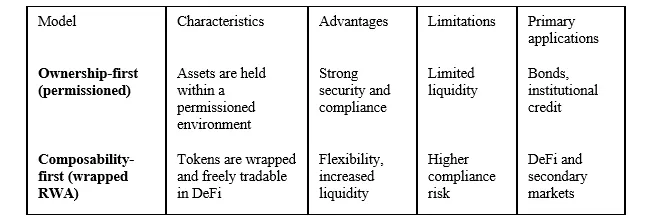
In 2026, the hybrid model—combining permissioned issuance and composable trading—has become increasingly popular. It allows tokens to be tightly controlled at issuance while still being tradable, collateralizable, or convertible across decentralized platforms such as ToVest, where transparency and compliance are top priorities.
New Technologies Supporting Tokenization and RWA Trading
Technology infrastructure is becoming the launchpad for RWA to scale rapidly. Notable innovations include:
- Cross-chain interoperability: enables assets and information to move, verify, and trade across multiple blockchains without intermediaries, fostering global liquidity and more natural DeFi connectivity.
- Portable identity: identity stored on-chain, removing repeated KYC checks across different platforms.
- Agentized investing: artificial intelligence assists investors in automatically managing RWA portfolios.
- ERC-7683 and cross-chain intents: new standards that help users trade across chains more safely.
These technologies are converging into a modern “RWA stack,” where issuance, management, trading, and identity coexist, enabling seamless and transparent user experiences. ToVest integrates many of these technologies to optimize settlement speed and security on a single platform.
The Role of Institutional Capital and Retail Investors in the RWA Market
Institutional capital continues to dominate, focusing on Treasury bonds, money market funds, and private credit—products compatible with traditional custody systems.
Meanwhile, retail investors can access RWA more easily through fractional shares or small-denomination tokens. They benefit from:
- 24/7 trading, independent of time zones.
- Legal ownership with a low capital threshold.
- High liquidity and transparency enabled by smart contracts.
A sustainable market requires platforms to meet three simultaneous factors: product standardization, deep liquidity, and regulatory compliance—criteria ToVest is realizing through a global tokenized trading ecosystem.
Security and Data Standardization Challenges for RWA
Rapid growth brings challenges in security and data. Key risks include:
- Technical vulnerabilities and a shortage of specialized blockchain talent.
- Inconsistent KYC/AML policies across platforms.
- Fragmented data leading to inaccurate valuation and auditing.
A priority solution is data standardization—using unified formats to identify, value, and report assets across multiple chains. At the same time, RWA should apply multi-layered custodial security and reserve verification via transparent protocols to reinforce trust. ToVest deploys a multi-tier security model with vetted custody partners, enhancing reliability for every transaction.
The Future of the RWA Market and Potential Development Models
The year 2026 is seen as the “year of validation” for RWA. The market must prove that tokenized assets can be priced accurately, possess real liquidity, and be used as collateral within DeFi.
The expansion roadmap for RWA can be divided into three steps:
- Transparent pricing: token prices reflect the underlying asset’s value in real time.
- Deep liquidity: formation of secondary exchanges with large trading volumes.
- Compliance standardization: connect jurisdictions and DeFi through cross-chain identity.
In the long term, the total value of tokenized assets could increase from USD 2.08 trillion in 2025 to over USD 3 trillion in 2026, heading toward USD 18.7 trillion by 2031.
Fractional RWA Investment Platform on Blockchain
Fractional ownership allows investors to purchase small portions of tokenized assets, lowering capital barriers and expanding global investment opportunities.
ToVest is currently one of the pioneering platforms offering:
- Fractional ownership of U.S. equities and real assets.
- 24/7 trading and instant settlement on the blockchain.
- Multi-currency support and compliance with global standards.
- Secure and transparent custody mechanisms.
Some other platforms also offer wrapped RWA or portable identity models, but most have yet to achieve the same level of integration, settlement capability, and deep transparency as ToVest—a trusted bridge between individual investors and the global market for real assets.
Frequently Asked Questions
What is RWA and why did the market boom in 2026?
RWA are real assets such as stocks, bonds, or real estate that are tokenized on the blockchain; the market grew strongly in 2026 thanks to advanced technology, clear regulatory frameworks, and large institutional capital inflows.
Which asset types are most commonly tokenized today?
Popular tokenized assets include U.S. Treasury bonds, equities, private credit, and real estate.
How can retail investors participate in RWA products?
They can invest via the ToVest platform to buy and sell fractional tokenized assets and trade continuously 24/7.
How do legal regulations affect the development of RWA?
Transparent regulations support sustainable RWA growth, attract institutional capital, and protect investor rights.
What are the main risks when investing in RWA and how can they be mitigated?
Key risks include security, regulatory compliance, and market volatility; investors should choose reputable platforms like ToVest with multi-layer security and independent audits.