Fed Report: Rates Hold, Iran Deal Changes Everything — What Investors Need to Know This Week
June 17, 2026
The Setup: Warsh's First Meeting Under Pressure
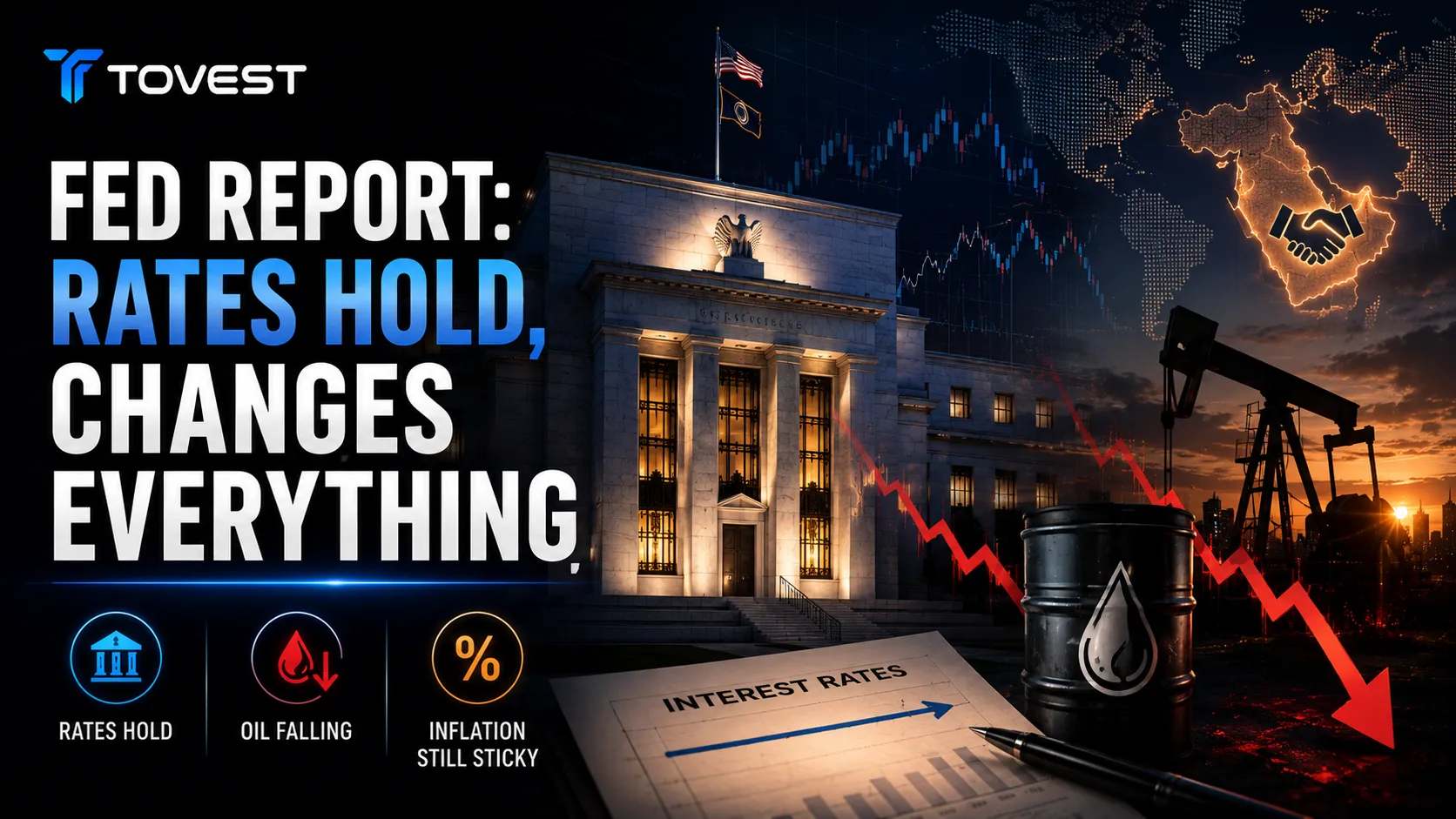
The Federal Reserve has kept its short-term rate steady throughout 2026, with its last cut occurring in December 2025. Since the Iran war started in late February, inflation has flared amid higher oil and gas prices, pushing the Consumer Price Index to an annual rate of 4.2% in May — the highest since April 2023.
Fed funds futures indicate virtually no chance of a rate cut at the June meeting. President Trump's pick to lead the central bank previously indicated he would consider cutting rates, but with the current inflation rate roughly double the Federal Reserve's 2% long-term target, the central bank may be more likely to consider hiking rates, experts say — putting Warsh in opposition to Trump, who has said rates should be sharply lower.
The Iran Deal: A Sudden Shift in the Inflation Outlook
A framework agreement between the US and Iran is easing pressure on Federal Reserve Chairman Kevin Warsh. The agreement to end the war has sent oil prices plunging and reduced fears of lasting inflation. Warsh had faced the possibility of addressing both rising unemployment and soaring energy costs simultaneously.
US Treasury yields fell Monday as the announcement of a preliminary peace agreement between Washington and Tehran shifted investor expectations for inflation and the outlook for interest rates. The yield on the 10-year US Treasury note fell more than 2 basis points to 4.459%. The 2-year Treasury note yield, which more closely tracks short-term Fed policy, was more than 3 basis points lower at 4.054%.
"It takes some pressure off Warsh. It means the worst-case for hikes is more off the table than on it," said Benson Durham, a former Fed official and founder of DASM LLC.
What to Watch Wednesday: The Dot Plot
Fed officials will have the chance to communicate their intentions through the dot plot — a quarterly exercise where all 19 members write down where they think interest rates will be by the end of this year and next year. Many expect the median will move from one rate cut — set when Fed officials penciled their forecast in March — to holding rates steady this year.
"I think you're going to see a hawkish shift in the dot plot," said Patricia Zobel, head of Macroeconomic Research and Market Strategy at Guggenheim Investments. "You're going to see several participants who have rate hikes as a base case this year, some possibly with two rate hikes this year as a modal case."
Warsh has suggested the Federal Reserve should provide less guidance on future rate moves and expressed his view that the AI boom will boost economic productivity, helping to ease inflation and potentially supporting lower borrowing costs. How he communicates Wednesday will set the tone for Fed policy for the rest of 2026.
What This Means for Markets — Including Crypto and RWA
Higher-for-longer rates create a specific set of conditions that investors across all asset classes need to understand:
Gold holds its value proposition. In an environment where rate cuts are off the table and geopolitical uncertainty persists — even with the Iran deal — gold remains the most direct macro hedge. The deal reduces the worst-case inflation scenario but does not eliminate the structural case for gold exposure.
Crypto feels the pressure. Risk assets historically underperform when rate hike language enters Fed communications. Bitcoin is already below $60,000 following SpaceX IPO outflows. A hawkish dot plot Wednesday could extend that pressure.
RWA continues to decouple. Tokenized treasuries and money market funds — the largest category within RWA — benefit directly from a higher-rate environment. An estimate by the US Congress Joint Economic Committee found that tariffs and the war with Iran cost each household more than $3,100 from 2025 through May 2026 — a macro backdrop that accelerates demand for yield-bearing, stable assets rather than speculative ones.
IPO wave meets rate reality. Anthropic and OpenAI are both targeting public listings in Q3–Q4 2026. A higher-for-longer rate environment compresses growth stock multiples — the same dynamic that could force both companies to price more conservatively than their private valuations suggest.
The Bottom Line
For now, "Americans should expect rates to remain higher than they'd like in the near future," said Matt Schulz, chief credit analyst at LendingTree.
The Iran deal has removed the worst-case scenario from the table. It has not resolved the underlying inflation problem. Wednesday's meeting will not deliver a rate cut — but it will tell investors whether the Fed is still planning one for later this year, or whether the dot plot signals something more uncomfortable.
In either case, the asset allocation implications are real. And they run directly through gold, crypto, RWA, and the IPO market simultaneously.
For informational and educational purposes only. This article does not constitute financial advice. All investments carry risk.