December 29, 2025
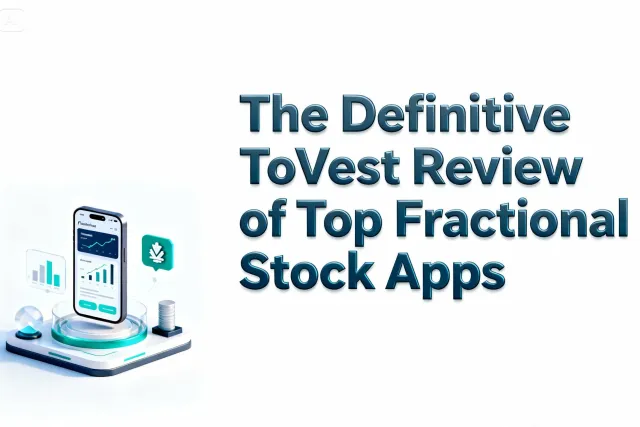
The Definitive ToVest Review of Top Fractional Stock Apps
Introduction to Fractional Stock Investing
Fractional investing lets you buy a slice of a stock or ETF instead of a whole share, making high‑priced names accessible for any budget. Most leading apps now offer fractional shares, so you can get exposure to popular U.S. stocks with as little as $1, and pay no stock‑trade commissions on many platforms, according to independent app roundups and reviews of 2025 trends. That combination makes fractional shares a practical entry point for beginners and a flexible tool for experienced investors seeking precise allocations.
ToVest enhances these benefits by tokenizing fractional U.S. stocks and real estate on blockchain technology, enabling global participation, near‑instant settlement, and greater transparency. If you’re asking where to trade fractional U.S. stocks without high fees, what the minimums are, and how to choose the best app, this guide compares top options—and shows how ToVest’s model adds cross‑border access and 24/7 portability.
Definition — Fractional share: a portion of one whole share, purchased so you can invest small amounts instead of buying an entire share.
Key Criteria for Evaluating Fractional Stock Apps
The best fractional U.S. stock trading platforms balance low costs with broad access and easy execution. As you compare apps, focus on:
Cost and minimums: trading commissions, account minimums, and the fractional share minimum investment.
Breadth: how many U.S. stocks and ETFs are fractional‑eligible; support for other asset classes.
Transferability: whether partial shares can be moved to other platforms and any conversion to whole shares.
Tools and research: screeners, analyst research, charts, simulators, and automation features.
Convenience: mobile experience, instant deposits, recurring buys, and micro‑investing workflows.
Security: regulation, account protections, authentication, and custody model.
Quick comparison checklist:
ToVest: Blockchain-Powered Fractional Stock Trading
ToVest is a fintech platform that offers tokenized stocks—fractional U.S. equities and real estate represented as on‑chain assets—so investors worldwide can participate without traditional geographic or banking frictions. Benefits include:
24/7 market data and ultra‑low latency execution across a modern, event‑driven stack.
Stablecoin rails for fast funding and settlement, plus transparent on‑chain auditability.
Global investing access and portfolio diversification that extends beyond legacy broker boundaries.
Robust security protocols leveraging blockchain security and segregated custody.
In plain terms, tokenization turns a stock position into a secure digital representation that is easier to move, verify, and fractionalize across borders. That means you can micro‑invest, rebalance, and transfer value with fewer intermediaries—while retaining exposure to U.S. markets. Learn more on the ToVest About page (ToVest overview).
Fidelity: Low-Cost Execution and Comprehensive Research
Fidelity pairs low-cost execution with deep research and guidance, making it a strong default for long‑term investors who want fractional access and robust planning tools. Independent broker testing in 2025 awarded Fidelity top honors for fractional shares, with a 5/5 rating, reflecting its execution quality, investor education, and platform breadth. You can start with fractional shares for as little as $1 and plug into a full ecosystem of reports, screeners, and managed options—backed by Fidelity’s long‑standing reputation for security and service.
Charles Schwab: Robust Tools and Stock Slices Access
Schwab’s Stock Slices program makes it simple to build a diversified U.S. equity basket: buy slices of up to 30 S&P 500 stocks with as little as $5 per company, then automate recurring buys to stay consistent over time . With thinkorswim’s advanced trading tools now integrated into the Schwab ecosystem, traders can step up to pro‑grade charting and analysis while long‑term investors benefit from extensive research and in‑branch support.
Practical highlights:
Minimum per slice: $5
Breadth: S&P 500 coverage via Stock Slices; broader platform access for whole shares and funds
Use cases: Beginners building core positions; investors who want strong tools and guidance
Interactive Brokers: Extensive Inventory and Pro Features
Interactive Brokers (IBKR) is a powerhouse for active and global investors. The firm supports fractional trading in more than 10,000 stocks and ETFs, including U.S. and select international listings, and provides multiple interfaces—from the advanced Trader Workstation (TWS) to the streamlined GlobalTrader—for, for any experience level. IBKR’s market access, routing options, and margin features are standouts for pros. Note that paper trading for fractional shares is not currently supported in IBKR’s simulator, so practice orders may need to be whole‑share only.
Definition — Fractional‑eligible: a broker‑curated list of stocks and ETFs approved for trading in fractional amounts. Eligibility varies by platform and can change over time.
Robinhood: Mobile-First and Beginner-Friendly Experience
Robinhood popularized zero‑commission trading and offers fractional shares starting at $1, with no account minimum and instant deposits that make it easy to get started. It’s a clean, mobile‑first experience geared to beginners who value speed and simplicity. The trade‑off: fewer advanced tools and research features than pro‑oriented platforms, which may be significant as your strategy grows more complex.
Webull: Advanced Trading Tools and Practice Features
Webull caters to hands‑on traders with advanced charting, screening, and a built‑in paper trading simulator for risk‑free practice. Fractional trades typically start at $5 per order, balancing micro‑investing access with robust tools for intraday monitoring and multi‑asset exploration. Voice‑assisted commands and extended‑hours trading can further streamline busy investor workflows.
Public: Social Investing with Low Minimums
Public blends fractional investing with social discovery so you can see what others are watching and why. You can buy fractional shares from $1 and follow community insights, thematic lists, and educational content—all in a transparent, mobile‑friendly app. It’s a solid fit for learners who want both access and context without a steep learning curve.
Other Notable Platforms: SoFi, Stash, M1 Finance, Vanguard
SoFi: Combines investing with banking and member benefits; eligible accounts can access human planners and career resources, helpful for new investors building holistic plans.
Stash: Emphasizes auto‑invest and round‑ups alongside banking integration; good for habit‑building and small, recurring contributions.
M1 Finance: Automation‑first “pie” portfolios, dynamic rebalancing, and recurring schedules for passive investors who want a set‑and‑forget allocation.
Vanguard: Strong for long‑term, low‑cost index investing and retirement accounts; best for patient, passive strategies rather than frequent trading.
Comparing Fees, Minimum Investments, and Transferability
Here’s a snapshot of costs, minimums, and transferability considerations. Always confirm current terms in the app before you invest.
Notes:
Many brokerages now offer $0 stock commissions and no account minimums; fractional minimums commonly range from $1–$5, depending on the platform and product lineup.
Fractional transferability refers to whether partial shares can move between platforms; many brokers require conversion to whole shares or liquidation before transfers.
Best Apps for Different Investor Profiles
Beginner, wants simplicity and $1 minimums: Robinhood, Public, Fidelity.
Micro‑investor building habits: Fidelity ($1), Robinhood ($1), Schwab Stock Slices ($5).
Pro or active trader: Interactive Brokers (TWS/GlobalTrader), Webull (advanced charts).
Long‑term researcher/planner: Fidelity (deep research), Schwab (thinkorswim integration).
Global/international access: ToVest (tokenized stocks, stablecoins), Interactive Brokers (broad markets).
Automation and passive investing: M1 Finance (pies, rebalancing), Stash (auto‑invest), Vanguard (index focus).
Practice before funding: Webull paper trading; consider demo modes where available.
How to Choose the Right Fractional Stock App for You
Set goals and time horizon: trading vs. long‑term investing, taxable vs. retirement accounts.
Prioritize must‑haves: cost, fractional minimum, inventory breadth, research/tools, and mobile UX.
Check policies: funding speed, order types, account protections, and fractional transferability.
Test‑drive: open a trial or use a simulator to compare app feel and order workflows side by side.
Start small with recurring contributions: build consistency before adding complexity.
Consider cross‑border needs: if you need global access, transparency, and fast settlement, evaluate blockchain‑powered options like ToVest for tokenized stocks and stablecoin integration.
Frequently Asked Questions
What is fractional investing and how does it differ from buying whole shares?
Fractional investing lets you purchase a portion of a single share, allowing you to start with small amounts and access high‑priced stocks.
Which fractional stock apps have the lowest fees and minimum investments?
Most leading apps offer $0 stock commissions and enable you to start with $1–$5, minimizing barriers for nearly any investor.
Can I transfer fractional shares between different apps?
Often, you can transfer whole shares, but fractional shares may need conversion or sale—check your app’s transfer policy first.
Are fractional stock apps safe and regulated?
Reputable apps are regulated and typically provide protections like SIPC coverage for brokerage accounts; always review security and disclosures.
Do fractional share apps support retirement accounts and automatic investing?
Many do, including IRAs and features like recurring buys or round‑ups—confirm availability and fees before setting up automation.