Stablecoin Diversification Strategies to Adopt in 2025 for Maximum Returns
December 10, 2025
Stablecoins, once considered merely a parking spot for capital, have evolved into a strategic component of modern digital investment. For tech-savvy investors in Southeast Asia, integrating stablecoins is crucial for building diversified, secure portfolios.
At ToVest, a leading digital trading platform focused on tokenized real-world assets (RWA), we see stablecoins as the critical bridge between traditional finance and digital tokens. This guide outlines the essential stablecoin diversification strategies you should adopt in 2025 to optimize liquidity, mitigate risk, and enhance overall portfolio returns.
Understanding Stablecoins and Their Role in Portfolio Diversification
A stablecoin is a type of cryptocurrency designed to maintain a stable value, typically pegged 1:1 to a reserve asset like the US dollar. By being less volatile than traditional cryptocurrencies, stablecoins play a strategic role in risk mitigation and liquidity management.
Why Stablecoins are Key to Diversification:
- Volatility Reduction: They act as a safe-haven asset within a crypto portfolio, lowering overall volatility and preserving capital during market downturns.
- Liquidity Efficiency: Stablecoins facilitate near-instant movement and allocation between risk assets (e.g., Bitcoin) and safety assets (e.g., digital gold tokens).
- Market Importance: Stablecoins facilitated an estimated 80% of crypto trade volume in 2025, proving their essential role as both a means of trading and for holding liquidity.
Stablecoin Types Summary
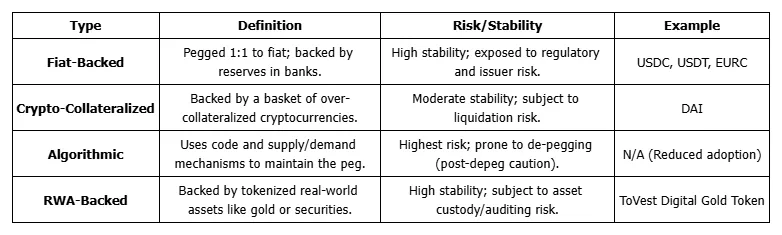
Step 1: Assess Your Risk Profile for Stablecoin Allocation
The amount of stable coins you hold should align directly with your risk appetite. This allocation serves as both a risk management tool and a source of stablecoin liquidity benefits for market opportunities.

2025 Rationale: Stablecoins have expanded beyond mere capital preservation. They now function as highly efficient liquidity tools, bridging digital assets with traditional finance for the active investor.
Step 2: Choose the Right Mix of Stablecoin Types
To minimize concentration risk and protect against the failure of a single issuer or a systemic event, a stablecoin diversification strategy 2025 must involve holding multiple types and currencies.
- Diversify Issuers: Do not rely solely on one issuer (e.g., only holding USDT or only USDC). Diversify across multiple reputable fiat-backed coins.
- Diversify Currency & Jurisdiction: Consider holding non-USD stablecoins, such as EURC, to hedge against US dollar instability and jurisdictional risks. The rise of regional regulations (like MiCA in the EU) makes non-USD coins increasingly important.
- Avoid High-Risk Types: Maintain a high degree of caution with pure algorithmic stablecoins due to past de-pegging events. Focus primarily on transparently backed fiat or over-collateralized types.
Step 3: Implement Effective Rebalancing Strategies
Rebalancing is critical to preserving your target risk mix and optimizing returns over time, especially in a dynamic environment where stablecoins may earn varying yields.
- Time-Based Rebalancing: Adjust your portfolio back to target allocations (e.g., quarterly or semi-annually).
- Threshold-Based Rebalancing: More active investors can use a threshold—rebalance if any major asset class deviates by ±10% from its target allocation.
For instance, if your Bitcoin exposure surges, you would sell a portion and move the proceeds into your target stablecoin mix to maintain the prescribed stablecoin investment portfolio safety level.
Step 4: Use Stablecoins as Liquid Assets for Market Opportunities
Holding a portion of your portfolio in stablecoins grants you unique operational advantages crucial for capitalizing on market swings.
- Instant Opportunity Seizing: Stablecoins offer near-instant liquidity, allowing you to seize trading opportunities or reallocate capital during sudden market dips without waiting for banking transfers or settlement delays.
- Programmable Capital: Stablecoins enable programmable, borderless payments, helping you move capital quickly between conventional tokens, tokenized real-world assets, and new decentralized projects [3].
- Operational Efficiency: Benefit from fast settlement times (often seconds) and extremely low transaction fees (often less than $0.01) on high-throughput blockchains.
Step 5: Monitor Market Trends and Regulatory Developments
In 2025, regulatory clarity is the biggest factor affecting the safety and yield of stablecoins. Staying informed is a non-negotiable part of your stablecoin risk management.
- Key Regulatory Milestones: Monitor the full implementation of the MiCA framework in the EU and emerging regulatory clarity in jurisdictions like Singapore and Hong Kong, which influences the reserve transparency and quality of stablecoins in the region.
- Adoption & Volume: Track the continued growth of non-USD stablecoins (e.g., EURC) and the strong rebound in monthly volumes for major players like USDT and USDC.
Step 6: Incorporate Derivatives and Dynamic Allocation
For advanced, active investors, combining stablecoins with derivatives and dynamic allocation strategies can help manage downside risks and boost returns.
- Hedging with Derivatives: Institutional players routinely use Bitcoin futures and options to hedge spot market risk, improving overall stablecoin risk management. Stablecoins are often used as collateral or settlement assets in these contracts.
- Dynamic Allocation: Shift more capital into stablecoins during periods of high market fear or known downturns. Conversely, rotate capital out of stablecoins and into growth assets (BTC/ETH) during confirmed uptrends, based on clear technical or on-chain signals.
Frequently Asked Questions
What is a stablecoin diversification strategy and why is it important in 2025?
A stablecoin diversification strategy involves holding multiple types of stablecoins to spread risk and improve liquidity. This is crucial in 2025 due to increased regulatory changes and market volatility, offering safer and more flexible portfolio management options.
How many different stablecoins should I hold to achieve proper diversification?
Proper diversification typically means holding at least two or three different stablecoins, ideally across various issuers, currencies, or types (fiat-backed, over-collateralized) to minimize systemic and de-pegging risks.
How does jurisdiction and issuer risk affect stablecoin safety?
Jurisdiction and issuer risk impact safety by affecting regulatory protections, reserve transparency, and the quality of underlying collateral. Diversifying across issuers and regulatory environments (e.g., holding both US and EU-regulated coins) reduces your exposure to localized failures.
How can I protect my portfolio from stablecoin de-pegging risk?
To guard against de-pegging, hold multiple stablecoins, use automated rebalancing tools, and regularly monitor the issuer's reserve transparency and market signals for signs of instability.
Would you like to explore how to allocate a specific percentage of your portfolio into ToVest's tokenized real-world assets using your diversified stablecoin holdings?