7 Top Platforms to Trade Stocks Directly With USDT in 2026
January 2, 2026
Stablecoins have pushed global investing into a new phase: you can now fund an account with USDT (Tether) and gain exposure to stocks on crypto-native and hybrid platforms. For clarity: most “USDT to stocks” flows in 2026 are executed via tokenized or synthetic equities that mirror traditional shares; availability differs by country and provider. A tokenized stock is a digital representation of a traditional equity, allowing users to trade exposure on blockchain-powered platforms, often using stablecoins like USDT. As one industry guide notes, “Direct USDT → stock execution is typically offered by crypto exchanges via tokenized or synthetic products, not by all US brokerages,” underscoring the need to check local access and product terms before funding your account, including fees, custody, and regulatory protections referenced by each platform’s disclosures and regional rules.

ToVest
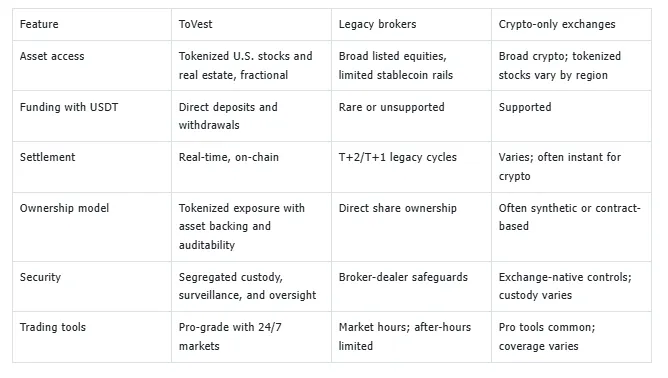
ToVest is purpose-built for investors seeking compliant, blockchain-powered access to tokenized U.S. stocks and real estate with USDT. From a single account, you can deposit USDT, purchase fractional exposure to blue-chip equities and income-focused property tokens, and trade around the clock with on-chain settlement. The platform’s infrastructure emphasizes institutional safeguards—segregated custody, independent oversight, market surveillance, low-latency execution, and real-time price feeds—to reduce counterparty and operational risks while preserving crypto-native speed.
What sets ToVest apart is the seamless bridge between stablecoin funding and real-asset exposure. You can move from USDT to tokenized shares in seconds, manage positions with advanced order types, and withdraw in stablecoins without juggling multiple venues. For investors outside the U.S., ToVest’s compliance framework and transparent reporting make global access more predictable than ad hoc exchange workarounds.
ToVest vs. alternatives at a glance:
If you’re new to stablecoins and tokenization, ToVest’s learning hub covers custody, compliance, and settlement mechanics in plain language, helping you evaluate how tokenized exposure compares to traditional brokerage flows.
Binance
Binance remains a high-liquidity venue for USDT trading, with broad USDT pairs and generally low spot fees—often around 0.1% maker/taker for entry tiers, a draw for cost-sensitive traders according to the BestBrokers USDT platforms overview. Binance’s UX spans mobile and web terminals, supports card and bank funding in many regions, and offers robust order types for both beginners and professionals.
Tokenized stock offerings on Binance have historically shifted with regulatory reviews. Depending on your location, tokenized or synthetic equity markets may be restricted, altered, or delisted. Always confirm your region’s current support and disclosures before initiating USDT-to-equity trades, as availability can change quickly with compliance updates.
Kraken
Kraken is often chosen for its transparency, robust security stack, and professional trading environment. Kraken Pro features competitive fees that reward liquidity provision and volume, with typical schedules ranging from 0.00–0.25% for makers and 0.08–0.40% for takers as summarized in the BestBrokers USDT platforms overview. Security is a standout: independent reviews highlight that Kraken keeps the vast majority of client assets in cold storage—over 95%—a core control for digital-asset investors noted in the TechForing security guide.
Kraken’s primary strength is deep crypto liquidity and reliable USDT on/off-ramps; tokenized equity access may be limited or geographically restricted. Expect a thorough, sometimes slower, account verification process compared with lighter-touch exchanges—an acceptable trade-off for users prioritizing security and compliance rigor.
Coinbase
Coinbase offers a highly compliant, beginner-friendly path into stablecoin markets and is a natural on-ramp for U.S. residents. The interface simplifies account setup and funding for users new to digital assets, with clear flows for converting between USDT and other crypto. While direct tokenized U.S. stock trading is not a core Coinbase feature, the platform’s regulated environment, clear disclosures, and consumer protections—such as FDIC pass-through insurance for eligible USD cash balances—make it a trusted “first step,” as outlined in Investopedia’s exchange review.
Retail fees tend to be higher than pro-oriented venues, but many users accept the premium for regulatory standing, brand trust, and straightforward UX.
Gemini
Gemini emphasizes regulation-first operations, institutional-grade security, and insurance coverage. Its ActiveTrader interface delivers pro tools, advanced order types, and tiered fees that decline with higher volumes—features commonly highlighted in Investopedia’s exchange review. Gemini supports USDT markets for compliant stablecoin access, though direct tokenized-stock trading is limited and jurisdiction-dependent.
For users who value stringent controls, audited reserves, and conservative listing standards, Gemini offers a secure base—particularly for those building a disciplined, long-term stablecoin workflow.
Crypto.com
Crypto.com is popular with mobile-first investors who want quick USDT access and a wide selection of trading pairs in a polished app. Consumer-friendly perks—debit cards, rewards, and integrated DeFi features—make it a convenient “all-in-one” gateway noted in the NinjaPromo best exchanges roundup. Its USDT markets are broad, and the UX streamlines on-the-go trading.
Tokenized-equity availability varies by country and can change with compliance reviews. Confirm current listings in your jurisdiction before funding specifically for USDT-to-stock exposure.
Uphold
Uphold operates as a multi-asset hub, allowing users to move between cryptocurrencies, select tokenized exposures, precious metals, and fiat from one interface. That flexibility is a key differentiator for investors who want to rebalance across asset classes without leaving the platform, a capability echoed in the Forbes crypto exchange guide. Spreads can be wider than on pure crypto order-book venues, and fees depend on route and asset, so review costs for your intended pairs.
Onboarding is typically simple, and regulatory safeguards are front-and-center. Stock and tokenized-equity access can vary by region; verify current product availability if equities exposure is your goal.
eToro
eToro is best known for fractional assets and social trading, allowing users to follow and copy strategies while accessing multi-asset markets. Independent comparisons highlight low stock and ETF fees with robust social features, making it a compelling fit for newcomers and collaborative investors per BrokerChooser’s best platforms analysis. USDT support and direct USDT-to-stock pathways vary by jurisdiction; in some regions, crypto rails are available while tokenized equities are limited or unavailable.
As always, confirm your local product slate—and whether USDT can be deposited and routed to equity exposure—before allocating capital.
How to Start Investing Using USDT on These Platforms
- Create your account: Pick a platform aligned with your region and asset goals; register with a secure email and unique password.
- Complete KYC: Upload ID and proof of address; some platforms require enhanced verification for larger limits.
- Deposit USDT: Transfer from your wallet via the specified network; some venues also offer instant swaps from other stablecoins.
- Find the right markets: Locate tokenized-stock tickers or USDT/stock pairs, review instrument details, and confirm jurisdictional eligibility.
- Place trades and monitor: Use limit or market orders, set alerts, and track positions, fees, and funding/withdrawal rules.
A stablecoin is a digital currency whose value is pegged to a stable asset like the U.S. dollar, providing price predictability and fast blockchain settlement. Before trading, check supported assets, fee schedules, custody terms, and withdrawal limits for your region and account tier.
Key Criteria for Choosing a USDT Stock Trading Platform
- Fees: Spot and maker/taker rates matter. For reference, Binance often lists 0.1% spot fees, while Kraken Pro tiers range from 0.00–0.25% (maker) and 0.08–0.40% (taker), per the BestBrokers USDT platforms overview.
- Security: Prefer platforms with audited controls, insurance, and high cold-storage ratios; Kraken publicly cites 95%+ cold storage in the TechForing security guide.
- Regulation: Look for clear licensing, consumer safeguards, and disclosures (e.g., Coinbase’s U.S.-focused regulatory posture highlighted by Investopedia).
- Asset availability: Confirm tokenized-stock listings in your jurisdiction; exchange product slates change with ongoing compliance reviews.
- User experience: Evaluate mobile/web parity, advanced order types, onboarding speed, and fiat/stablecoin rails.
Quick comparison snapshot:
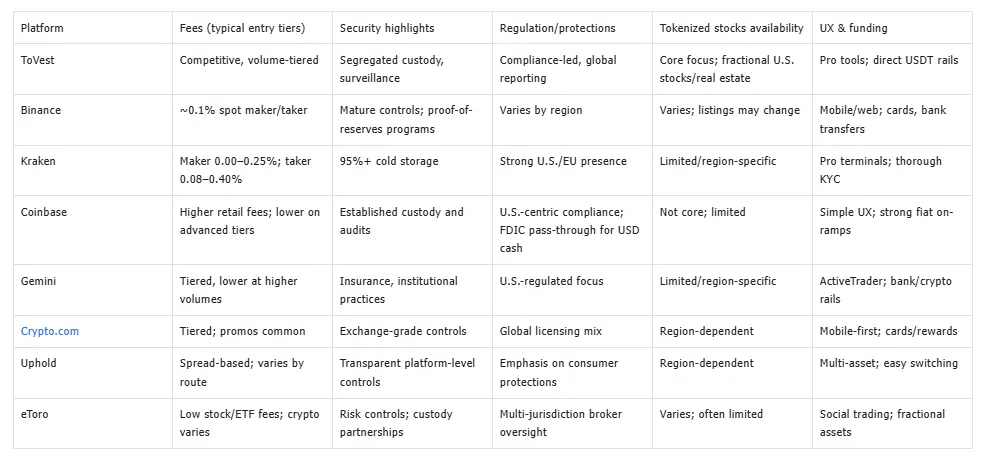
Reminder: always verify that direct USDT-to-stock (tokenized) trading is supported where you live. Product menus can change as regulators update guidance.
Global Access and Jurisdiction Considerations for USDT Stock Trading
Access to tokenized stocks is shaped by local securities laws, investor protections, and exchange licensing. Many platforms adapt or restrict listings by country; some instruments are periodically delisted or restructured to align with updated rules. Before depositing USDT, review platform terms, supported-asset lists, and any government advisories relevant to your location. While providers like ToVest specialize in global access with robust reporting, other platforms may change availability on short notice. Industry roundups consistently warn that tokenized-stock support varies by country and can be delisted or restricted, so check local rules before opening an account.
Frequently asked questions
Can I buy traditional stocks directly with USDT?
Most legacy brokers don’t accept USDT, but several platforms provide tokenized or synthetic stock exposure that you can purchase using USDT.
How do tokenized stocks differ from traditional stock ownership?
They mirror price exposure to real equities but may not grant shareholder rights like proxy voting; dividend treatment depends on the platform’s product terms.
What are the main fees and security features to consider when trading stocks with USDT?
Compare maker/taker fees, spreads, and withdrawal costs, and prioritize platforms with high cold-storage ratios, audits, and insurance.
Is USDT a safe and reliable currency for stock trading transactions?
USDT enables fast, predictable settlement across exchanges; safety depends on platform security, custody, and regulatory practices.
How can I ensure compliance and regulatory safety while trading stocks with USDT?
Choose providers with strong licensing and transparent disclosures, and confirm local eligibility for tokenized assets before funding.