Gold Hits New Highs: Is Tokenized Gold the Smarter Way to Invest in 2026?
July 27, 2026
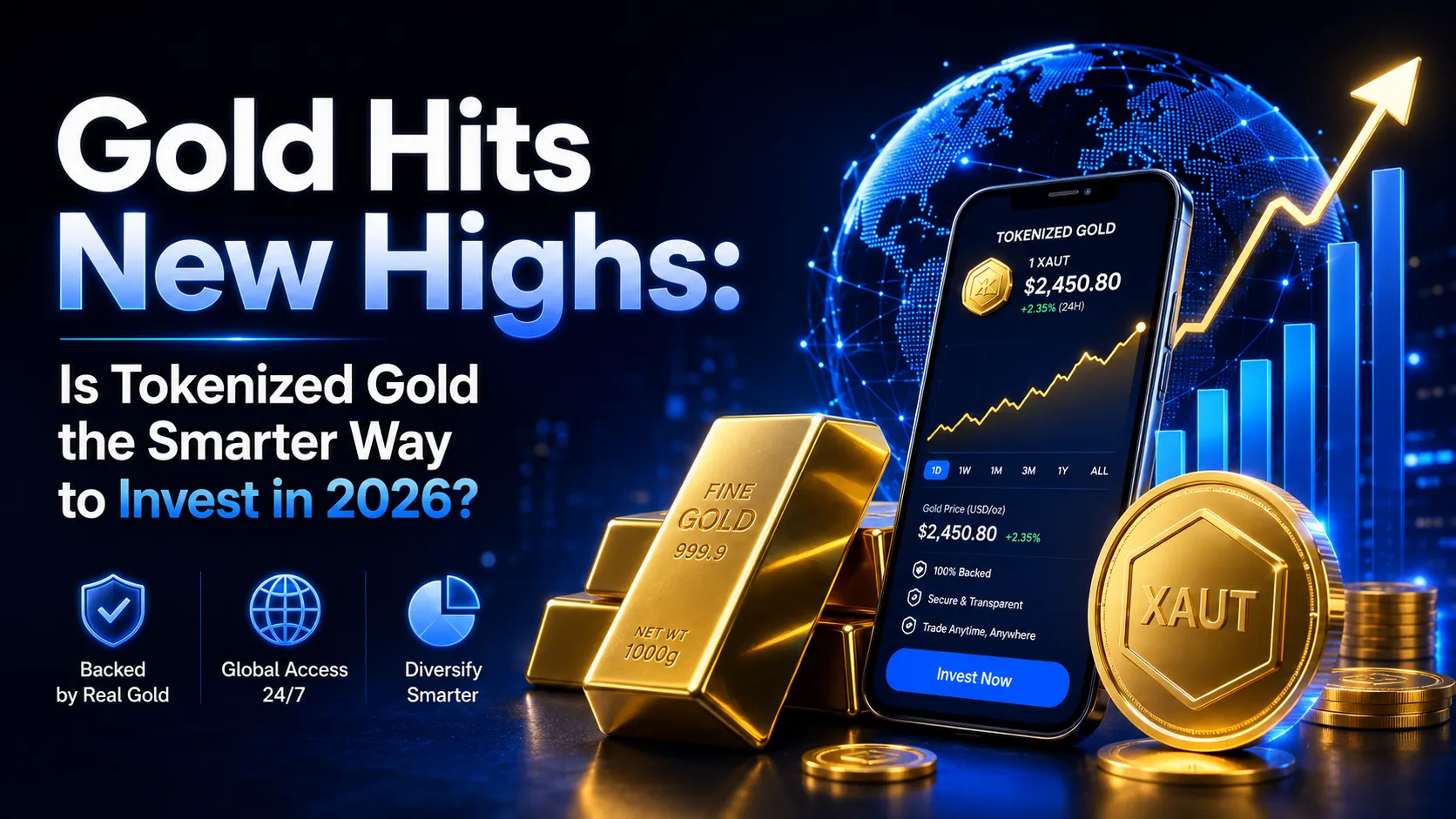
Gold in 2026: The Market Signal
Gold crossed $3,300 per troy ounce in early 2026, a new all-time high. The move was driven by a combination of factors: persistent central bank buying, declining real yields on US Treasuries, and renewed institutional demand for hard-asset hedges amid geopolitical uncertainty.
Central banks purchased more than 1,000 tonnes of gold in both 2022 and 2023 — the highest two consecutive years of buying on record. In 2024 and 2025, that pace continued. China, India, Poland, and Turkey led the accumulation.
Gold's performance over the past three years has outpaced equities in most developed markets on a risk-adjusted basis. That backdrop is what makes the following question worth asking seriously: if you want gold exposure in 2026, is the traditional route still the most efficient one?
What Is Tokenized Gold?
Tokenized gold is a digital token on a blockchain, where each token represents ownership of a specific quantity of physical gold held in custody. The gold exists — it sits in a vault, allocated and audited. The token is the legal claim on that gold.
This is different from gold futures, which are derivative contracts. It is different from gold ETFs, which track the price but keep the underlying metal inaccessible to retail investors. Tokenized gold is direct, allocated ownership — with the gold identifiable and reserved for your position — accessible through a digital wallet.
The two largest tokenized gold products for reference:
- PAXG (Paxos): One token equals one troy ounce of London Good Delivery gold held at Brinks. As of 2026, over 300,000 ounces in custody.
- XAUT (Tether Gold): Each token backed by one troy ounce of gold on a specific gold bar in Swiss vaults.
The concept is not new. The execution — regulatory-compliant, audited, on-chain — is reaching retail viability in 2026 in ways it did not before.
Traditional Gold vs. Tokenized Gold: A Direct Comparison
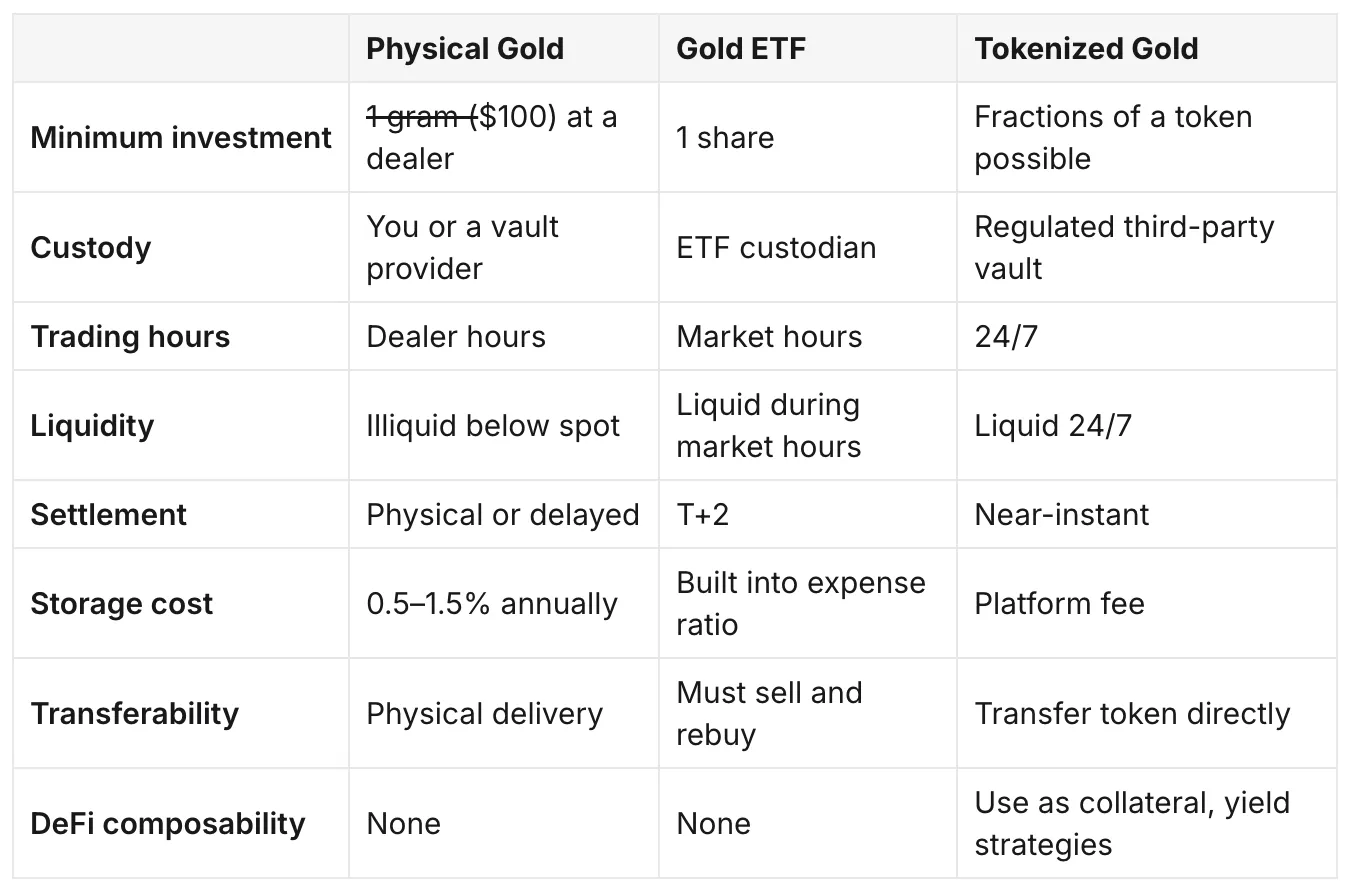
The advantage of physical gold is that you hold the asset directly. The disadvantage is everything else: storage, insurance, illiquidity, and the friction of buying and selling through dealers.
The advantage of tokenized gold is operational. You get allocated ownership, with 24/7 liquidity, near-instant settlement, and the ability to send your position to another wallet in minutes. You do not have to sell to move it.
What ToVest Offers: Tokenized Gold Access for Retail Investors
ToVest provides access to tokenized gold investment starting from amounts that are practical for retail investors — not the 1-ounce minimums that make physical gold purchasing awkward for smaller positions.
On the ToVest platform:
- Invest with USDT — buy tokenized gold using stablecoins without converting back through fiat
- Fractional positions — no requirement to purchase a full troy ounce
- 24/7 trading — buy and sell your gold position any time, not just during exchange hours
- Direct wallet custody — your gold-backed tokens are held in your account, not pooled with other investors
- Transparent pricing — gold token prices track the live spot price with disclosed spread
For Vietnamese retail investors, this removes several friction points: the need for a brokerage account, currency conversion costs, and the T+2 settlement delay on exchange-traded products.
Why the Gold + Crypto Combination Makes Sense in 2026
The previous objection to crypto-based gold was simple: counterparty risk. If the platform holds the gold and the platform fails, you lose.
That objection has not disappeared. But it has narrowed, for two reasons.
First, regulatory frameworks for tokenized commodities now exist in multiple jurisdictions. Tokenized gold issuers operating under Singapore MAS, CFTC guidance, or EU MiCA frameworks are subject to custody and disclosure requirements that were not in place three years ago.
Second, on-chain proof of reserves has become standard practice for credible tokenized commodity products. Regular third-party audits, published vault records, and on-chain attestations mean investors can verify backing without trusting a press release.
The combination of gold's established role as a hedge asset and the operational improvements tokenization provides — fractional access, 24/7 liquidity, composability — addresses the primary limitations that have kept gold underweighted in retail portfolios.
Risks to Understand Before Investing
Custody and counterparty risk: Your position is backed by gold held by a custodian. If the custodian fails or commits fraud, recovery depends on legal process. Choose platforms with audited proof of reserves.
Smart contract risk: The token contract itself can have vulnerabilities. Established products with public audits carry lower risk. Unknown or unaudited token contracts carry materially higher risk.
Liquidity risk: Tokenized gold is more liquid than physical gold. It is not as liquid as a major gold ETF during market hours. For very large positions, exits can move the price.
Platform risk: If the platform facilitating your access fails, access to your tokens may be disrupted even if the underlying gold is safe. Understand the custody structure before investing.
Price tracking: Tokenized gold should track spot gold prices closely. Small deviations occur due to platform fees and spreads. Large, persistent deviations are a warning sign.
The Practical Question for 2026
Gold's role in a portfolio is established. The argument for holding it is not new. What is new in 2026 is that the operational case for holding it in tokenized form — rather than through a dealer, an ETF, or a futures contract — has become concrete enough to evaluate.
For retail investors who want gold exposure without the friction of physical purchases, without the market-hours constraint of ETFs, and without the derivative complexity of futures: tokenized gold on a regulated, audited platform addresses all three.
ToVest is built for exactly this use case. Tokenized gold, accessible with USDT, at fractions of an ounce, 24 hours a day.