USDT vs Fiat: Which Is Better for Direct Stock Buying
December 10, 2025
The worlds of traditional finance and cryptocurrency are converging, bringing forward a critical debate for modern investors: Should you use USDT (Tether) or traditional fiat currency to buy stocks?
At ToVest, we recognize that investors need seamless access across both environments. We are leading the charge in real-world asset (RWA) tokenization, empowering users to confidently navigate these options. This article serves as your authoritative resource for comparing these methods, particularly as stablecoin adoption rapidly transforms access to equities and other investments.
Understanding USDT and Fiat Currency for Stock Purchases
To make an informed decision, it's essential to clarify the foundational definitions of the two primary funding methods.
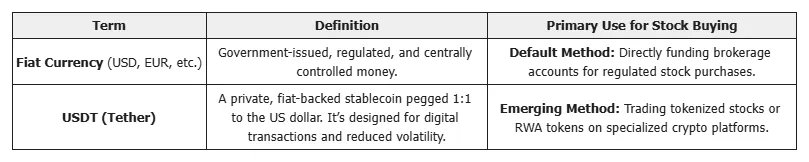
While fiat remains the default for regulated, traditional stock purchases, platforms like ToVest are increasingly bridging the gap, allowing stablecoins like USDT to facilitate trading of tokenized assets, granting investors a new, digital-native path to equities.
How USDT Enables Direct Stock Buying on Crypto and Tokenized Platforms
USDT is the fuel for stock trading on digital-first or tokenization platforms, offering technical efficiency and 24/7 market access.
On crypto-native platforms (like ToVest), users can trade tokenized stocks or Real-World Asset (RWA) tokens directly with USDT. Tokenized stocks are defined as digital representations of official equity shares that can be traded 24/7 on blockchain-based platforms. This process often bypasses the traditional financial friction of banks and wire transfers.
Typical Flow for Buying a Tokenized Stock with USDT:
- Fund Wallet: Transfer USDT from an external crypto exchange or personal wallet to the specialized trading platform (e.g., ToVest).
- Select Asset: Choose the desired tokenized stock (e.g., a tokenized representation of TSLA or AAPL).
- Execute Trade: Use the USDT balance in your wallet to purchase the tokenized asset, with the transaction recorded on the blockchain.
- Instant Settlement: Settlement often occurs near-instantly, providing liquidity and 24/7 trading availability.
Important Note: On conventional brokerage platforms, direct USDT stock purchases are typically not supported. USDT's utility is focused on crypto-oriented or multi-asset trading venues.
Limitations of Using USDT for Traditional Regulated Stock Ownership
When the goal is "true" share ownership in regulated markets, using USDT faces specific regulatory and operational hurdles.
- Conversion Required: Most traditional, regulated brokers only support fiat. Therefore, USDT holdings generally must be converted to fiat (via an "off-ramp") before a purchase can be made.
- Extra Steps and Fees: This conversion introduces extra steps, conversion fees (addressed below), and potential delays dependent on banking hours and wire/ACH processing.
- Shareholder Rights: Tokenized stocks—while representing equity—may not confer direct voting or dividend rights to the token holder, unlike stocks purchased directly with fiat through a licensed broker.

Comparing Liquidity and Transaction Speed: USDT vs. Fiat
Choosing the optimal funding route often depends on how fast and liquid you need the transaction to be.
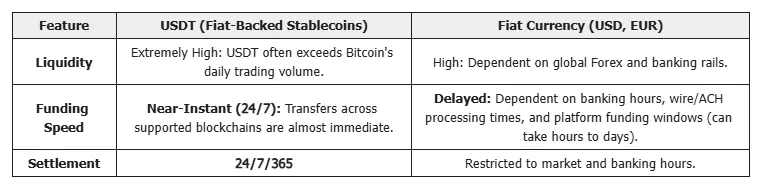
For active traders requiring rapid, global movement of value into or out of assets, USDT’s speed and 24/7 settlement provide a significant edge.
Regulatory and Transparency Considerations
Investor protection and transparency differ significantly between the two methods.
- Fiat Regulation: Fiat held in regulated banking or brokerage channels is covered by deposit insurance (e.g., FDIC, FSCS) and subject to clear, enforced governmental oversight.
- Stablecoin Transparency: USDT’s reserves and audits have faced scrutiny. While claimed to be fully backed, Tether's reserves may include riskier assets, which led S&P Global Ratings to downgrade its peg stability score. Regulatory clarity for stablecoins is evolving globally.
- MiCA: The EU’s Markets in Crypto-Assets Regulation (MiCA) is a key regulatory framework for crypto assets, including stablecoins, seeking to impose greater stability and transparency requirements.
Cost and Fees Involved in Buying Stocks with USDT Compared to Fiat
The total transaction cost can be complex when using USDT due to the potential for multiple conversion steps.
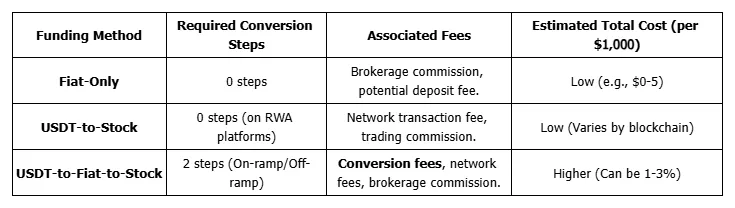
The use of USDT introduces potential crypto to stock conversion fees and network fees (gas) that are absent in a simple fiat-to-stock transaction.
Risk and Stability: Evaluating USDT and Fiat for Investment Safety
Stability is the most critical difference between the funding sources.
- Fiat Safety: Fiat in a regulated financial institution or brokerage is backed by government guarantees and insurance, offering a uniquely high security baseline.
- USDT Risk Factors: USDT is a private stablecoin backed by reserves (like Treasuries and commercial paper). While it targets a 1:1 peg to the US Dollar, it carries issuer and counterparty risk not present with fiat funds. It can also briefly deviate (depeg) from $1 during periods of market stress.
Stability Table: Fiat maintains an absolute $1 peg in regulated accounts; USDT history shows occasional, short-term volatility deviating slightly from $1.
Use Cases Where USDT Offers Advantages Over Fiat
USDT is the superior tool for specific investors or jurisdictional needs:
- Global, 24/7 Trading: Ideal for active traders who need to move value quickly across platforms, avoiding banking delays.
- Cross-Border Investment: Excellent for users in regions with capital controls or highly inefficient local banking systems, where USDT can act as a dollar proxy that can be later converted to local fiat abroad.
- Crypto Ecosystem Parking: Preferred by crypto traders who want to temporarily park profits in a stable asset without incurring friction or delays from repeatedly moving funds off-ramp to a bank.
Why Fiat Remains the Primary Choice for Direct Regulated Stock Ownership
Despite the innovation in tokenization, fiat remains the de facto method for the vast majority of stock investors.
For direct ownership of regulated stocks (and the associated dividends, voting rights, and legal clarity), fiat is unequivocally better and often the only option. This is due to the universal acceptance by brokers, the robust insurance protections, and the clear regulatory framework that governs fiat-funded brokerage accounts.
ToVest is committed to facilitating both approaches, empowering users to decide whether they need the regulatory clarity and rights of traditional ownership (via fiat) or the 24/7 speed and access of tokenized assets (via USDT).
Frequently Asked Questions
Can I buy stocks directly with USDT, or do I need fiat?
Most traditional stock brokers only accept fiat currency. However, specialized crypto or tokenization platforms like ToVest let you buy tokenized stocks directly with USDT, but these may not provide the same ownership rights as true, regulated shares.
Is buying stocks with USDT cheaper or faster than using fiat?
Using USDT offers superior transaction speed and 24/7 availability. However, buying stocks with fiat at a regulated broker is typically simpler and may involve fewer total conversion fees and steps.
Will I have shareholder rights if I buy stocks with USDT?
If you convert USDT to fiat and buy stocks through a regulated broker, you receive full shareholder rights. If you buy tokenized stocks with USDT, you may not receive dividends or voting rights, depending on the platform’s structure.
Is USDT as safe as holding fiat cash for stock purchases?
Fiat held in a regulated bank or brokerage is typically insured and protected by government bodies. USDT aims to maintain a stable value but carries issuer, reserve, and crypto-related risks that are not present with fiat money.
Would you like a step-by-step guide on how ToVest facilitates the conversion of USDT to tokenized assets?