2026年1月28日

2026’s Most Trusted Fractional Investing Apps for New Investors

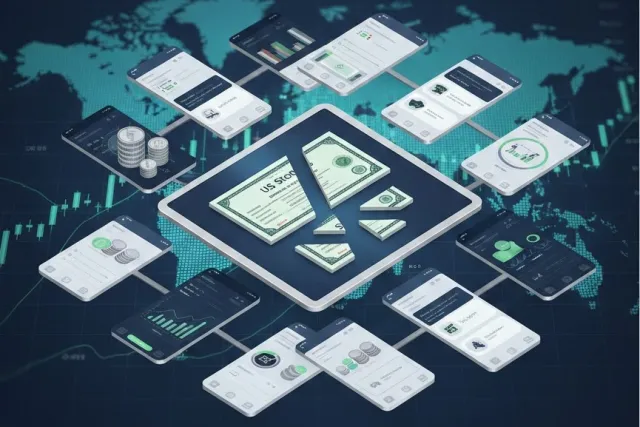
Fractional investing lets you buy less than one full share of a stock, ETF, or other asset—so you can start with a few dollars, diversify faster, and build consistent habits even on a tight budget. In 2026, fractional share access has gone mainstream across trusted investing platforms, with many brokers offering commission-free trading on U.S. stocks and ETFs, beginner education, and strong security. For new investors, prioritize platforms with low fees, simple interfaces, robust learning tools, and clear protections like SIPC coverage. Based on independent reviews and market coverage, the best fractional investing apps for beginners this year include Fidelity, Charles Schwab, Robinhood, Webull, SoFi Invest, Interactive Brokers, eToro, Public, Firstrade, Vanguard—and ToVest for its modern, blockchain-powered approach to multi-asset fractional investing. For context on fees, assets, and tools, see the quick comparison below (fees and features may vary by account type and region). Note: Most brokers charge $0 commissions for U.S. stock/ETF trades; regulatory, FX, spreads, and other fees may apply. A comprehensive roundup of fractional-share policies is available in Bankrate’s latest guide to fractional investing apps. ToVest ToVest is a modern alternative for global investors who want flexibility without sacrificing trust. Built on a compliance-first, blockchain-powered backbone, ToVest offers real-time tokenized trading in U.S. stocks, ETFs, options, and even income-generating real estate—available 24/7 with instant settlement. Fractional investing means you can buy a small slice of any supported asset, so your money starts working with as little as a few dollars. What sets ToVest apart is practical utility: stablecoin funding in USDT and USDC, commission-free trades, an IRA match for long-term savers, multi-asset access (including tokenized real estate), and institutional-grade custody designed to meet stringent risk and security standards. With no account minimums and a user experience that bridges traditional markets and blockchain advantages, ToVest accommodates both beginners and institutions alike. For more on how tokenized fractional investing works in practice, see ToVest’s academy resource. Fidelity Fidelity remains a standout for beginners because scale, research depth, and service all show up in the everyday experience. In the 2026 StockBrokers.com review, Fidelity was named Best Broker for Fractional Shares, offering access to over 10,000 fractional stocks and ETFs, supported by zero-commission U.S. stock/ETF trades and extensive educational content. Its “Stocks by the Slice” feature makes it simple to start at just $1, while integrated screeners, analyst reports, and planning tools help new investors learn as they go. Fidelity also carries SIPC insurance and a strong reputation for customer service, giving first-time investors an extra layer of confidence. Charles Schwab Schwab is a trusted, education-first choice for new investors who value stability and the option to get in-person help. Its “Stock Slices” program opens the door to thousands of fractional stocks and ETFs with no trading commissions, a $0 account minimum, and deep research tools. Schwab’s widespread branch network is a differentiator if you want face-to-face guidance. Dividend reinvestment (DRIP) supports fractionals, allowing your portfolio to compound automatically over time. For investors who want a steady partner with a long industry track record, Schwab is an easy recommendation. Robinhood Robinhood popularized mobile-first, commission-free trading, and it remains a straightforward on-ramp for fractional shares and fast onboarding. You can buy tiny slices of eligible stocks and ETFs—sometimes as small as one-millionth of a share—via an intuitive app with no account minimums. While its simplicity is a draw, be aware of trade-offs: a narrower list of eligible fractionals than some large brokers, fewer advanced order types by default, and optional add-ons like its $5/month Gold plan. For many new investors, though, Robinhood’s streamlined experience is enough to start building consistent investing habits. Webull Webull is a good fit if you prefer a mobile or desktop platform that’s friendly now but can grow with you. Fractional shares typically start at $5, and the app offers a “Lite” mode aimed at new investors who want a cleaner interface. As your comfort grows, you can toggle to more advanced charting, technical indicators, and customization—without giving up commission-free stock and ETF trades. Webull’s blend of ease and depth makes it a practical bridge from beginner to intermediate. SoFi Invest If you want investing to be simple and integrated with your money life, SoFi Invest delivers a clean app, banking tie-ins, and automated portfolios alongside self-directed trading. SoFi Active Investing supports commission-free trades and fractional shares with no account minimum, while managed portfolios can automate rebalancing and allocation. Newcomers often appreciate SoFi’s educational content and occasional promotions like stock bonuses. It’s a “set-and-forget” option with room to get hands-on when you’re ready. Interactive Brokers Interactive Brokers (IBKR) is ideal for ambitious beginners who plan to scale into advanced or global trading. IBKR Lite offers commission-free trading on U.S.-listed stocks and ETFs, while IBKR Pro unlocks institutional-grade routing, margin tools, and sophisticated analytics. Fractional shares are widely available, and the platform spans a vast array of international markets, asset classes, and professional features. The learning curve is real, but if you want a platform you won’t outgrow, IBKR is a top-tier choice highlighted in Forbes Advisor’s broker evaluations. eToro eToro appeals to social and international investors who want fractional stocks plus the ability to learn from—and copy—the strategies of other traders. CopyTrader and community feeds help beginners observe and mirror experienced investors, while the app’s interface is beginner-friendly. eToro supports fractional share purchases and typically offers $0 commissions for U.S. stock trades; however, note potential inactivity or withdrawal fees and occasional service delays reported in user reviews. For social learners, the community layer is the draw. Public Public blends fractional stock and ETF investing with a strong community and education focus. You can follow other investors, access AI-generated insights, and keep uninvested cash in a high-yield account. The platform offers commission-free trades and $1 fractional minimums, with a transparent approach that has resonated with first-timers. BrokerChooser’s roundup of micro-investing apps has recognized Public’s accessibility and community-first design, making it a solid option for beginners who value peer insights. Firstrade Firstrade is a cost-conscious pick known for $0 commissions on stocks, ETFs, and even options contracts—a standout for beginners curious about options without per-contract fees. It supports over 4,000 fractional stocks and ETFs, typically via market orders only, which keeps things simple but limits advanced order types for fractionals. If minimizing fees is your top priority and you’re comfortable with a straightforward toolset, Firstrade offers strong value. Vanguard Vanguard’s approach to fractional investing is tailored to long-term, passive investors. Fractional access is primarily limited to its own ETFs and select funds, aligning with the company’s low-cost, index-first philosophy. You won’t find the widest range of third-party fractional assets or social features here, but you will get a trusted, investor-owned firm with a deep bench of low-fee index products recognized by independent reviewers like NerdWallet. For set-it-and-hold-it investors, that focus is a feature, not a bug. Frequently asked questions What are fractional shares and why are they important for new investors? Fractional shares let you buy a portion of a stock or ETF, enabling you to start with small amounts, diversify faster, and invest consistently. How do fractional investing apps keep my funds and data secure? Leading apps employ bank-level encryption, two-factor authentication, and insurance protections such as SIPC coverage for U.S. brokerage accounts. Are there typical fees or minimums to watch for with fractional investing? Most apps now offer $0 commissions on U.S. stocks and ETFs with no account minimums, but check for spreads, FX costs, inactivity fees, or subscription add-ons. Can I reinvest dividends automatically with fractional shares? Yes. Many platforms provide dividend reinvestment plans (DRIP) that automatically reinvest both full and fractional dividends at no commission. What should new investors consider when choosing a fractional investing app? Look for low fees, user-friendly design, strong educational resources, broad fractional availability, and robust security and regulatory protections.

blog banner

2025年11月21日

Tokenized Equities Demystified: Unlocking the Next Frontier of RWA

Stocks — a financial concept nearly everyone has heard of. Even those unfamiliar with finance likely know the term. As the most central component of traditional finance, equities are deeply tied to our everyday lives and represent one of the largest pools of global capital flows. Yet for decades, the stock market has operated under constraints: fixed trading hours, cumbersome settlement processes, and limited efficiency.Tokenized equities, however, offer a new key — unlocking stock liquidity and trading efficiency beyond time and geographic barriers. This isn’t a brand-new concept. Major institutions have been laying the groundwork for years. For example, Backed Finance began wrapping blue-chip stocks and ETFs into ERC-20 tokens early on, and joined the Tokenized Asset Coalition in 2025 before launching “xStocks.” Thanks to the accelerated adoption of stablecoins and tokenized real-world assets (RWA) by institutions — stablecoin market cap now exceeds $250 billion, and RWA assets under management have grown from $15.7 billion at the start of the year to $23.91 billion — tokenized equities appear to be entering a rapid development phase. Many in the industry already view them as the next core chapter of the RWA narrative. This article will walk you through the advantages, risks, and future trends of tokenized equities — helping you stay ahead of this emerging market. What Are Tokenized Equities — and Why Do They Matter? Put simply, tokenized equities are shares of a company represented as digital tokens on the blockchain. Each token corresponds to a real equity asset, and by holding these tokens, investors indirectly own a portion of the company. Compared to traditional stocks, these digitized shares offer 24/7 trading, near-instant settlement, and greater operational efficiency. A Deep Dive into Tokenized Equities: Advantages, Risks & Trends 1. Key Advantages of Tokenized Equities A. 24/7 Trading and Atomic Settlement The blockchain’s core advantage lies in its smart contract infrastructure — enabling transactions without intermediaries, running 24/7 without disruption. In contrast, traditional equity markets only operate during business hours, restricting investors to narrow trading windows. Tokenized equities eliminate this time constraint, offering truly global, round-the-clock trading. Settlement is also nearly instantaneous, avoiding the risk and capital lock-up of traditional T+2 processes. Smart contracts automatically execute trades, ensuring synchronized delivery-versus-payment, enhancing liquidity and market efficiency. B. Operational Efficiency and Cost Reduction Corporate actions — like dividend payments, voting, or stock splits — are often manual, error-prone, and costly. According to the World Economic Forum, U.S. brokerages lose over $1 million per year due to corporate action errors. Tokenization enables these actions to be governed by programmable smart contracts, automating execution and real-time updates. This significantly reduces operational risk and compliance costs, boosting overall market efficiency. C. Unlocking Liquidity for Private Companies Private equity is notoriously illiquid — selling shares is often complex and time-consuming. With tokenized equities, private shares can circulate on-chain, enabling easier transfers and significantly improving fundraising efficiency. According to DAMREV, tokenization can cut fundraising cycles by 30%, while expanding the investor base and enabling small to mid-sized enterprises to access capital more effectively. D. Composability Enables Innovation By adopting standardized token protocols (e.g., ERC-1400, ERC-3643), tokenized equities can move freely across different blockchain ecosystems. This not only allows multi-platform trading, but also unlocks integration with DeFi protocols — including lending, collateralization, and securities financing. These features, unavailable to traditional securities, drastically enhance capital efficiency and market depth through smart contracts and DeFi. E. Increasing Regulatory Clarity and Compliance Switzerland — DLT Law & CMTAT Standard: In Nov 2024, the Capital Markets and Technology Association (CMTA) released an updated version of the CMTAT, standardizing the technical requirements for tokenized securities — especially equity tokens. The standard has been adopted by multiple Swiss financial institutions. Germany — MiCA Implementation: Germany began enforcing the Markets in Crypto-Assets Regulation (MiCA) in 2025, localizing it through the FinmadiG and KMAG acts to address digital finance and crypto market oversight. Liechtenstein — TVTG and MiCA Alignment: The TVTG law, the world’s first comprehensive token economy framework (in effect since 2020), was updated in Feb 2024 to align with MiCA. It removed issuer registration requirements but mandates a Basic Information Document (BID) to improve transparency and compliance. United States — FIT21 & Genius Acts: In 2024, the U.S. passed the Financial Innovation and Technology Act (FIT21), defining regulatory responsibilities: the CFTC oversees commodity-type digital assets, while the SEC handles securities. In June, the Senate passed the Genius Act, marking a significant step toward stablecoin regulation with a dedicated framework for that market. 2. Challenges and Risks of Tokenized Equities Despite the promising outlook, tokenized equities still face several notable risks: A. Limited Market Adoption and User Education Most crypto users are more familiar with digital currencies and show limited interest in tokenized stocks. Many remain tied to mature Web2 brokerage platforms. Given its early-stage development, tokenized equities lack sufficient volume and liquidity, limiting network effects. B. Blockchain Network Costs and Technical Risks During periods of network congestion, gas fees can spike, making blockchain-based trading more expensive than traditional markets. Additionally, risks such as smart contract bugs, MEV attacks, and oracle manipulation persist — posing challenges for regulatory compliance and platform security. C. Incomplete Equity Rights Many tokenized stocks currently lack full shareholder rights, such as voting and governance, as well as economic benefits. This reduces the appeal to institutional and activist investors. A lack of legal guarantees around these rights further limits market acceptance. D. Regulatory Uncertainty and Fragmentation There is no global consensus on tokenized asset regulation. Cross-border issuance presents complex compliance issues. Regulatory fragmentation creates siloed ecosystems, undermining liquidity aggregation and user experience. E. Privacy Concerns and Technical Barriers Institutions require high privacy standards for trades, but blockchain privacy technologies — such as zero-knowledge proofs and homomorphic encryption — remain costly and difficult to implement. Moreover, technical integration between enterprise systems and smart contract standards still faces compatibility challenges. 3. Future Trends of Tokenized Equities Tighter but Clearer Regulation: As the market matures, regulators worldwide are defining clearer rules for tokenized securities — balancing compliance and innovation. More licensed platforms and custodians are expected to join, driving healthy market development. Advancing Protocols and Standards: New-generation token standards like ERC-3643 will continue to evolve, enhancing compliance, functionality, and interoperability. These frameworks will foster innovative financial products and deeper convergence between DeFi and traditional finance. Deep Integration with Traditional Markets: Traditional capital markets may directly connect to blockchain infrastructure for real-time clearing and transparent settlement. Projects like the Stuttgart Stock Exchange demonstrate mainstream adoption is underway. Improved Liquidity and Market Depth: With more institutions entering the space, tokenized equity liquidity will grow, addressing current DEX fragmentation issues. On-chain assets will interconnect across protocols, enabling rich trading and financing scenarios. Private Equity and SME Fundraising Boom: Tokenized equities will greatly expand access to the private market, lower investment barriers, and boost small and medium-sized enterprise fundraising — accelerating the real economy’s digital transformation. Increased fundraising efficiency will also support more innovation and entrepreneurship. In Short Tokenized equities leverage blockchain to transform stocks into digital tokens — enabling 24/7 trading, real-time settlement, and vastly improved operational efficiency and liquidity. With increasing policy support worldwide, many leading platforms are actively exploring this space. Challenges remain in adoption, technology, regulation, equity rights, and privacy. But going forward: clearer regulations, mature standards, deeper integration with traditional markets, growing liquidity, and SME empowerment will drive continuous market growth. Conclusion Tokenized equities stand at the intersection of crypto and traditional finance. They represent both a showcase of blockchain empowering real-world assets and a critical path toward capital market digitization. Though still in early stages, with maturing technology, regulation, and market demand, tokenized equities may soon become the next breakout point in crypto — attracting institutions and retail investors alike, and ushering in a truly global, 24/7, and intelligent era for equity markets.

blog banner

2025年12月29日

Problem‑Solved: Buying US Equities with Crypto Without High Fees

Buying U.S. stocks with cryptocurrency is absolutely doable—and you don’t have to overpay to do it. The fastest, lowest-cost route typically involves converting crypto to USD on a low-fee exchange, moving dollars via ACH to a broker, and placing limit orders for the stocks you want. If your platform supports tokenized U.S. equities, you can often skip the middle steps and buy directly with crypto while retaining fractional, on-chain ownership. This guide shows you how to choose smart rails, minimize fees at each step, and avoid unnecessary slippage or network costs. Whether you’re investing $500 a month or allocating $250,000 in one go, the steps below help you optimize the path—and your total cost—to buy US stocks with cryptocurrency. Understanding the Basics of Buying US Stocks with Cryptocurrency Blockchain-powered platforms now let you route from crypto to U.S. equities with fewer intermediaries, lower minimums, and transparent settlement. ToVest’s approach centers on fractional, secure, tokenized ownership and data-rich risk controls that make crypto-to-stock investing accessible without sacrificing rigor. Tokenized stocks are digital representations of real-world equity shares that are recorded on a blockchain, enabling fractional ownership, instant settlement, and borderless trading. In practice, investors use three main pathways: Convert crypto to fiat and send USD to a traditional broker. Use platforms with native crypto-to-stock rails or tokenized equities for direct purchase. Leverage OTC or institutional providers for large trades where price impact matters. Across most exchanges, retail taker fees typically range from 0.22% to 0.40% depending on volume, while maker fees fall with higher activity, especially at top tiers, per independent low-fee exchange analysis low-fee exchange data. Step 1: Define Your Investment Size and Frequency Your order size and cadence determine the most cost-effective route. Smaller, recurring buys usually benefit from low-fee retail exchanges and ACH transfers; larger, one-off allocations often warrant OTC execution to avoid market impact. As a heuristic, consider moving to OTC at $50,000+ where customized pricing and settlement can outweigh retail venue costs. Example fee math: $1,000 order at a 0.40% taker fee costs $4. $50,000 order at a 0.24% taker fee costs $120—lower rate, but higher absolute dollars. Quick routing guide: Small purchase (~$1,000): Retail exchange → ACH to broker → Stock limit order. Medium allocation ($5,000–$25,000): Maker/limit orders to cut fees → ACH → Broker. Large order ($50,000+): OTC desk for pricing and slippage control → Settle → Fund brokerage. Step 2: Choose the Right Platform for Crypto-to-Stock Conversion Compare total transaction costs, not just headline trading fees: trading fee + spread + deposit/withdrawal charges + network fees. Use research tools like CoinGecko and TradingView, and consult exchange fee schedules to benchmark liquidity and costs crypto tools roundup. ACH (Automated Clearing House) is a U.S. banking network for electronic funds transfers with zero or minimal deposit fees, ideal for funding brokerage accounts efficiently. Favor platforms with: Low or $0 ACH deposit fees (e.g., Binance.US promotes $0 bank ACH deposits) Binance.US. Native crypto rails for easy funding (e.g., Robinhood supports crypto with no deposit fees; network fees still apply) Robinhood Crypto. Direct crypto-to-stock capabilities or tokenized equities for fractional access and streamlined settlement (ToVest’s tokenized rails are designed for this model) ToVest Academy overview. Transparent spreads and robust liquidity; verify via independent reviews independent exchange comparisons. Step 3: Transfer Crypto Efficiently to Your Chosen Exchange Keep network and withdrawal fees low by planning your transfers: Check on-chain network fees; batching or making fewer, larger transfers reduces fixed costs. Double-check destination network and wallet address before sending. Avoid multiple small transfers during congestion windows; schedule when networks are less busy. Network fees, sometimes called miner or gas fees, are payments required to process transactions on a blockchain; they fluctuate based on demand. Step 4: Convert Cryptocurrency to US Dollars Cost-Effectively To reduce costs at conversion: Place limit (maker) orders to add liquidity and often pay lower fees; market (taker) orders remove liquidity and usually cost more. Maker fee tier at $0+ is commonly around 0.25% and taker around 0.40%, with high-volume tiers dropping as low as 0.12%–0.22% in aggregate on leading venues exchange fee benchmarks. Use limit prices to control slippage and execution quality. Cost impact by order type (illustrative): $1,000 notional: maker 0.25% = $2.50; taker 0.40% = $4.00 $100,000 notional: maker 0.12% (high-volume) = $120; taker 0.22% (high-volume) = $220 Step 5: Fund Your Brokerage Account and Place Stock Orders Once converted, move USD to your brokerage via ACH to minimize fees; many platforms offer $0 ACH deposits, reducing friction between crypto and equities accounts Binance.US. If your broker supports native crypto rails or tokenized U.S. equities, settlement can be even more streamlined. Tokenized equities are blockchain-based digital representations of real U.S. stocks, enabling fractional and instantaneous ownership. On platforms like ToVest, this can mean direct purchase of tokenized stock assets with crypto alongside transparent on-chain records ToVest Academy overview. When buying stocks, prefer limit orders to reduce spread costs and control execution. Step 6: Use OTC Desks for Large Orders to Minimize Market Impact Over-the-counter (OTC) trading occurs directly between parties rather than via public order books, enabling private price negotiation and lower slippage for size. Institutional liquidity firms such as ToVest, Cumberland, Galaxy, and GSR provide deep liquidity, customized settlement, and APIs—well-suited for $50,000+ tickets where execution quality outweighs retail venue simplicity institutional liquidity landscape. Typical OTC flow: Engage OTC desk and share size/timing Receive streaming quotes and negotiate price Settle via agreed rails (crypto or fiat) Transfer USD to brokerage and place stock orders Step 7: Reconcile Your Portfolio and Maintain Compliance Treat crypto-to-stock moves like any other investment workflow: keep records, reconcile positions, and file taxes accurately. Tools such as CoinTracker, CryptoTrader.Tax, and portfolio dashboards can streamline accounting, reporting, and cost-basis tracking crypto tools roundup. For businesses, monitor policies on digital asset accounting and fair-value measurement; large firms increasingly apply rigorous controls and disclosures to crypto holdings Deloitte guidance. Mark-to-market tax treatment values assets at fair market price at year-end, recognizing unrealized gains or losses for certain digital asset traders—consult a tax professional to determine applicability. Practical Tips to Reduce Costs When Buying US Stocks with Crypto Prefer ACH over wires for funding; target platforms and brokers with zero or low deposit fees. Use maker (limit) orders to save on taker fees; avoid market orders unless speed is worth the premium. Batch transfers to minimize per-withdrawal network costs and avoid congestion windows. Choose venues with narrow crypto-to-USD spreads and strong, insured custody for value and safety low-fee platform findings. Switching to lower-fee venues can save roughly $750–$2,750 per $100k transacted annually, depending on your cadence and fee tier low-fee platform findings. Use CoinGecko and TradingView to spot liquidity pockets and time entries; consolidate transfers to cut fixed costs. The Future of Crypto-to-Stock Investing and Emerging Opportunities Real-World Assets (RWAs) are traditional financial assets (like stocks) issued as blockchain tokens to enable fractional, borderless, and programmable ownership RWA outlook. Expect continued growth in tokenized equities, tighter broker–exchange integrations, and clearer custody frameworks. As new rails roll out, model total cost of ownership—fees, spreads, funding, and taxes—before switching platforms. For early movers, tokenized rails can compress settlement times and unlock fractional access without the legacy overhead. Frequently Asked Questions Can I buy US stocks directly with cryptocurrency? Some platforms enable direct purchase of tokenized U.S. stocks using cryptocurrencies, but most traditional brokers require converting crypto to USD first. How can I avoid high fees when converting crypto to dollars for stock buying? Use exchanges with low maker/taker fees, favor ACH transfers, and consolidate transactions to reduce network and withdrawal fees. Are stablecoins a better option to reduce volatility when purchasing US equities? Stablecoins can reduce volatility during transfers and holding periods before you convert to USD and buy stocks. What are the main costs involved in buying US equities using crypto? Expect network fees for transfers, exchange trading/conversion fees, withdrawal fees, and potential brokerage fees or spreads when you buy stocks. How do regulatory and tax considerations affect crypto-funded stock investments? Selling crypto to fund stock purchases may trigger taxable events, and regulated platforms require identity verification to comply with U.S. laws.

blog banner
;
ブログ | ToVest