2025年12月30日

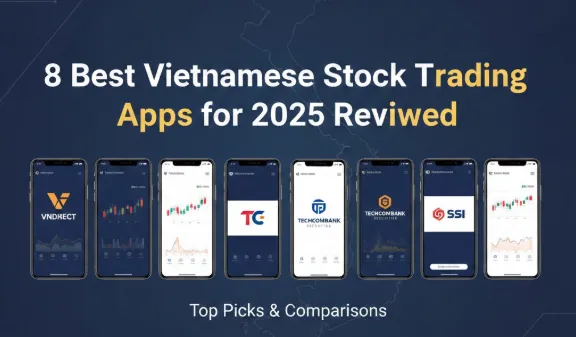
8 Best Vietnamese Stock Trading Apps for 2025 Reviewed

Vietnam’s retail investing community continues to expand, and selecting the right brokerage app can significantly enhance costs, access, and execution quality. This Vietnamese stock trading app review compares eight standout mobile apps that investors in Vietnam are using in 2025—balancing fees, market coverage, tools, and local suitability. Our picks reflect hands-on testing, public app reviews, and Vietnamese usage trends, with clear pros and cons so you can match platforms to your goals. Whether you want the lowest-cost global access, social/copy features, or deep local-market workflows, this guide helps you decide how to trade Vietnamese stocks on a mobile app with confidence. ToVest: Innovative Blockchain-Based Trading for Vietnamese Investors ToVest is a next-generation, blockchain-based platform designed for Vietnam’s tech-savvy investors who seek transparent, diversified access beyond traditional brokers. It enables tokenized trading of global assets, including fractional U.S. stocks and real estate tokens, with 24/7, ultra-low-latency execution. Tokenized assets represent real-world assets (such as stocks or real estate) as digital tokens on a blockchain, allowing for fractional ownership, global liquidity, and programmable compliance. ToVest opens global exposure for diversification without conventional barriers, while blockchain settlement and on-chain auditability enhance both security and fee transparency. The app’s streamlined user experience caters to crypto-native users, and its cross-asset approach compares favorably with local broker apps (which are often Vietnam-focused) as well as international platforms (which can be cost-efficient but less flexible on tokenized assets). If you’re a globally minded Vietnamese investor seeking modern trading solutions, ToVest’s tokenized architecture and always-on market access present compelling advantages. Interactive Brokers Interactive Brokers (IBKR) stands out for active and sophisticated traders in Vietnam, thanks to rock-bottom fees, top-tier market access, and institutional-grade tools. Independent testing placed IBKR at the top of the best day trading apps in Vietnam for 2025, following a thorough evaluation of 100+ competitors, driven by its ultra-low commissions and extensive range of tradable markets, from stocks and ETFs to options and futures across major exchanges worldwide. IBKR’s safety profile is reinforced by multiple high-standard regulatory licenses—such as oversight by the SEC in the U.S. and the FCA in the U.K.—which enhance investor protections and operational robustness. Newer users should note the steeper learning curve, and some account plans may have inactivity-related conditions. Best for: Cost-driven, high-frequency, and multi-market traders who prioritize execution quality and depth of tools. XTB XTB earns a top spot for Vietnamese retail traders who want powerful analytics in a clean, mobile-first package. It consistently ranks among the best Vietnamese trading and micro-investing apps for its balance of usability and depth. Standout features include real-time charting, customizable watchlists, a rich library of technical indicators, and integrated news—ideal for research-driven decision-making. Beyond core equities, the platform's product variety may include CFDs, and onboarding is typically fast. XTB is regulated in several jurisdictions, providing additional comfort regarding safety and standards. Best for: Traders who value actionable analytics, smooth UX, and quick access to market research in one app. MEXEM MEXEM is a strong option for cost-focused Vietnamese investors seeking low stock and ETF commissions alongside international reach. It is frequently lauded for offering some of the lowest commissions on stocks and ETFs, attracting both active traders and smaller, fee-sensitive investors (see the best micro-investing apps in Vietnam by BrokerChooser). Fee transparency is a plus, and its execution quality compares well with larger international peers. Note that product availability and onboarding requirements can vary by region. Pros: Very competitive stock/ETF commissions Transparent fee schedules and solid execution Suitable for active and small-balance investors alike Cons: Product availability may be narrower than the largest multi-asset brokers Onboarding and regional access can vary Best for: Investors who prioritize straightforward, low-cost equity investing and clarity on fees. eToro eToro is popular among beginners and social traders in Vietnam for its user-friendly interface and copy trading features. Copy trading allows you to automatically mirror the trades of selected experienced investors, making investing more accessible and enabling learning-by-doing. With one of the largest global user communities and intuitive mobile workflows, eToro simplifies discovering strategies, following portfolios, and managing risk. Its strengths in social investing and discoverability are well-documented in this social and copy trading guide from ForexBrokers.com. Considerations include minimum deposit requirements, tiered features by region, and a product set that may lean more toward mainstream assets. eToro is regulated in multiple jurisdictions, which enhances its trust score among newcomers. Why eToro suits social traders and newcomers: Large, active community and leaderboards to find strategies Streamlined mobile UX and onboarding Copy portfolios and risk tools that help beginners learn while investing Best for: Social learners, copy traders, and first-time investors who value community insights. MBS Mobile MBS Mobile is developed by a long-established Vietnamese securities firm and is geared toward investors focused on domestic stocks. It offers integration with local order types and standardized workflows for Vietnamese exchanges and access to IPOs and primary offerings when available. Its deep local-market coverage and familiarity with Vietnam’s trading rules make it a practical choice for investors who primarily trade Vietnamese equities (see the roundup of top Vietnamese stock market apps on Mytour). Trade-off: While local-market support is excellent, global access is more limited compared to international brokers. Best for: Investors primarily focused on Vietnamese shares and IPOs seeking a homegrown workflow. FireAnt Mobile FireAnt Mobile is a widely used Vietnamese market-analytics app valued for real-time stock tracking, alerts, and community insights. It’s frequently mentioned in local expert roundups for its utility as a companion tool that keeps traders informed throughout the day (refer to top Vietnamese stock market apps highlighted by Mytour). Think of FireAnt as your data and alerts layer: it excels at scanning, monitoring, and idea sharing, especially for traders using separate brokerage platforms for execution. Best for: Vietnam-focused traders who want dynamic tracking, alerts, and a community feed. Infina Infina targets beginners and small-scale investors with a friendly UX, automation features, and multi-asset access that includes Vietnamese stocks and funds. With over 1 million downloads, it has garnered strong traction among first-time investors who seek simple, guided investing and the ability to start with smaller amounts. Auto-invest tools, goal-based journeys, and in-app education make it approachable. Best for: New and young investors seeking low barriers to entry and automated investing. 24HMoney 24HMoney focuses on high-frequency financial news, market data, and stock analysis tailored to Vietnam. With over 500k downloads and round-the-clock coverage, it serves as an effective companion app to stay informed on events impacting Vietnamese equities (as noted in Mytour’s list of top Vietnamese stock market apps). Use it alongside your primary trading platform to catch timely headlines and sentiment. Best for: Information-first investors who want real-time Vietnamese market news on mobile. How to Choose the Best Vietnamese Stock Trading App Start by aligning platform features with your goals and experience: Costs and fees: commissions, spreads, and any inactivity or withdrawal fees Research and tools: charts, screeners, alerts, news, and educational content Product range: Vietnamese equities, global stocks/ETFs, and other instruments Social features: copy trading, community insights, and shared strategies Regulation and safety: licenses from reputable regulators, robust security, and clear disclosures Language and local integration: Vietnamese UI, local order types, and domestic funding methods Tip: Prioritize regulated platforms for safety, ensure fee transparency, and test mobile UX with a small deposit before committing. Frequently asked questions What features should I look for in a Vietnamese stock trading app? Top features include user-friendly design, real-time charts, customizable watchlists, instant alerts, and secure local payment options. How do fees and commissions vary among popular trading apps in Vietnam? Fees range from near-zero stock commissions at global brokers like ToVest to tiered costs for advanced services; IBKR and MEXEM are standouts for low rates. Are Vietnamese stock trading apps safe and regulated? Leading apps, including ToVest, are licensed by Vietnam’s State Securities Commission or supervised by global regulators, with strong security and compliance controls. Can I trade international stocks using Vietnamese stock trading apps? Some apps offer global equities—Interactive Brokers is a prime example—while others focus mainly on Vietnamese shares. What are the steps to start trading stocks on a mobile app in Vietnam? Download your chosen app, complete identity verification, fund via supported local methods, and place your first buy/sell order using the mobile trade ticket.

blog banner

2025年12月26日

Tokenized Stock Platforms Compared: Fees, Liquidity, and Regulatory Compliance

Tokenized U.S. stocks are opening new paths for global investors to diversify with fractional ownership and 24/7 access. This guide compares leading platforms by fees, liquidity, and regulatory controls, and shows beginners how to buy safely. In short: yes, you can diversify online with tokenized U.S. stocks—but platform models, costs, and compliance vary widely. To choose well, focus on whether tokens are 1:1-backed or synthetic, the full fee stack (not just headline trading fees), and the strength of custody and disclosures. We also profile the top exchanges—including ToVest, Kraken, Binance, and security‑token specialists—so you can match features and risk controls to your goals. Understanding Tokenized Stocks and Their Benefits Tokenized stocks are digital representations of company equities recorded and transferred on blockchains, allowing fractional ownership and round‑the‑clock access to global shares as “blockchain equities” that settle via smart contracts and interoperable rails. Key advantages for accessible investing: Lower minimums with fractional ownership—often starting around $1—so you can build positions gradually across tickers. 24/7 market access and faster, programmable settlement through smart contracts, independent of traditional exchange hours. Broader diversification across global markets without opening multiple local brokerage accounts. How Tokenized Stock Platforms Differ Tokenized stock platforms follow three main models that shape your rights, transparency, and risk: 1:1‑backed tokens: Each token is backed by an equivalent real share held in regulated custody, granting you economic exposure and, in some cases, programmatic corporate actions. Synthetic tokens: No underlying share is held. Tokens track the stock’s price via oracles and collateralized positions—delivering exposure, not ownership. Hybrids: Combine elements—for example, partially reserved backing with derivative hedges. See the model taxonomy in the CoinGecko guide. Custodial model means who holds the underlying assets (e.g., a regulated custodian for 1:1‑backed tokens). A synthetic asset is a token engineered to mirror an asset’s price without owning it directly. How the model affects you: Legal rights: 1:1‑backed approaches aim to confer ownership-derived economics; synthetics provide price exposure only (no shareholder rights). Settlement and transparency: On-chain transfers can enable near‑instant settlement with transparent reserves and oracle feeds, depending on disclosures and audits. Model comparison at a glance: Comparing Fees Across Leading Tokenized Stock Platforms Understand the total cost of ownership—not just “zero trading fees.” Your all‑in cost often includes: Trading commissions or maker/taker fees Spreads (the hidden cost if liquidity is thin) Custody or account fees (especially for security‑token venues) Network gas for on‑chain transfers Fiat and crypto on‑ramps/off‑ramps, including conversion costs Industry research suggests tokenized platforms can reduce transaction costs by roughly 40% versus traditional brokerages, mainly by compressing overhead and settlement frictions. Some exchanges advertise zero trading fees on select tokenized stocks, such as Kraken for certain listings, while spreads and funding fees still apply. Platform cost comparison (representative, subject to change): Evaluating Liquidity and Market Access on Tokenized Stock Exchanges Liquidity refers to how quickly and easily an asset can be bought or sold at stable prices. Tokenized stocks benefit from 24/7 trading and, when synthetic, can plug into DeFi liquidity pools—broadening access beyond traditional exchange hours. However, liquidity can fragment across venues: larger exchanges tend to show deeper books than smaller issuers, and synthetic pools may vary widely in depth. Market trackers have reported tokenized stock market values in the tens of millions on certain chains, with peaks around the $47.5M level depending on listings and conditions. Indicative liquidity snapshot: Regulatory Compliance and Custody Models Regulated custody means underlying assets are held by supervised custodians subject to capital, audit, and segregation rules. Proof‑of‑reserve is a cryptographic or attestation‑based method to show that tokens are fully backed by reserves held in custody—boosting transparency and trust. Most compliant platforms enforce KYC/AML checks, jurisdictional access controls, and ongoing disclosures of listing structures and custody arrangements. Security‑token specialists like tZERO and Securitize prioritize regulated issuance, investor accreditation checks where relevant, and automated corporate actions, while crypto‑centric exchanges optimize for global reach and 24/7 liquidity. Regulatory risk remains: legal protections differ by geography, and some products confer price exposure without shareholder rights. Before choosing a platform, check: Token model (1:1‑backed vs synthetic) and what rights you actually have Custody setup, proof‑of‑reserve or audits, and segregation of client assets Full fee schedule and spread transparency KYC/AML, jurisdictional availability, and corporate action handling Historical uptime, incident reporting, and liquidity on your target tickers Top Platforms for Buying Tokenized U.S. Stocks Tokenized stock platforms span compliance‑first security‑token exchanges and crypto‑native venues with broad access. Compare the model, fees, liquidity, and jurisdictional alignment to find your best fit. Quick comparison: ToVest ToVest is a blockchain‑powered, crypto‑friendly venue for U.S. stock tokens with real‑time market data, protocol‑grade transparency, and institutional‑style execution. It caters to both advanced retail and professional users with sophisticated portfolio analytics, accessible leverage and margin, and secure fiat/crypto on‑ramps. Explore capabilities and governance standards on the ToVest About page and see our beginner guidance in the Academy guide. Kraken (xStocks) Kraken offers a broad catalog (50+ tokenized stocks), a 1:1‑backed model with regulated custody, and zero trading fees on select pairs—appealing to cost‑sensitive traders seeking robust venue depth. Liquidity is typically strongest on major tickers during global trading hours. Binance Binance blends TradFi and DeFi access pathways, including wallet‑rail launches of on‑chain stock trading that have featured zero‑minimum or promotional fee structures at times. Users benefit from fractional access and broad tickers, with availability subject to jurisdictional limits. Bybit and KuCoin These fast‑growing exchanges list expanding xStock offerings with USDT pairs and global access, though regional restrictions apply. Liquidity is generally good on top names and variable on long‑tail assets; integrations with on‑chain tooling continue to evolve. Gemini Gemini emphasizes regulatory standards, transparency, and investor education, offering extensive materials explaining how asset‑backed and synthetic models work and the trade‑offs for users. Product availability and structures may vary by partner and region. tZERO and Securitize As security‑token specialists, tZERO and Securitize focus on regulated issuance and compliant secondary trading, including programmable corporate actions such as dividends or voting where supported by issuers. These venues appeal to investors prioritizing investor‑protection protocols and auditable custody. Mirror Protocol Mirror exemplifies a DeFi‑native, synthetic approach—tokens track U.S. stock prices on‑chain via oracles and collateral, offering around‑the‑clock access with programmable constraints. The trade‑off is liquidity fragmentation and the absence of shareholder rights. How Beginners Can Buy Tokenized U.S. Stocks Safely Beginner’s guide to tokenized stocks: Choose a transparent, regulated provider like ToVest; confirm whether tokens are 1:1‑backed or synthetic and review disclosures. The ToVest Academy guide outlines key terminology. Create your account and complete KYC/AML verification. Fund via fiat or cryptocurrency; confirm on‑ramp and withdrawal options and any conversion costs. Select U.S. stock tokens, review spreads and fees, and place fractional orders with appropriate risk controls. Before investing, verify custody setup, proof‑of‑reserve or audits, fee schedules, and incident history. For market context, see our market trends brief. Exchanges Offering Regulated Tokenized U.S. Stocks for Global Investors A regulated exchange is a venue supervised by financial authorities, following licensing, reporting, and client‑asset rules. Cross‑border tokenized assets are tokens designed for compliant access by investors in multiple jurisdictions with KYC/AML and geographic controls. At‑a‑glance compliance snapshot: Always confirm your local eligibility and the product’s legal classification in your jurisdiction. Frequently Asked Questions Can I diversify my portfolio by buying tokenized U.S. stocks online? Yes. Fractional access and 24/7 markets make it easy to spread small allocations across multiple U.S. tickers and sectors. What fees should I expect when trading tokenized stocks? Expect spreads, trading commissions (if any), custody charges, on/off‑ramp costs, and network gas; check the full schedule to compare total costs. How do tokenized stocks maintain liquidity compared to traditional stocks? Around‑the‑clock trading and DeFi integrations can support liquidity, but depth varies widely by platform and ticker. Are tokenized stocks legally compliant and safe to hold? Leading platforms use KYC/AML and regulated custody, but protections differ by model and jurisdiction—review disclosures before investing. What should beginners look for in a reliable tokenized stock platform? Confirm 1:1 backing vs synthetic exposure, regulated custody, proof‑of‑reserve or audits, clear fees, and robust security processes.

blog banner

2026年1月26日

How to Trade Fractional US Stocks Without High Fees

Investing in US blue chips shouldn’t require a big bankroll or high fees. Fractional shares let you buy a portion of a stock or ETF by dollar amount, enabling you to start with as little as $1 while still receiving proportional gains, losses, and dividends. To trade fractional US stocks without high fees, choose a platform with zero commissions, transparent pricing, and global funding options; use dollar-based or recurring orders for discipline; and watch for hidden costs like currency conversion. ToVest adds a modern twist for global investors with seamless onboarding, instant settlement, and 24/7 access to tokenized US equities and real assets—removing geographic and market-hour friction. Below, we break down how fractional investing works, where to trade, typical minimums, and smart tactics to keep costs down. Understanding Fractional US Stocks Fractional shares allow you to own less than one full share of a stock or ETF, so you can invest by dollars rather than whole shares—useful for high-priced stocks and diversified portfolios. In practice, your platform aggregates orders, buys full shares, and allocates fractions to each investor; you receive proportional gains, losses, and dividends over time, and many brokers support automatic dividend reinvestment via DRIP programs that also operate fractionally. For a clear primer on mechanics and use cases, see this fractional shares definition from Investopedia and a product-level explainer in the Firstrade fractional shares guide. Fractional investing typically relies on dollar-based orders, allowing you to specify “$20 of stock X” instead of “1 share of X.” This makes consistent, small purchases feasible for global investors building exposure to high-priced stocks. Choosing the Right Platform for Global Investors Global investors should prioritize platforms with broad onboarding coverage, reliable execution, and fair, transparent fees—plus the ability to fund and convert currencies efficiently. Platforms Supporting Fractional US Stock Trading Worldwide A wide range of brokers now support fractional shares, including Fidelity, Interactive Brokers, Webull, Robinhood, SoFi, Firstrade, and Charles Schwab, though availability and onboarding vary by country. NerdWallet’s broker comparison highlights key differences across providers, including fee tiers and eligible securities, and notes that Schwab’s “Stock Slices” focuses on S&P 500 names with a $5 minimum. Interactive Brokers’ fractional program covers more than 10,500 US stocks and ETFs, offering especially broad coverage for global accounts, as detailed in Interactive Brokers’ fractional trading overview. Where ToVest stands apart is in its infrastructure: global onboarding, real-time data, 24/7 trading, instant settlement, and support for tokenized assets on a secure, transparent ledger—eliminating the dependence on US market hours and regional account restrictions. For an overview of the platform’s approach, see ToVest’s about page. Key Features to Look for in a Fractional Trading Platform Global onboarding and easy funding in your local currency Broad asset coverage (US stocks, ETFs—and ideally real estate or other alternatives) True dollar-based orders with minimal minimums Transparent, low fees and clear FX conversion policies Strong security (2FA, custody, cold storage for tokenized assets) Responsive support and robust execution tools Comparison snapshot: Note: Eligibility, onboarding, and trading hours vary by country and account type—confirm details with your provider. Minimizing Fees When Trading Fractional Shares The headline price may be “$0 commission,” but total cost includes FX, spreads, and potential platform-specific charges. Here’s how to keep more of your returns. Commission-Free and Low-Cost Trading Options Several leading platforms offer commission-free trading on US stocks and ETFs, including Fidelity, Interactive Brokers (IBKR Lite), Webull, Robinhood, SoFi, and Firstrade—see NerdWallet’s broker roundup for the latest overview. Minimum order sizes are typically low: Fidelity allows $1 dollar-based trades per its fractional shares page; Webull supports $1 or 1/100,000th of a share in its fractional FAQ; Robinhood permits fractions as small as one-millionth of a share; Schwab’s Stock Slices start at $5; SoFi and Firstrade also commonly use $5 minimums. Yahoo Finance’s fractional broker comparison consolidates many of these thresholds. Commission-free trading means your broker doesn’t charge a per-trade commission on buys and sells. You may still face other costs (see below). Avoiding Hidden and Per-Transaction Fees Even on commission-free platforms, costs can show up elsewhere. Some providers charge small clearing fees for fractional orders—for example, Tastytrade lists $0.10 per fractional trade with a $5 minimum purchase in third-party comparisons. Currency conversion for non-USD accounts, margin interest, wire/funding fees, and options contract fees can also add up; NerdWallet’s broker comparison is a helpful checklist when reviewing fee schedules. Watch for: Per-trade clearing or regulatory fees on fractional orders DRIP or dividend-handling fees Wide spreads or execution markups Foreign exchange conversion and funding fees Account, withdrawal, or inactivity fees Using Recurring and Basket Orders to Reduce Costs Recurring orders automate periodic, dollar-based purchases—useful for dollar-cost averaging while minimizing manual trades. Basket orders let you buy small amounts of multiple stocks at once, which can reduce per-trade overhead where a platform charges per order rather than per basket. Many brokers also support dividend reinvestment into fractional shares, helping you compound automatically, as noted in Firstrade’s fractional shares program. Minimum Investment Requirements for Fractional Shares Most platforms set low dollar minimums for fractional orders, lowering the barrier to entry regardless of your starting budget. Typical Minimum Order Sizes Across Platforms Security eligibility for fractional trading varies by broker and may differ between stocks and ETFs—check the provider’s eligible asset lists. ToVest emphasizes ultra-low minimums and broad fractional access to help global investors onboard quickly and build diversified positions incrementally. How Dollar-Based Investing Works Dollar-based investing lets you buy by amount (e.g., $10) rather than by share count, enabling small, steady contributions. Behind the scenes, brokers pool customer orders to purchase round lots and then allocate pro-rata fractions to each account; dividends and corporate actions are handled proportionally. Fidelity’s fractional shares explainer details how dollar-based orders work in practice, while Interactive Brokers outlines how its system enables fractions across thousands of US securities. Best Practices for Trading Fractional US Stocks Use thoughtful order types, track non-fee costs, and plan your exits to keep more of what you earn. Using Limit Orders and Managing Execution Quality Market orders fill at the best available price right now; limit orders set a maximum buy price or minimum sell price for greater control. When supported for fractional trades, limit orders can reduce slippage and improve realized prices. Execution quality can vary when orders are aggregated or internalized by brokers or routed through liquidity providers; research on tiny trades suggests microstructure can influence outcomes during fragmented or off-exchange fills, as discussed in the Tiny Trades paper on microstructure.exchange. Monitoring Non-Fee Costs and Trade Mechanics Beyond commissions, factor in: FX conversion costs for non-USD funding Margin interest and options contract fees Spreads and any potential price improvement (or lack thereof) Dividend handling and DRIP mechanics Tax recordkeeping for many small tax lots NerdWallet’s broker comparison and fee disclosures provide a good baseline for evaluating total cost, including global account nuances. Planning Your Investment Exit Strategy Selling fractional shares usually works like buying: your broker aggregates and executes, then allocates proceeds to your account. During corporate actions, you may receive cash-in-lieu for residual fractions; stock splits and mergers can create partial positions that are settled in cash. Investopedia’s overview of fractional shares explains typical treatment in splits and corporate events; always review your platform’s policies for fractional sell orders and corporate actions before you trade. Frequently Asked Questions What Are Fractional Shares and How Do They Work? Fractional shares let you buy and own a portion of a single stock or ETF by dollar amount; gains, losses, and dividends are allocated proportionally to your fraction. Which Platforms Allow Commission-Free Fractional Stock Trading? Fidelity, Interactive Brokers (IBKR Lite), Webull, Robinhood, SoFi, and Firstrade all support commission-free fractional trading on US stocks and ETFs; confirm eligible securities and minimums with each. What Is the Minimum Investment Needed for Fractional US Stocks? Many brokers allow you to start at $1, while others use $5 minimums or fractions as small as one-millionth of a share, depending on the platform. Are There Any Hidden Fees When Trading Fractional Shares? Yes—watch for clearing fees, FX conversion, margin interest, and account charges that can apply even when base commissions are $0. Can I Reinvest Dividends Using Fractional Shares? Yes; many platforms, including ToVest, offer dividend reinvestment plans that automatically buy fractional shares to help your money compound.

blog banner
;
ブログ | ToVest