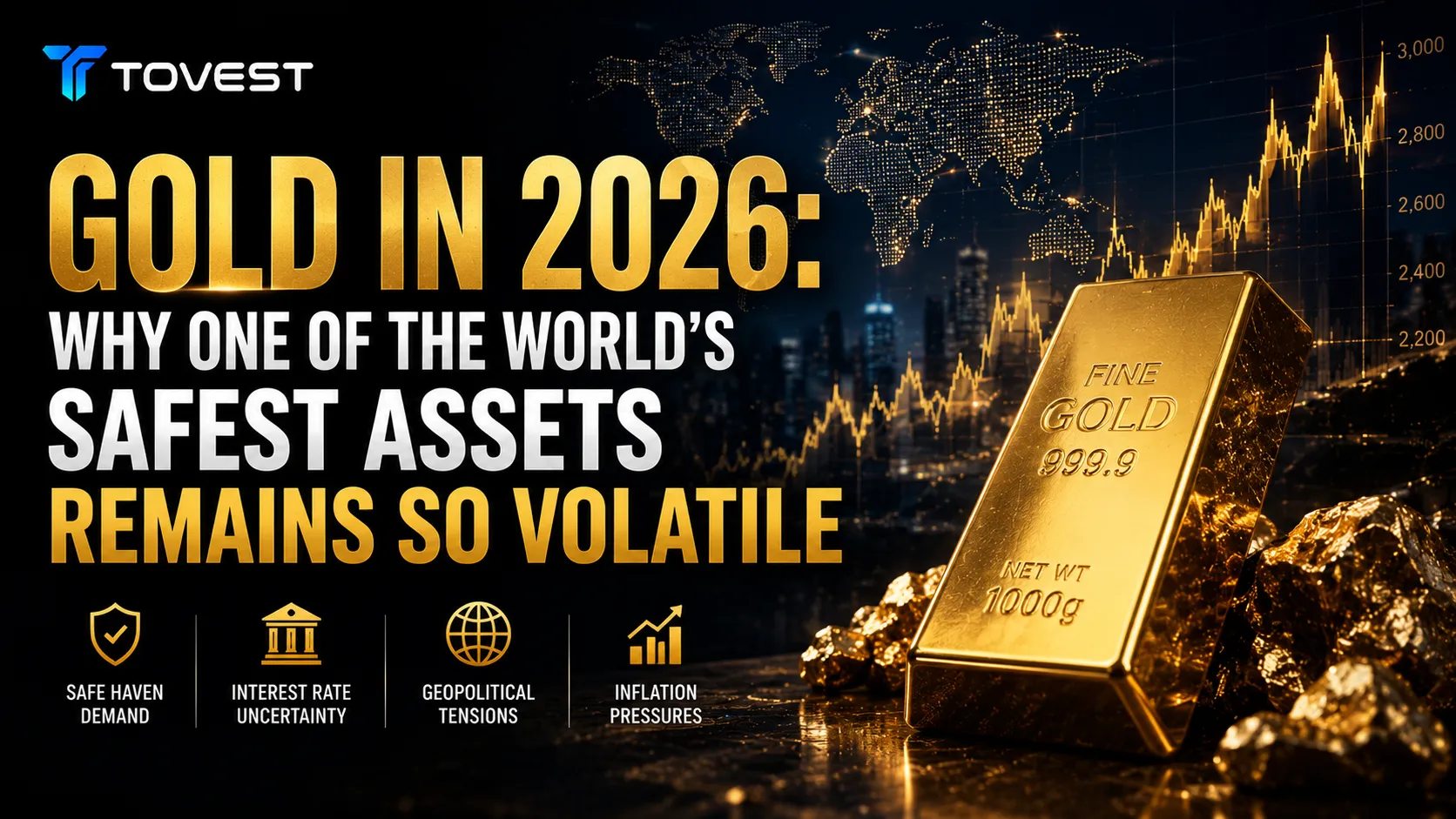
Gold in 2026: Why One of the World's Safest Assets Remains So Volatile
June 26, 2026
Gold Is Safe—So Why Is It So Volatile?
Gold has long been regarded as one of the world's safest assets. During periods of economic uncertainty, inflation, or geopolitical tension, investors often turn to gold as a store of value.
Yet in 2026, gold has experienced notable swings despite maintaining its reputation as a safe-haven asset. Prices surged to record highs earlier this year before retreating as expectations around interest rates, the U.S. dollar, and geopolitical developments shifted.
This raises an important question:
Why does one of the world's safest assets continue to experience significant price volatility?
The answer lies in the complex interaction between global macroeconomic forces rather than a single event.
1. Interest Rates Continue to Shape Gold Prices
One of the most influential drivers of gold prices is monetary policy, particularly decisions made by the U.S. Federal Reserve.
Unlike bonds or savings accounts, gold does not generate interest or dividends. When interest rates remain elevated, investors may prefer income-generating assets, increasing the opportunity cost of holding gold.
Conversely, expectations of future rate cuts often improve sentiment toward gold as lower yields reduce that opportunity cost.
Rather than reacting only to rate decisions, gold prices often move based on what investors expect central banks to do next.
2. The U.S. Dollar Plays a Critical Role
Gold is primarily priced in U.S. dollars.
When the dollar strengthens, gold generally becomes more expensive for buyers using other currencies, which can reduce global demand.
When the dollar weakens, gold typically becomes more accessible internationally, supporting higher demand and stronger prices.
This inverse relationship continues to be one of the most closely watched indicators in the gold market.
3. Geopolitical Events Still Matter
Gold has earned its reputation as a safe-haven asset because investors often seek stability during periods of uncertainty.
Wars, regional conflicts, trade disputes, and financial instability frequently increase demand for gold.
However, markets don't simply react to current events—they react to expectations.
If geopolitical risks begin to ease or diplomatic progress reduces uncertainty, investors may rotate capital back into equities and other risk assets, even if underlying tensions have not completely disappeared.
4. Central Banks Continue to Accumulate Gold
Another important but often overlooked factor is the role of central banks.
Over the past several years, many central banks have continued increasing their gold reserves as part of broader diversification strategies.
Holding more gold helps reduce dependence on individual reserve currencies while strengthening long-term financial resilience.
Although this trend may not always influence daily price movements, it provides structural support for long-term demand.
5. Investor Sentiment Can Shift Quickly
Market psychology also contributes to gold's volatility.
When investors become optimistic about economic growth, artificial intelligence, or equity markets, capital often flows toward higher-risk assets.
During periods of uncertainty, slowing growth, or financial stress, demand for defensive assets like gold typically increases.
These changing risk preferences help explain why gold prices can fluctuate even without major economic surprises.
6. Gold Is Entering a New Digital Era
While physical gold remains a cornerstone of global investing, the market is also witnessing the rapid growth of tokenized gold.
As part of the broader Real World Assets (RWA) movement, tokenized gold enables investors to access physical gold ownership through blockchain technology.
This approach offers several potential advantages:
- Fractional ownership
- Greater accessibility
- Near 24/7 trading
- Faster settlement
- Increased transparency
Rather than replacing traditional gold, tokenization represents another way investors can gain exposure to one of the world's oldest assets through modern financial infrastructure.
Final Thoughts
Gold remains one of the world's most trusted safe-haven assets—but "safe" does not mean "stable."
Its price continues to respond to changes in interest rates, currency movements, geopolitical developments, central bank demand, and investor sentiment.
Understanding these global forces is often more valuable than attempting to predict every short-term price movement.
As investing continues to evolve, gold is also entering a new chapter through digital ownership and Real World Assets, connecting centuries-old value preservation with modern blockchain technology.
Whether held physically or digitally, gold continues to play an important role in diversified investment portfolios across an increasingly uncertain world.