Addressing the Challenges of Small-Scale RWA Investments on Blockchain and Fiat
July 8, 2026
In recent years, real-world assets (RWA)—real assets tokenized on blockchain—have become an important bridge between traditional finance and decentralized finance (DeFi). However, for small investors, accessing this asset class still faces barriers such as high costs, limited transparency, and complex regulations. This article analyzes the main challenges of small-scale RWA investing on both blockchain and in fiat systems, and proposes solutions to make the market more accessible and equitable.
Challenges of Small-Scale RWA Investing on Blockchain
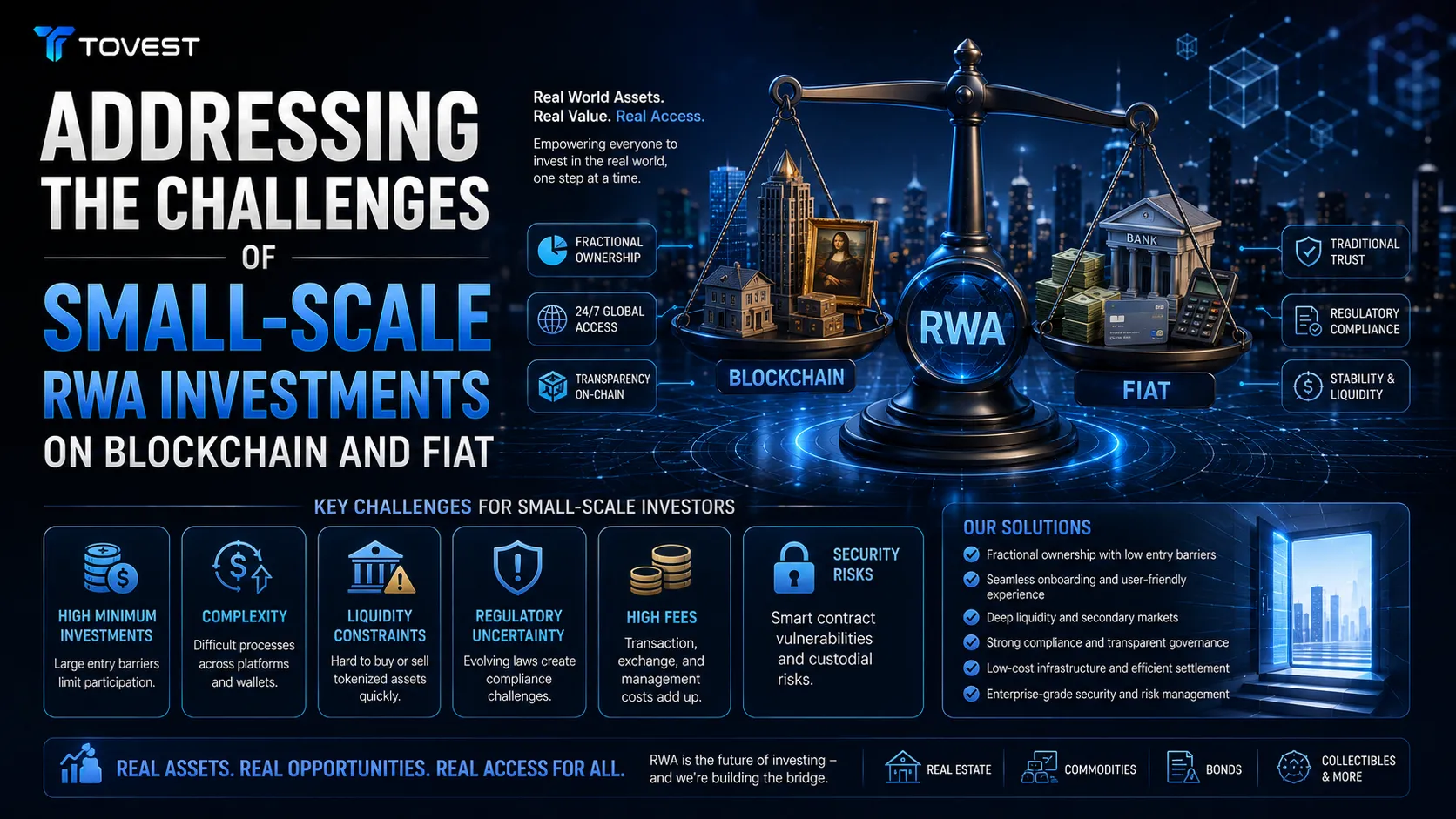
High Transaction Costs and Technical Infrastructure
Tokenizing real assets requires multiple intermediating layers such as token issuance, asset verification, and smart contract development. These processes make transaction costs significant, especially for small-value investments. In addition, popular blockchains like Ethereum still have high gas fees, which reduce profitability.
Platforms like ToVest, which use optimized trading and custody mechanisms, have significantly reduced operating costs and shortened settlement times for small investors.
Legal Barriers and Asset Provenance
Not every jurisdiction has a clear legal framework for tokenizing real-world assets. For small investments, verifying ownership, valuation, and compliance with anti-money laundering (AML/KYC) regulations often costs more than the initial investment, making it difficult for individual investors to participate.
Solutions such as ToVest's built-in digital identity process help streamline compliance while maintaining security and transparency.
Limited Liquidity
Although blockchain enables 24/7 trading, RWA tokens still suffer from low liquidity due to the lack of strong secondary markets. At small scales, token holders struggle to resell or exchange for other assets without incurring steep discounts.
RWA platforms that integrate spot and margin trading, such as ToVest, are gradually improving this through instant trading models and flexible liquidity bridges.
Challenges of Small-Scale RWA Investing in Traditional Fiat Systems
In traditional finance, investing in physical assets—from real estate and private bonds to commodities—typically requires substantial capital. Small investors are constrained by minimum investment thresholds or cannot access exclusive products such as trusts or private placement notes. In addition, complex onboarding, documentation, and tax procedures slow transaction speeds, raise administrative costs, and often lack transparency.
By contrast, transparent blockchain solutions like ToVest provide proof of ownership on an immutable ledger, enabling investors to verify assets at any time.
Solutions to Promote Small-Scale RWA Investing
1. Flexible Tokenization and Fractional Ownership
Blockchain technology enables splitting assets into multiple tokenized fractions (fractional ownership), allowing investors to contribute small amounts of capital while still holding a share of the asset's benefits. This expands accessibility without undermining legal rights.
ToVest applies this model so that investors can build diversified RWA portfolios with just a few USDT while maintaining rights protection and identity transparency.
2. Infrastructure Optimization and Multi-Chain
Platforms built on low-cost blockchains (such as Layer 2 or app-specific chains) can significantly reduce transaction fees. When RWAs are supported across multiple chains, users can choose the network that best fits their speed and cost needs.
ToVest deploys multi-chain infrastructure with fast settlement mechanisms and support for multiple currencies, minimizing conversion costs and increasing flexibility for investors.
3. Legal Standardization and Simplified Identity Verification
Developing a transparent legal framework for RWAs increases confidence among small investors and reduces compliance costs. Digital identity (DID) mechanisms can replace traditional KYC processes, ensuring security while delivering a seamless user experience.
ToVest integrates DID and custodian partner attestations, enabling investors to comply with international regulations without sacrificing convenience.
4. Stablecoin Adoption and Fiat On/Off-Ramps
Bridges between fiat and crypto are essential for small capital flows to participate in RWAs. Using stablecoins stabilizes investment value and reduces volatility risk when moving between the banking system and blockchain.
With ToVest, users can deposit, trade, and withdraw easily via stablecoins and multiple fiat payment methods, creating a stable bridge between the two systems.
Outlook and Roadmap for Small-Scale RWAs
As blockchain technology matures and major financial institutions participate, small-scale RWA investing will become more common. The convergence of DeFi and CeFi is paving the way for hybrid products that ensure compliance while retaining blockchain's automation and low-cost advantages.
In the near future, with clear legal frameworks, low-cost infrastructure, and smart risk-sharing models, small-scale RWAs could become a mainstream investment option, democratizing fair return opportunities for all investor segments.
ToVest believes this path will realize the vision of "Open Access to Wall Street" – expanding global investment opportunities that are transparent and equitable for everyone.