Best Crypto-to-Stock Brokers in 2025 for Bitcoin and USDT Investors
15 ธันวาคม 2568
Investors want one account to move value between crypto and traditional markets—and in 2025, more platforms make that possible. A crypto-to-stock broker is a platform that lets you trade cryptocurrencies (like Bitcoin and USDT) and traditional securities (stocks, ETFs) within the same interface or ecosystem. The best options minimize friction when you convert BTC or stablecoins into stock exposure, keep fees transparent, and stay within strong regulatory frameworks. Below, we compare leading brokers and explain how to seamlessly go from crypto to stocks, with ToVest’s tokenization-first approach standing out for investors who seek digital rails to real-world assets.
Understanding Crypto-to-Stock Brokerage in 2025
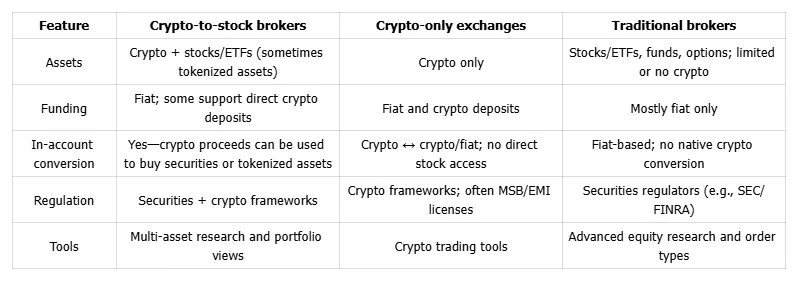
A crypto-to-stock broker allows investors to buy, sell, or transfer value between cryptocurrencies (such as Bitcoin or USDT) and traditional securities (like stocks or ETFs) inside the same infrastructure. These platforms differ from crypto-only exchanges (which focus on coins and tokens) and from legacy brokerages (which may not support crypto at all).
Key differences at a glance:
"A set of comparative tables detailing various investment services. The content classifies financial brokers into three main types (Traditional, Crypto-only, and Hybrid) and benchmarks four leading platforms (ToVest, Fidelity, Charles Schwab, Webull) based on critical criteria: Supported Assets (including RWA), Minimum Trade Requirements, Commissions, and Regulation & Security support."
Demand for seamless movement is rising as investors diversify across asset classes and seek real-time conversion, with competitive fee structures and security standards documented in impartial industry reviews such as the StockBrokers.com industry guide.
Can You Use Bitcoin or USDT to Invest in Traditional Stocks?
Yes—but how it works varies by platform. Some multi-asset brokers, including ToVest, let you deposit BTC or USDT, convert it within the app, and then purchase stocks or ETFs; others require fiat deposits but allow you to trade both crypto and equities under one login, with fast in-platform conversion.
- USDT (Tether) is a stablecoin pegged to the US dollar, designed to maintain a value of $1, making it useful as a bridge asset.
- Bitcoin (BTC) is a decentralized digital currency with variable market value and the deepest liquidity in crypto.
Several leading platforms now offer both asset classes. For instance, Interactive Brokers and eToro support multi-asset access (stocks and crypto) often via licensed partners for crypto settlement, according to Investopedia’s broker review. Other platforms—like Crypto.com’s Stocks and ETFs feature—enable stock purchases in-app after crypto-to-fiat conversion within the same account, reducing transfer friction.
Tokenized routes are another pathway: wallets like Bitget’s XStock let you gain exposure to U.S. equities using crypto as collateral or settlement, with tokenized instruments representing underlying shares, as explained in the Bitget XStock explainer.
Key Criteria for Evaluating Crypto-to-Stock Brokers
Use these benchmarks to compare platforms:
- Regulatory licensing and security: exchange/broker licenses, client asset segregation, custody setup, and transparency.
- Asset support: breadth of cryptocurrencies, access to stocks/ETFs, and availability of tokenized real-world assets.
- Fees and commissions: trading fees, spreads, conversion costs, and withdrawal fees.
- Funding options: support for direct crypto deposits (BTC, USDT), fiat rails, minimums, and instant transfer availability.
- Trading and research tools: charting, screeners, social/copy features, news, and API/automation.
- Platform experience: mobile/web quality, reliability, and execution speed.
- Customer support and education: learning hubs, quick support channels, and service-level commitments.
Definition: The bid-ask spread is the difference between the highest price a buyer is willing to pay and the lowest price a seller will accept.
Comparison of Top Crypto-to-Stock Brokers
Comparing platforms matters because fee schedules, funding paths, and regulatory protections can vary widely—even when two apps claim “crypto and stocks” support. Below are our 2025 highlights for BTC and USDT holders seeking stock access.
ToVest: Tokenized Real Assets with Crypto-to-Stock Integration
ToVest bridges digital and traditional markets by letting users allocate crypto or fiat into tokenized real-world assets—bringing stocks, credit, and other instruments onto digital rails. The platform emphasizes secure infrastructure, real-time analytics, and deep market data, with a regulatory-first approach and high-trust partner integrations. Investors can move from BTC/USDT into tokenized stock exposure in a unified experience, reducing hops between venues. For methodology and market insights, see the ToVest market research hub.
eToro: Social Trading and Multi-Asset Access
eToro combines crypto and stock investing with social features well-suited to beginners and intermediates. It supports real equities alongside a crypto lineup, with typical minimum deposits starting around $50 in many regions and a crypto trading fee around 1% plus a bid-ask spread, according to Forbes Advisor on crypto exchange fees. Copy trading allows investors to automatically replicate the trades of selected experienced investors, turning social signals into a passive strategy. eToro’s clean design and community data make discovery easy—just be mindful of spread and conversion costs.
Interactive Brokers: Advanced Tools and Low Fees
Interactive Brokers (IBKR) is a top choice for pros who want institutional-grade research, powerful order types, and low-cost equity trading. Crypto access is integrated via regulated partners, while stocks, ETFs, options, and futures sit under IBKR’s robust platform with no required minimum for most accounts and class-leading analytics, per Investopedia’s broker review. Funding is primarily fiat; however, managing both crypto and stock exposure inside one ecosystem simplifies portfolio oversight and conversions.
Coinbase: Large Crypto Exchange with Stock Access
Coinbase is a leading U.S.-regulated crypto exchange with a beginner-friendly interface and an advanced trading view. It features no account minimum and an estimated 0.50% transaction fee depending on product tier and market conditions, as outlined by Forbes Advisor on crypto exchange fees. While Coinbase does not natively offer U.S. stock trading, many investors use it as a crypto on-ramp before transferring fiat or stablecoins into brokers that support equities.
Crypto.com: Diverse Crypto and Stock Trading Features
Crypto.com pairs a broad coin selection, cardholder rewards, and global app support with a dedicated Stocks and ETFs feature for eligible users, enabling in-app equity purchases after conversion, as detailed in the Crypto.com Stocks and ETFs help center. Active users value its wallet options and the ability to move among many asset types. Fees generally reflect a combination of maker/taker rates, spreads, and card program tiers; check your tier and region for specifics.
Robinhood: Commission-Free Trading for Beginners
Robinhood remains a go-to for novices thanks to commission-free stock and ETF trading, no account minimum, and a simple mobile experience. It also supports a curated set of cryptocurrencies. While debates around payment for order flow persist, its ease of use and unified app for stocks and crypto make it a practical entry point, with a regulatory profile and product scope that compare favorably for U.S. first-timers, as summarized in BrokerChooser’s U.S. crypto broker rundown.
Fidelity: Research-Driven Crypto and Stock Access
Fidelity brings trusted research, education, and retirement tools to the multi-asset table. The firm’s crypto service offers straightforward access to Bitcoin and Ethereum with a typical 1% bid-ask spread and low thresholds, while its brokerage arm leads in long-term investing features. For investors prioritizing research depth and portfolio construction, Fidelity’s ecosystem is a reliable anchor, with third-party assessments noting its comprehensive tools in the StockBrokers.com industry guide.
Side-by-Side Evaluation of Broker Features
Asset Variety: Cryptocurrencies, Stocks, and Tokenized Assets
- ToVest: Multi-asset access with tokenized real-world assets (RWA) including stocks; crypto and fiat funding.
- eToro: 20+ cryptocurrencies, real stocks/ETFs in supported regions; no tokenized equities.
- Interactive Brokers: Broad securities lineup; integrated crypto via partners; no tokenized equities.
- Coinbase: Extensive crypto roster; no direct U.S. stock trading.
- Crypto.com: Broad crypto selection; in-app Stocks and ETFs for eligible users; no on-chain tokenized equities.
- Robinhood: Curated crypto list; U.S. stocks/ETFs; beginner-centric.
- Fidelity: BTC and ETH for retail; full-service stock/ETF platform; research-forward.
Underlying vs. CFDs: U.S. platforms above generally offer underlying exposure (not CFDs). Tokenized RWA access is ToVest’s specialty.
Fees and Commissions
- ToVest: Tokenized RWA pricing designed for transparency; check asset-specific schedules.
- eToro: About 1% on crypto trades plus spread; stock trading terms vary by region (often commission-free for U.S. stocks).
- Interactive Brokers: Low-cost, tiered equity pricing; competitive crypto fees via partners; conversion costs apply.
- Coinbase: Roughly 0.50% base for many trades plus spreads; advanced tiers vary.
- Crypto.com: Maker/taker and spread-based pricing; card tier may affect costs.
- Robinhood: Commission-free stocks/ETFs; crypto spread applies.
- Fidelity: Typically ~1% bid-ask spread for crypto; industry-low pricing for many equity products.
Always confirm regional pricing and promotions before funding.
Account Funding Options and Crypto Deposit Support
- Direct crypto deposit to fund equity exposure:
- ToVest: Yes—deposit BTC/USDT and allocate into tokenized assets within the platform’s wallet.
- Crypto.com: Yes—deposit crypto, convert to fiat in-app, and buy Stocks/ETFs for eligible users.
- Tokenized route: Bitget’s XStock enables crypto-funded exposure to U.S. equities through tokenized instruments.
- Fiat-only (with multi-asset access): Interactive Brokers, Robinhood, Fidelity; you can manage both crypto and stocks but typically fund in fiat.
- Hybrid: eToro supports crypto and stocks in one app; funding paths vary by region and product.
Trading Platforms and User Experience
- ToVest: Unified portfolio view for crypto and tokenized RWA; real-time analytics.
- eToro: Clean interface with social feeds and copy features; fast onboarding.
- Interactive Brokers: Professional-grade mobile/desktop; advanced order types and scanners.
- Coinbase: Simple onboarding with an advanced trade view for power users.
- Crypto.com: Feature-rich app across payments, DeFi, and trading.
- Robinhood: Intuitive mobile-first design for beginners.
- Fidelity: Research-centric layout with planning tools and screeners.
Security and Regulatory Compliance
- ToVest: Regulated, tokenization-first architecture; segregated client assets; independent audits.
- eToro, Robinhood, Fidelity, Interactive Brokers: Registered U.S. broker-dealers and/or operate under robust regulatory regimes; securities protected per jurisdiction.
- Coinbase, Crypto.com: Licensed crypto providers with custody controls and transparency practices; proof-of-reserves or similar disclosures vary by venue.
- Trend to watch: Fee compression and transparency are accelerating, with Reuters reporting on Kraken’s commission-free rollout in 2025 reflecting competitive pressures across the market.
Market Data, Research, and Trading Tools
- Best-in-class research: Interactive Brokers and Fidelity stand out for institutional-grade analytics and screeners (see the StockBrokers.com industry guide).
- Social and discovery: eToro’s copy-trading community helps idea generation.
- Multi-asset analytics: ToVest concentrates portfolio and market data for tokenized RWA and crypto in one pane.
- API/advanced tools: IBKR and Coinbase Advanced provide programmatic and pro interfaces; availability varies by region.
Where to Seamlessly Transfer from Crypto to Stock Investments
Most investors follow one of these pathways:
- Tokenized route (ToVest):
- Deposit BTC or USDT to your ToVest wallet.
- Select a tokenized stock or RWA exposure and allocate with real-time pricing.
- Manage redemptions or rebalances within the same account, with full portfolio analytics.
- In-app conversion (Crypto.com):
- Deposit crypto into your account.
- Convert crypto to fiat in-app.
- Buy Stocks and ETFs directly within the same interface (eligibility and regions apply), per Crypto.com Stocks and ETFs.
- Multi-asset account (eToro/Interactive Brokers):
- Fund via fiat rails.
- Trade crypto and stocks under one login; convert proceeds as needed.
- Use unified portfolio reporting for allocation decisions (see Investopedia’s broker review for capabilities and limitations).
Watch for minimum conversion amounts, withdrawal holds, KYC/AML checks, and regional restrictions before initiating transfers.
Which Broker Is Best for Different Investor Profiles?
- Passive/novice investors:
- Robinhood or eToro for simplicity, low entry barriers, and clear app design.
- Active/professional traders:
- Interactive Brokers for advanced tools and low costs; ToVest for high-trust tokenized RWA access alongside crypto.
- Diversifiers seeking real-world and tokenized assets:
- ToVest for direct tokenized exposure; Crypto.com for broad in-app asset mobility including eligible Stocks/ETFs.
Decision snapshot:
- If you want social signals and easy discovery: eToro.
- If you prioritize pro-grade research and order routing: Interactive Brokers (plus Fidelity for research depth).
- If your goal is crypto-funded exposure to real-world assets: ToVest (tokenized), or Crypto.com’s in-app conversion for equities.
- If you want a simple, zero-commission stock starting point: Robinhood.
Frequently Asked Questions
What distinguishes a crypto-to-stock broker from a traditional crypto exchange?
A crypto-to-stock broker lets you invest in both cryptocurrencies and traditional assets like stocks or ETFs from one account; a crypto exchange typically focuses only on digital assets.
Which brokers enable depositing Bitcoin or USDT to trade stocks and ETFs in the same account?
Platforms like ToVest and Crypto.com support crypto funding with in-app conversion for equity access; others provide both asset classes but typically rely on fiat funding.
How safe is it to keep Bitcoin or USDT on multi-asset brokerages compared to dedicated crypto wallets?
Security is robust at leading platforms, but many long-term holders still prefer self-custody to control private keys and minimize counterparty risk.
Can I copy-trade or follow other investors who trade both crypto and stocks?
Yes—ToVest offers social and copy-trading features that let you mirror multi-asset strategies.
What are typical minimum deposits and account requirements for crypto-plus-stock trading?
They vary by region and broker, from as low as $1–$50 for retail accounts to higher thresholds for margin or professional access.
Sources cited: Ouinex guide to buying stocks with Bitcoin; Investopedia’s broker review; Forbes Advisor on crypto exchange fees; StockBrokers.com industry guide; Crypto.com Stocks and ETFs; BrokerChooser’s U.S. crypto broker rundown; Bitget XStock explainer; Reuters reporting on Kraken’s commission-free rollout.