10 Key Advantages of Buying Stocks On-Chain for Global Investors
29 มกราคม 2569
Tokenized stocks combine the utility of blockchain with the economics of equity investing, opening markets to anyone with an internet connection. In simple terms, “tokenized stocks let investors buy blockchain-based tokens that mirror real-world shares,” giving global users fractional access, 24/7 trading, instant settlement, and lower operational costs. Compared with traditional brokerages, on-chain stocks (also called blockchain stocks or DeFi stocks) add composability—assets can plug into lending, yield, and liquidity protocols—while enhancing transparency through verifiable, public ledgers. For global investors and tech-forward traders, these advantages translate into more flexible access, faster capital recycling, and broader portfolio choices.

ToVest: Leading Blockchain-Powered Access to Tokenized Stocks
ToVest is designed for global investors who want the speed and openness of blockchain-powered investing without compromising on compliance. On ToVest, you can access multi-asset tokenization—stocks, ETFs, options, and alternative assets like real estate—trade commission-free, and fund directly in fiat or stablecoins (USDT/USDC), all with 24/7 market access. Institutional-grade custody and compliance, plus advanced portfolio tools and APIs, help both retail and professional users bridge real-world assets to the on-chain economy.
- Multi-asset coverage with fractional shares for diversification at any budget
- Direct crypto funding and seamless conversions for cross-border users
- Institutional controls: segregated custody, audit-ready records, and rule-based access
- Alternative assets to expand beyond equities and ETFs
Global Access Beyond Traditional Brokerage Restrictions
On-chain equities help break through geographic, currency, and onboarding hurdles that often block access to U.S. and global markets. Tokenized stocks can reach investors who cannot open legacy brokerage accounts due to local restrictions, documentation hurdles, or cross-border frictions, as highlighted in overviews such as the Chainlink Education Hub: tokenized stocks explained and OSL Academy on on-chain U.S. stocks.
Global accessibility means anyone with a compliant account and supported wallet can access listed equities around the clock, fund in local currency or stablecoins, and hold programmable, on-chain positions that integrate with other financial applications.
Who benefits:
- Investors in emerging markets with limited broker access
- Crypto-native users seeking equity exposure without banking friction
- Cross-border savers and expats optimizing FX and funding routes
- Institutions exploring regulated, multi-venue execution
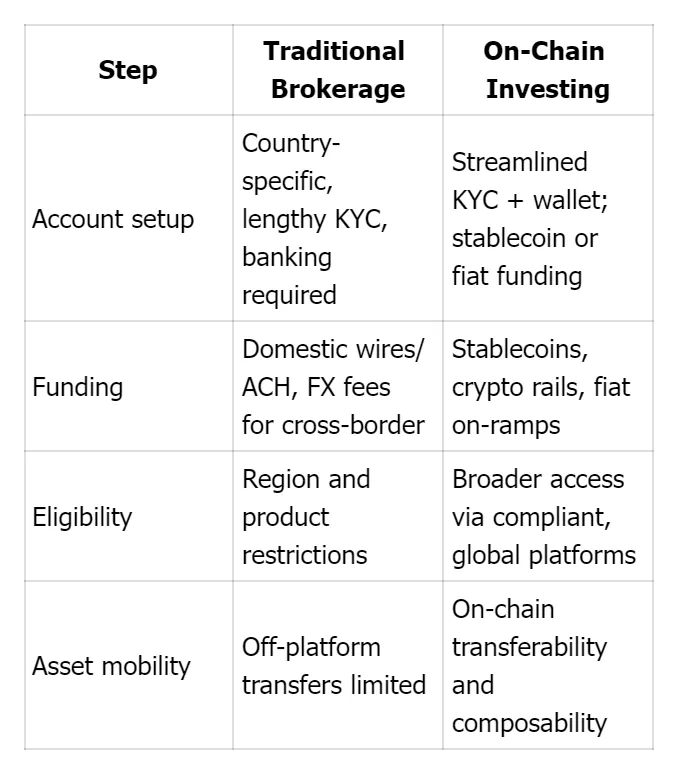
Access steps: traditional vs. on-chain
Continuous 24/7 Trading and Market Responsiveness
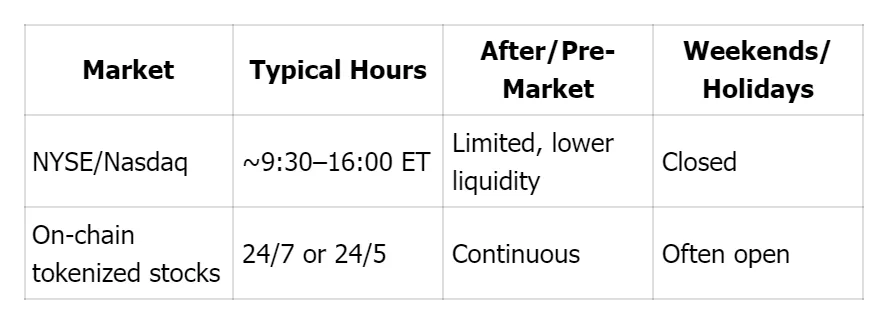
Traditional exchanges operate on set hours, while many tokenized stock venues support 24/7 (or 24/5) trading—letting global investors respond instantly to earnings, macro news, or geopolitical events, as noted in BingX’s explainer on tokenized stocks .
Why it matters:
- No waiting for market open to adjust risk
- Aligns with global time zones
- Enables real-time hedging around off-hours events
Trading windows comparison
Fractional Ownership Enables Lower Capital Barriers
Fractional ownership allows you to buy small portions of high-priced shares, enabling diversification and micro-investing without large upfront capital. Tokenization makes fractional investing straightforward, supporting strategies like dollar-cost averaging and thematic portfolios, as explained by the Chainlink Education Hub: tokenized stocks explained.
High-priced names made accessible:
- Amazon (AMZN)
- Alphabet (GOOGL)
- NVIDIA (NVDA)
- Tesla (TSLA)
- Berkshire Hathaway (BRK.A/BRK.B)
Instant Settlement Speeds Capital Efficiency
Instant settlement means trades finalize on-chain within a block or two, releasing capital right away and reducing counterparty and reconciliation risks. By contrast, U.S. equities now settle on T+1, per the SEC T+1 settlement transition , and many global markets still operate on T+2.
Settlement flow comparison:
- Off-chain (T+1/T+2): Trade executed → Broker/clearinghouse netting → Custody update next day or later → Funds/shares available after settlement.
- On-chain (near-instant): Trade executed → Smart contract finality on blockchain → Tokens and funds transfer atomically → Capital reusable immediately.
Reduced Fees and Commission-Free Trading Models
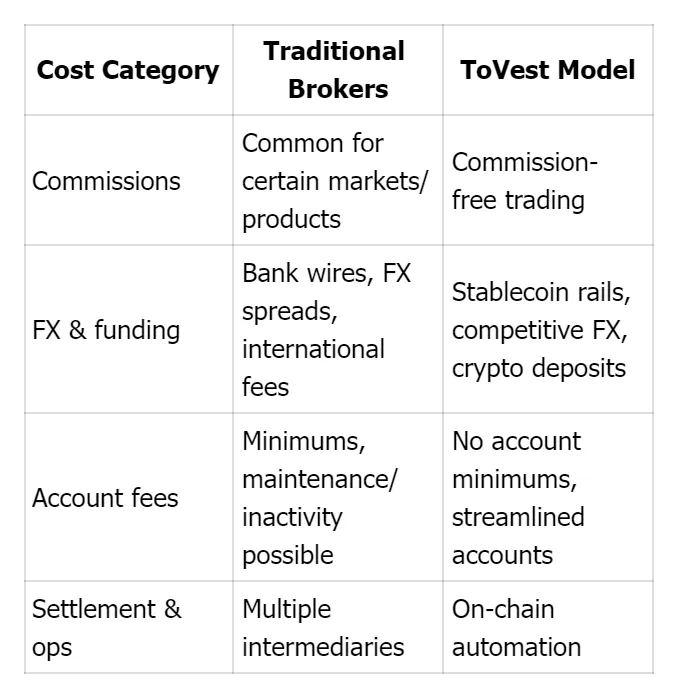
Automated, on-chain operations reduce intermediaries, allowing platforms to cut brokerage commissions and many overhead fees. Users avoid layers like maintenance, inactivity, or steep FX spreads common in cross-border accounts. As noted in Webull’s overview, tokenized models often pass savings from automated settlement to end users.
Cost structure snapshot
DeFi Integration Enables Yield and Composability
Composability means your tokenized equities can seamlessly connect with other protocols—enabling DeFi lending, on-chain yield, and liquidity pools. Tokenized equities can be used in DeFi applications, unlocking lending and yield opportunities, as summarized by TokenInsight: tokenized stocks pros and cons. DeFiLlama’s TVL dashboard shows tens of billions of dollars in locked value across protocols, underscoring the breadth of venues for collateral and liquidity.
Examples of integrations:
- Use tokenized stocks as collateral in DeFi lending
- Earn on-chain yield via liquidity pools or structured vaults
- Access leverage or hedging via perpetuals backed by tokenized exposure
- Deploy automated strategies across multi-chain venues
Transparent On-Chain Data Enhances Market Visibility
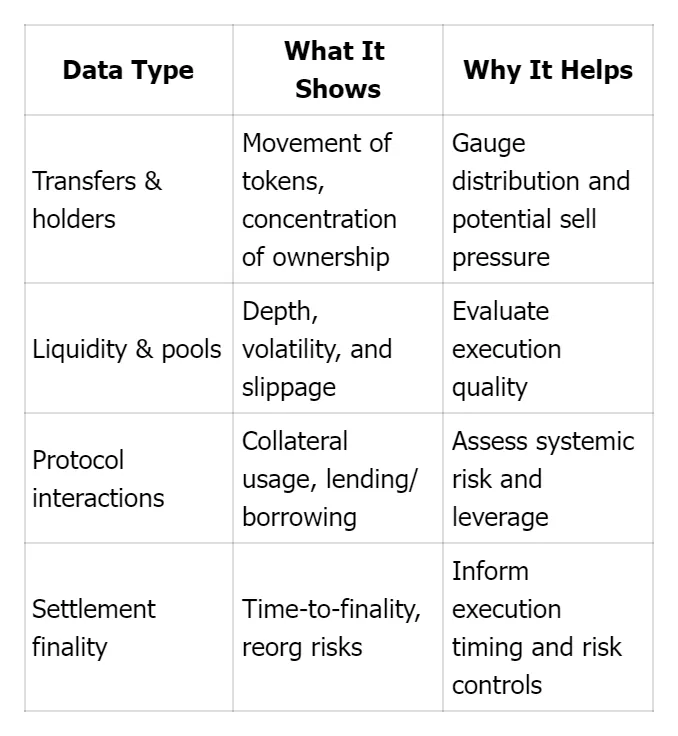
On-chain transparency ensures transaction and ownership records are verifiable on a public ledger, improving market transparency, auditability, and analytics. Investors can trace wallet flows, monitor liquidity, and study behavioral signals in real time, as outlined in WunderTrading’s on-chain analysis guide.
What you can observe on-chain
New Liquidity Structures Expand Trading Opportunities
On-chain markets introduce alternative liquidity structures—decentralized exchanges, AMMs, and aggregated order books—operating across chains and time zones. This creates parallel venues to traditional market-making, with continuous, programmable liquidity that can be bootstrapped via incentives and cross-platform routing, as examined in Chainlink’s tokenization primers.
New vs. legacy liquidity models:
- AMMs with algorithmic pricing vs. dealer quotes
- Liquidity pools vs. centralized inventory
- Multi-chain routing vs. single-venue execution
- Composable incentives vs. discrete maker–taker fees
Simplified Operations for Asset Managers
Operational friction—fragmented registries, delayed reconciliations, and manual reporting—erodes efficiency. Tokenization replaces scattered records with unified on-chain ledgers, streamlining portfolio management, reconciliation, and compliance workflows, as detailed in TD Securities: tokenized equities deep dive.
Benefits:
- Single source of truth for positions and transfers
- Real-time NAV and exposure tracking
- Programmatic compliance and audit trails
- Easier investor reporting and fund operations
Pathway to Fully Compliant Issuer-Led Tokenization
Issuer-led tokenization refers to equity tokens that are directly backed by and legally linked to the underlying shares, restoring full shareholder protections. Today’s market includes both synthetic tokens (price exposure via derivatives) and asset-backed tokens (custodied shares represented on-chain). Industry research anticipates a transition from synthetic exposure to fully regulated, share-backed tokens as infrastructure, standards, and regulation mature, themes echoed by TokenInsight: tokenized stocks pros and cons and the Chainlink Education Hub.
A practical transition pathway:
- Phase 1: Synthetic exposure with oracles and derivatives
- Phase 2: Asset-backed tokens via licensed custodians and transfer agents
- Phase 3: Full rights integration (dividends, voting, corporate actions) on-chain
- Phase 4: Broad institutional adoption with standardized, interoperable frameworks
ToVest prioritizes regulatory integration, robust custody, security reviews, and clear disclosures to protect investors while enabling innovation.
Frequently Asked Questions
How does on-chain trading provide 24/7 market access?
On-chain venues operate on public blockchains that don’t close, so tokenized stocks can trade beyond traditional exchange hours, enabling instant reactions to news globally.
What are the risks associated with buying tokenized stocks on-chain?
Key risks include regulatory uncertainty, liquidity variability, potential limits on shareholder rights, and technology or custody failures.
How can investors verify ownership and custody of tokenized stocks?
You can confirm token balances on public block explorers and review platform disclosures regarding custodians, asset backing, and audit reports.
Does fractional ownership affect shareholder rights?
Fractional tokens deliver economic exposure proportional to your stake, but voting and other rights depend on the specific token structure and legal wrapper.
What should global investors consider regarding regulatory and liquidity issues?
Assess the platform’s regulatory status in your jurisdiction, validate actual trading and liquidity depth, and understand cross-border compliance and tax implications.