How Beginners Can Securely Purchase Tokenized U.S. Stocks with Crypto
27 มกราคม 2569
Getting started with tokenized U.S. stocks is simpler than it seems. In short, you choose a reputable platform, complete verification, fund with fiat or stablecoins, and buy small, verified tokens that mirror real U.S. shares. Tokenized stocks are blockchain tokens designed to track actual equities; many are backed 1:1 by shares held with a licensed custodian, enabling 24/7 trading, near-instant settlement, and fractional buys using crypto. This guide explains how to pick a secure app, avoid impostor tokens, and execute your first trade on a centralized exchange or DEX—plus how to protect your holdings afterward. It reflects ToVest’s commitment to security, accessibility, and transparency for fractional U.S. stock exposure, aligned with best practices from leading platforms and independent resources.

Understanding Tokenized U.S. Stocks and Crypto Integration
“Tokenized stocks are blockchain tokens that represent shares or fractions of shares backed by real holdings” and typically reflect a 1:1 claim on underlying equity held by a licensed custodian, keeping prices tightly correlated to the real asset value (Investopedia, Tokenized Equity). The appeal for beginners is straightforward: you can fund with stablecoins, trade 24/7, settle quickly via smart contracts, and start with small amounts, often from as little as $1 (CoinGecko, What Are Tokenized Stocks; Bitget Academy’s beginner guide).
Key terms:
- Stablecoins are cryptocurrencies like USDT or USDC pegged to fiat currencies, widely used for funding and settlement on tokenized markets (BingX, Beginner’s Guide).
- A decentralized exchange (DEX) is a peer-to-peer venue where you trade from your own wallet without an intermediary.
Important risks include custody arrangements, regulatory uncertainty across jurisdictions, and platform security—factors that should be assessed before you commit funds (Investopedia, Tokenized Equity).
Choosing a Secure Platform to Buy Tokenized U.S. Stocks
Before you download an app or connect a wallet, run a quick pre-check:
- Is the platform regulated or operating under clear legal frameworks?
- Does it list the U.S. tokenized equities you seek with transparent disclosures?
- Are custody, audits, and withdrawal policies explained plainly? Independent comparisons can help (Traders Union, Best Tokenization Platforms).
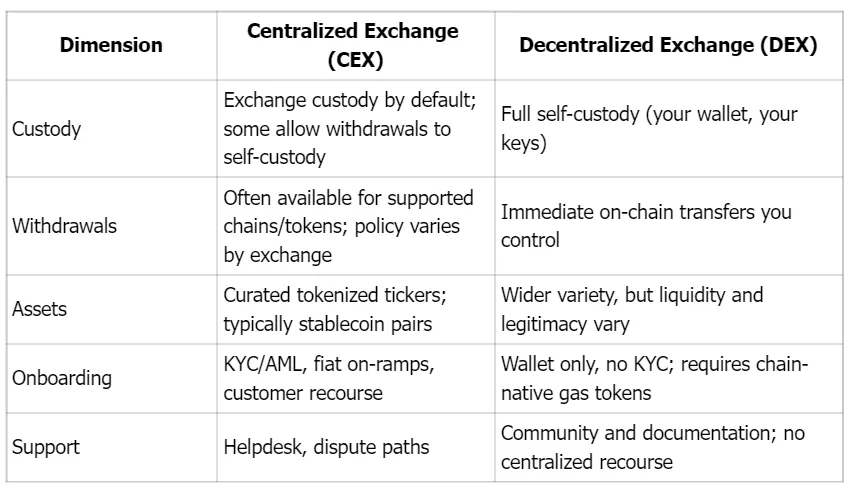
Centralized exchanges (CEX) vs. DEX:
- CEX advantages: simple onboarding, KYC compliance, and customer support—ideal for a first purchase. Established offerings like ToVest's integrations aim to bring 24/7 tokenized U.S. equities to mainstream users (Kraken, xStocks).
- DEX advantages: permissionless access, self-custody, and composability with DeFi—at the cost of higher technical overhead and the need for careful contract verification (BingX, Beginner’s Guide).
Comparison snapshot:
Security checklist when selecting a platform:
- Confirm 1:1 token backing and licensed third-party custody with proof-of-assets disclosures (Investopedia, Tokenized Equity).
- Review legal/compliance posture, withdrawal rights, third-party audits, and incident history (Traders Union, Best Tokenization Platforms).
Completing Verification and Funding Your Account
For your first purchase, use a beginner-friendly, KYC-compliant exchange or app; you can explore DEX options later once you’re comfortable (BingX, Beginner’s Guide).
Onboarding steps:
- Create an account and complete KYC with a valid ID.
- Set a strong, unique password and enable two-factor authentication (2FA).
- Fund your account:
- Fiat: card, bank transfer, or local payment rails.
- Stablecoins: deposit USDC/USDT for broad market access and low volatility (BingX, Beginner’s Guide).
- Start small—test a nominal amount to validate deposits, trading, and withdrawals before scaling.
Researching and Verifying Tokenized Stock Details
Avoid impostor tokens by verifying details before you buy:
- Always copy the official token contract address from the platform’s listing page or trusted documentation—never from random social posts or chat groups (YouTube tutorial on Solana with Phantom and Jupiter).
- Understand the token structure:
- Is the token backed by real shares via a licensed custodian with proofs and attestations (Investopedia, Tokenized Equity)?
- Which chain is used, and is there an audit or proof-of-reserves mechanism?
- Do dividends or governance rights pass through? Some tokenized stocks provide price exposure only and may not confer shareholder rights (Gemini Cryptopedia, Tokenized Stocks).
- Due diligence checklist:
- Review issuer documents, third-party audits, and reliable price oracles if used.
- Confirm custodian licensing and published proof-of-assets or attestation statements.
Executing Your Purchase on Centralized or Decentralized Platforms
CEX flow (example pairs: USDT/AAPL, USDC/TSLA):
- Search the tokenized ticker on the spot market.
- Select a stablecoin pair and choose market or limit order.
- Enter a small test size; confirm fees and settlement details.
- After execution, review your balance and attempt a small withdrawal if supported.
DEX flow (e.g., on Solana using Phantom and Jupiter):
- Set up a self-custody wallet (Phantom), back up the seed phrase, and fund with SOL for gas.
- Acquire USDC/USDT on Solana via a bridge or CEX withdrawal.
- Use an aggregator (Jupiter) or DEX (Raydium) to select the verified token contract (YouTube tutorial on Phantom & Jupiter).
- Review slippage, routing, and fees; execute a small swap first.
- Verify receipt in your wallet and bookmark the token’s official contract/address.
Pro tips:
- Double-check the token contract and trading pair before confirming.
- Use conservative slippage on DEXes and watch for aggregator fees and liquidity depth.
- Start with a small buy to test settlement and user experience.
Securing Your Tokenized Stock Holdings
You can keep holdings on a reputable custodial exchange for convenience or withdraw to self-custody for maximum control. Some platforms emphasize 24/7 tokenized equities access and aim to support smooth on-chain transfers (Kraken, xStocks). ToVest’s framework prioritizes enterprise-grade security, transparent operations, and global accessibility for fractional U.S. stock exposure (ToVest, About).
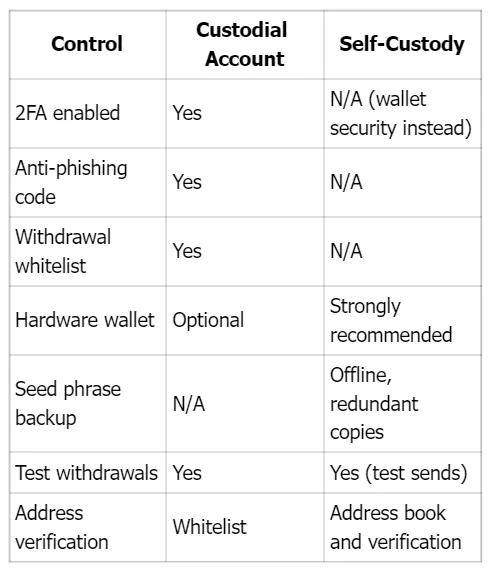
Best practices:
- Custodial accounts:
- Enable 2FA and set an anti-phishing code.
- Use a withdrawal whitelist and monitor login/IP alerts.
- Test a small withdrawal before larger transfers.
- Self-custody:
- Use a hardware wallet for significant balances; never share your seed phrase.
- Maintain offline backups of seed and passphrases.
- Verify addresses via address books and send test transactions first.
Operational notes:
- Budget for gas fees (SOL on Solana, ETH on Ethereum).
- Use a portfolio tracker or explorer alerts to monitor on-chain balances and activity.
Quick security checklist:
Monitoring Investments and Managing Risk
Stay proactive:
- Track platform and protocol updates, including audits, smart contract changes, and regulatory notices.
- Monitor trading fees, liquidity, and slippage; thin liquidity can widen execution costs.
- Watch issuer communications and proof-of-assets updates to confirm ongoing backing (Investopedia, Tokenized Equity).
Practical discipline:
- Avoid margin or leveraged products until you fully understand the mechanics and risks (BingX, Beginner’s Guide).
- Review your portfolio periodically and cap exposure to any single tokenized stock, especially during major market or regulatory events.
Frequently Asked Questions
What are tokenized U.S. stocks, and how do they work for crypto users?
Tokenized U.S. stocks are crypto tokens that mirror real U.S. shares, allowing you to trade exposure 24/7 with stablecoins; settlement and ownership records occur on blockchain rails.
What are the best beginner-friendly platforms to buy tokenized stocks with crypto?
Start with compliant centralized exchanges that offer KYC onboarding, stablecoin funding, and clear custody policies; consider ToVest as a user-friendly option, and progress to DEX platforms once you’re comfortable with self-custody.
What are the step-by-step instructions for beginners to purchase securely?
Create an account, complete KYC, enable 2FA, fund with fiat or stablecoins, verify the token contract, and place a small test order before scaling.
How can beginners ensure secure purchases and avoid scams?
Use platforms with strong security and compliance, verify official contract addresses from the source, start with small trades, and enable withdrawal whitelists and alerts.
Can I use crypto or stablecoins directly, and what about regulations?
Yes—USDT or USDC are commonly accepted on both CEX and DEX; always check local laws and the platform’s regulatory status before trading.
Are there risks, and how do tokenized stocks compare to real shares?
Benefits include 24/7 access and fractional investing, but risks include volatility, regulatory shifts, and platform security; many tokens provide price exposure rather than full shareholder rights.
Is NYSE tokenized trading available yet, and will it accept crypto?
It’s not live as of now; most tokenized U.S. stock trading happens on crypto platforms using stablecoins while traditional venues come up with future plans.
For a deeper dive into secure, transparent tokenized investing, see ToVest’s latest market perspective (ToVest Research Report).