How to Avoid Low Yields: Choosing Stablecoins That Pay
30 ธันวาคม 2568
Earning steady income from stablecoins is possible—but only if you choose assets and platforms that balance transparency, liquidity, and sustainable yield. The best approach begins with fiat-backed coins that are easy to redeem, then layering in vetted lending, DeFi, or yield-bearing options that fit your risk tolerance. This guide shows where to earn passive income with stablecoin investments, how to vet issuers and platforms, and what to monitor so your APY doesn’t evaporate. We’ll compare coins and strategies, highlight trusted stablecoin platforms, and provide a step-by-step path to test, diversify, and scale your allocation while minimizing avoidable risks.

Understanding Stablecoins and Their Types
A stablecoin is a digital asset designed to maintain a stable value—usually pegged to a fiat currency like the U.S. dollar—by holding collateral (cash, Treasuries, or crypto) or using algorithms that adjust supply. The goal is less volatility than typical cryptocurrencies and easier movement across networks.
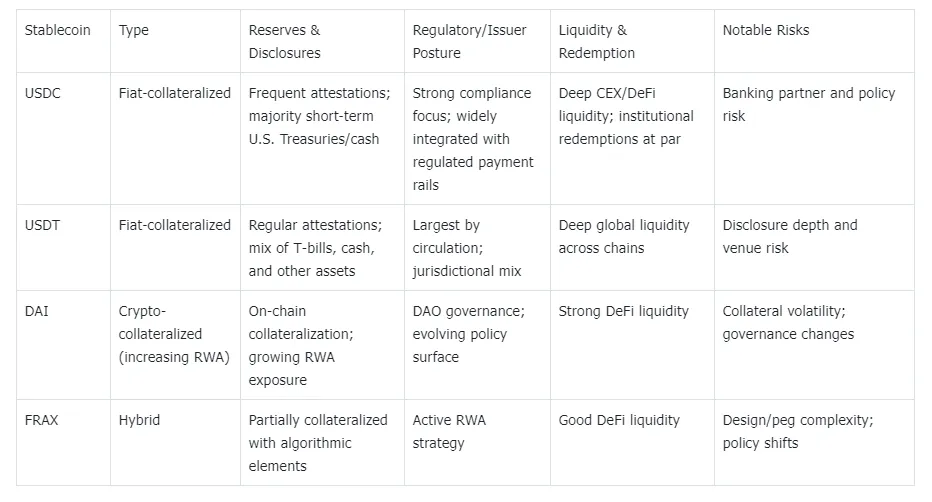
- Fiat-collateralized stablecoins (e.g., USDC, USDT) are backed 1:1 by reserves like cash and short-term U.S. Treasuries, with redemptions at par through the issuer or partners, which supports payments and yield use cases, per industry overviews from Yellow Card and JPMorgan Private Bank.
- Crypto-collateralized stablecoins (e.g., DAI) are backed by other crypto assets and typically over-collateralized to absorb volatility.
- Algorithmic stablecoins (e.g., AMPL) aim to hold a peg via supply algorithms; history shows they can break during stress.
- Hybrid models (e.g., Frax) mix collateral and algorithmic mechanisms.
Fiat-collateralized stablecoins dominate due to straightforward redemption and broad acceptance; JPMorgan Private Bank notes they hold the large majority of market share, reflecting their utility and regulatory momentum for payments and treasury-like use.
Market concentration is also high: a handful of stablecoins account for the vast majority of circulating value, according to The Motley Fool’s analysis of stablecoin share.
Key Criteria for Choosing Yield-Generating Stablecoins
- Reserve transparency and attestations: Prefer issuers that publish frequent, independent attestations and disclose detailed reserve composition (cash, T‑bills, repos). USDC is often cited for its regular disclosures and Treasury-heavy reserves in industry studies.
- Regulatory posture and licensing: Favor tokens and platforms under clear regulatory regimes that reinforce redeemability and capital standards. Stripe’s overview of stablecoin payments highlights evolving rules and the importance of par redemptions and compliance.
- Liquidity and redemption mechanics: Check on-chain liquidity, centralized exchange depth, and whether institutional redemption is accessible and timely at par.
- Platform security and counterparty risk: Centralized finance (CeFi) is simpler but adds custodial and platform risk; decentralized finance (DeFi) offers transparency but introduces smart contract and governance risk.
- Yield sustainability: Verify how APY is generated. Durable yields come from borrow demand, protocol revenue, or T‑bill passthroughs; short-lived token incentives are prone to drop-offs, as tracked in Galaxy Digital’s research on on-chain yield.
Comparison of leading stablecoins (summary view):
Step 1: Assess Your Investment Needs and Risk Tolerance
Clarify how you’ll use stablecoins: immediate payments and float management require fast settlement and instant liquidity, while income-focused allocations can tolerate modest lockups or variable APYs. Define your minimum acceptable yield, how much capital you can lock and for how long, and your comfort with custody (CeFi) versus protocol (DeFi) risk.
Create a checklist:
- Liquidity needs (T+0 withdrawals vs. lockups)
- Target APY range and acceptable variability
- Capital at risk and drawdown limits
- Custody preference (custodial vs. self-custody)
- Technical comfort with on-chain tools and monitoring
Step 2: Evaluate Stablecoin Issuers for Transparency and Security
Start with the asset itself. Review the issuer’s proof-of-reserves reports, audit/attestation frequency, and reserve composition. Coins with independently verified, high-quality reserves (cash, T‑bills, repos) and clear redemption policies tend to fare best under stress. McKinsey’s analysis of tokenized cash underscores why verifiable reserves and cash-like assets matter for resilience.
Provable reserves are independently verified statements confirming all issued stablecoins are fully backed by equivalent cash or liquid assets.
A cautionary note: Algorithmic designs have repeatedly broken in stress conditions; TerraUSD’s collapse wiped out tens of billions and remains a central case study in stablecoin risk, as covered by Nasdaq’s overview of stablecoin investing risks.
Quick issuer vet checklist:
- Independent attestations (monthly/quarterly) and named auditor
- Detailed reserve breakdown and duration profile
- Par redemption mechanics and settlement timelines
- Jurisdiction, licensing, and regulatory disclosures
- Incident history and remediation transparency
Step 3: Select the Right Yield Strategy for Your Portfolio
Common ways to earn yield:
- CeFi lending: Exchange or lender programs with simple onboarding and predictable UX; typical ranges around 4–7% APY, depending on borrow demand and region, per the Eco guide to stablecoin lending platforms.
- DeFi protocols: On-chain money markets (e.g., Aave) with transparent reserves and variable APYs often in the 4–7% range in normal markets, as summarized by MyEtherWallet’s stablecoin yield guide.
- Yield-bearing stablecoins: Tokens that pass through T‑bill or protocol income (e.g., “USDS”-style instruments) and auto-accrue around mid-single-digit yields; Galaxy Digital notes these are linked to real-world rates and may fluctuate with policy cycles.
- RWA-backed lending: On-chain access to financing receivables or treasury-like assets; yields map to real-economy risk, fees, and seniority.
Strategy comparison:
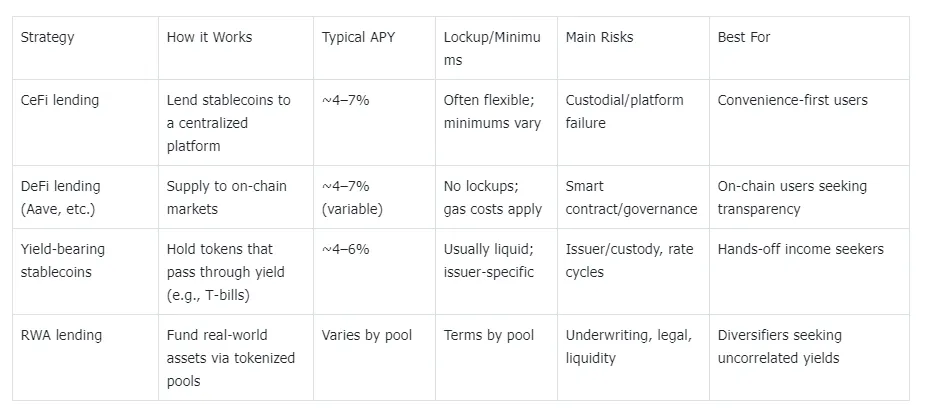
Match higher yields with higher diligence: on-chain transparency can help you verify parameters, while CeFi simplicity comes with centralized counterparty exposure.
Step 4: Test Investments with Small Deposits and Monitor Performance
Pilot before you scale. Start with a small amount (e.g., $100) to confirm deposits, accrual, and withdrawals. StablecoinInsider’s walkthroughs emphasize verifying redemption flows and timelines before committing larger balances.
A simple test loop:
- Deposit and note fees/time,
- Track daily/weekly APY,
- Request partial withdrawal,
- Confirm final payout timing/fees,
- Document support responsiveness and any hiccups.
Keep a log so you can compare platforms apples-to-apples.
Step 5: Diversify Across Stablecoins and Platforms to Mitigate Risks
Avoid single points of failure. Split funds across multiple fiat-backed coins (e.g., USDC, USDT) and at least one crypto-collateralized option (e.g., DAI), and diversify delivery (some CeFi, some DeFi). Trust Wallet’s guide to earning with stablecoins reinforces diversification to limit depeg, counterparty, or smart contract events.
Practical guardrails:
- Cap exposure to any one issuer or platform at ~40%
- Spread across chains and venues to improve exit options
- Stagger maturities/lockups to maintain liquidity
Example allocations:
- Conservative: 40% USDC (CeFi), 30% USDC (Aave), 30% yield-bearing stablecoin
- Balanced: 30% USDC (CeFi), 30% USDT (DeFi), 20% DAI (DeFi), 20% RWA pool
- Opportunistic: 25% USDC (DeFi), 25% USDT (CeFi), 25% yield-bearing, 25% RWA pool
Step 6: Continuously Monitor Stablecoin and Platform Health
Set a cadence: review yields weekly, platform health monthly, and security settings at least quarterly. On-chain analytics and issuer reports help you spot drift in reserves, utilization, and risk. For transaction monitoring and wallet hygiene, tools from Chainalysis and TRM Labs offer real-time screening and alerting.
Track regulatory updates and issuer attestations—rules continue to evolve for redemptions and capital standards, as summarized in Stripe’s stablecoin payments note. Good habits here protect long-term yield stability as market, rate, and policy regimes change.
Practical Platforms and Tools for Earning Stablecoin Yields
Where to earn passive income with stablecoin investments today:
- CeFi platforms: Kraken (around mid-single-digit APY on select assets in supported regions), Nexo (headline rates up to the low teens with tiers/requirements), and Coinbase for simple onboarding. See CryptoManiaks’ roundup for current yield snapshots and requirements.
- DeFi protocols: Aave typically offers variable APYs in the mid-single digits with no lockups; platform dashboards and explorers provide live utilization and rate data. Plasma Finance’s overview of earning interest in stablecoins explains how to compare pools.
- Yield-bearing stablecoins: Instruments that pass through T‑bill or protocol income (e.g., “USDS”-style tokens) often yield around 5% with minimal manual management; issuers publish terms and custody details.
- RWA and advanced options: Tokenized credit and invoice financing platforms (e.g., Huma Finance–style pools) bring real-world cash flows on-chain; yields vary by underwriting and seniority.
Platform snapshot:
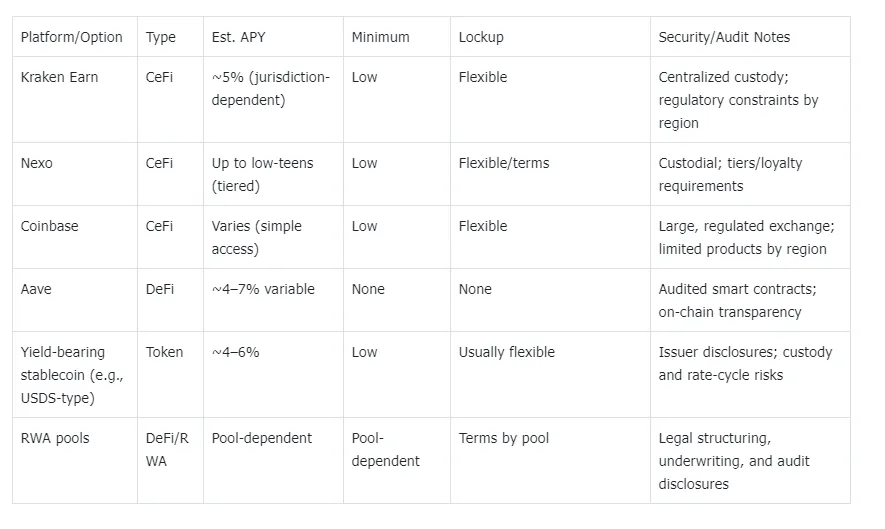
To keep decisions data-driven, consider using ToVest analytics to track yields, platform health, and diversification in one place.
Frequently Asked Questions
What regulations impact stablecoin yields and how can investors navigate them?
Many regions require full reserve backing and restrict issuers from paying direct interest; investors can still earn via regulated lending programs or compliant DeFi pools that route yield from borrow demand or real-world assets.
Which stablecoins and platforms currently offer the most reliable yields?
USDC and USDT are the most widely integrated, with deep liquidity and broad platform support; for yield, established venues like Nexo, Kraken, and Aave are common starting points, though terms and risks vary.
How can I minimize risks like depegging and low returns with stablecoins?
Favor coins with frequent independent attestations, clear redemption, and strong compliance; diversify across coins and platforms and verify that APY comes from durable sources, not short-lived incentives.
What are the common risks when chasing stablecoin yields?
Key risks include counterparty failure, smart contract exploits, regulatory shifts, liquidity shortfalls, and depegs—especially in stressed markets—so avoid over-concentration and keep monitoring.
Are yield-bearing stablecoins safe for long-term investment?
They can be efficient for income, but safety depends on reserve quality, issuer transparency, and custody; treat them as income tools you actively monitor rather than set-and-forget holdings.