How to Avoid Hidden Fees When Trading Tokenized U.S. Stocks
10 ธันวาคม 2568
ToVest positions itself as a secure, ultra-low latency digital trading platform specializing in tokenized real-world assets, catering to tech-savvy investors seeking transparent fee structures, expansive asset selection, and improved liquidity beyond traditional markets. The following guide emphasizes how investors can leverage transparency to minimize trading costs.
Choose the Right Trading Platform for Tokenized Stocks
Selecting the appropriate trading venue is the first and most critical step in avoiding unexpected or hidden fees. Different platforms have vastly different fee structures and access models.
Tokenized stocks are digital representations of traditional equities, often issued 1:1 against held shares or as synthetic contracts tracking price movements. The platforms that facilitate their trading—your tokenized stock platform comparison—must be scrutinized for transparency and efficiency.
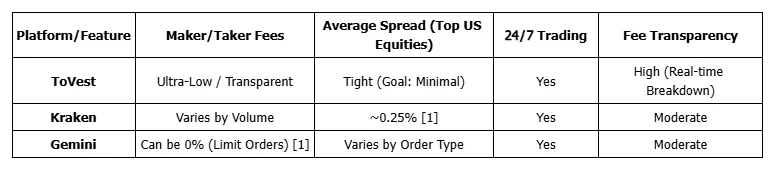
For instance, platforms like Gemini offer patient traders fees as low as 0% using limit orders, while a platform like Kraken might average spreads of around 0.25% for popular U.S. equities. A platform prioritizing low latency and tight spreads, like ToVest, is crucial for cost-effective execution.
Understand Common Fee Types in Tokenized Stock Trading
To avoid hidden costs, you must recognize all typical charges. Build a mental checklist of every fee you might encounter:
- Trading Fees (Maker/Taker): Direct costs paid to the platform for executing trades. Maker fees are for providing liquidity (e.g., placing a limit order); taker fees are for removing liquidity (e.g., placing a market order).
- Bid-Ask Spreads: This is often the most significant "hidden" cost. The bid-ask spread is the difference between the highest price a buyer is willing to pay (bid) and the lowest price a seller is willing to accept (ask). Wider spreads increase total trading costs in less liquid markets. For example, a 0.25% spread on tokenized stock trade costs the investor 0.25% on entry and 0.25% on exit.
- Withdrawal or Deposit Charges: Fees for moving fiat or crypto (like stablecoins) on or off the platform.
- Currency Conversion Fees: Applicable if you fund your account or purchase assets in a currency different from the tokenized stock's peg (e.g., converting EUR to USD-pegged tokens).
- Custody or Inactivity Fees: Less common but present on some platforms for holding assets or for dormant accounts.
Leverage Platform Tools to Assess and Minimize Trading Costs
Proactive use of platform resources can dramatically reduce your realized expenses. Transparency is your best defense against hidden fees.
- Fee Calculators: Use the platform’s fee calculator before placing a trade. This tool can surface hidden charges that may not be obvious at first glance.
- Real-Time Spread Monitors: Look for platforms that offer real-time visualization of the bid-ask spread and price execution (as is typically found on platforms like Kraken and emphasized by ToVest). This ensures you have full visibility into the true cost of your trade.
- Transparent Breakdowns: Favor platforms that provide a clear, step-by-step breakdown of all associated charges—including trading fees and estimated spread cost—immediately prior to execution.
Monitor Market Liquidity and Timing to Reduce Spreads and Slippage
Market dynamics directly affect the cost of trading tokenized US stocks fees. Trading volume and timing are key factors.
- Liquidity is Key: Liquidity refers to how easily assets can be traded without significant price impact. Deeper liquidity pools mean tighter spreads and better trade execution.
- Avoid Thinly Traded Assets: Trading illiquid or thinly traded tokenized stocks, especially during off-peak hours, often results in significantly wider spreads, inflating your costs.
- Beware of Slippage: Slippage is the difference between the expected price of a trade and the actual executed price. This cost increases total expense, especially with large orders or during periods of high volatility. Trading during periods of high liquidity (typically when the underlying U.S. market is open) helps mitigate this.
Stay Updated on Regulatory Changes Affecting Tokenized Stock Fees
The regulatory landscape directly impacts compliance costs, which can be passed on to investors as fees.
- SEC Oversight: Tokenized U.S. equities are generally regulated by the SEC like traditional securities, requiring specific registrations and disclosures.
- ATS and Compliance: Many secondary trading venues for tokenized stocks operate as Alternative Trading Systems (ATS)—SEC-regulated platforms offering alternatives to traditional exchanges. Compliance with these rules can sometimes introduce administrative or regulatory fees.
- Monitor Notices: Always monitor official notices and the fine print from your chosen platform. Regulatory shifts can introduce new or hidden compliance-related costs.
Review Token Structures and Terms to Identify Potential Hidden Costs
Not all tokenized stocks are created equal. The underlying token structure can introduce non-obvious costs or differences in investor rights.
- Backing Matters: Some tokens are 1:1 backed by physically held shares (which may pay dividends); others are synthetic contracts that merely track the price. Synthetic tokens may involve hidden swap fees or premium/discount pricing structures.
- Read the Documentation: Scrutinize the token-specific documentation for details on rights (such as voting or dividend eligibility) and potential charges related to the token’s maintenance (e.g., automated dividend mechanics or custody fees for the underlying asset).
Consider Transaction Timing to Optimize Fee Efficiency
The time you choose to trade can have a measurable impact on your realized costs.
- Trade During Peak Liquidity: Encourage trading during periods that overlap with higher liquidity (e.g., overlapping with U.S. market hours) to benefit from the tightest spreads and reduced slippage.
- Use Limit Orders: For non-urgent trades, platforms like Gemini often incentivize patient traders with lower maker fees when using limit orders (fees can be reduced to 0%). This allows you to set your price and avoid market-order price volatility.
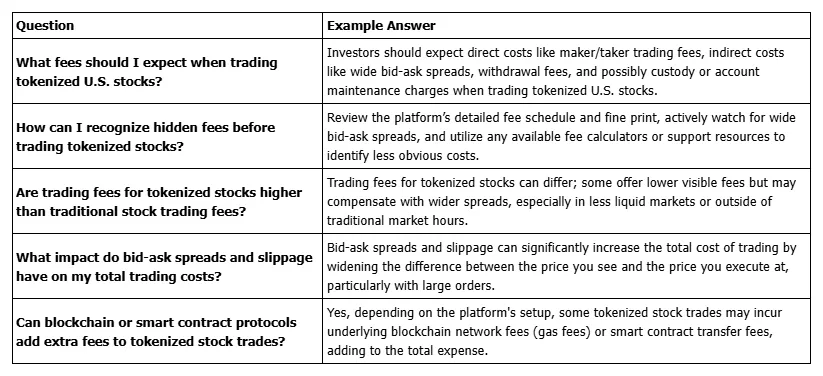
Frequently Asked Questions
Would you like me to research and compare the current regulatory requirements for tokenized US stocks versus European tokenized stocks?