2026년 1월 30일

Stablecoin Income Opportunities You Should Capture in 2026

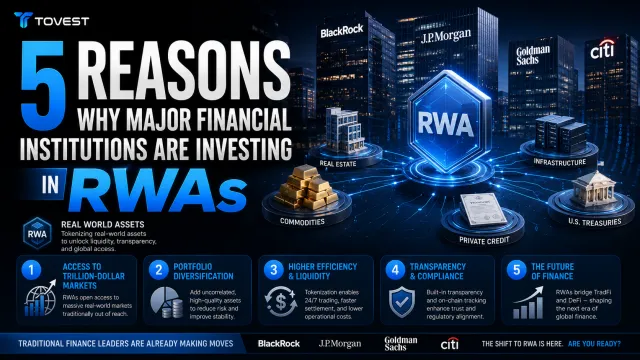
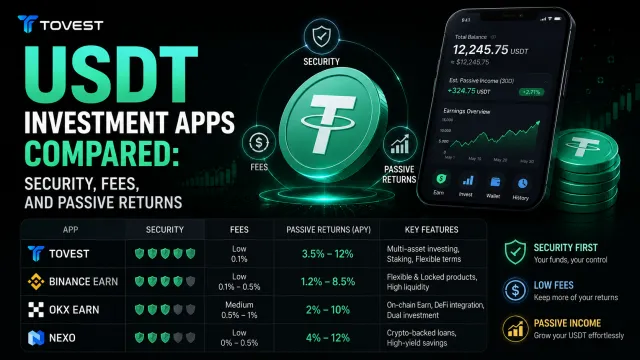
Stablecoins have matured into a mainstream tool for earning income and rebalancing portfolios—without the price swings of traditional crypto. In 2026, you can capture stablecoin income through issuer reserve yields, DeFi lending and liquidity incentives, and fee-based payment rails, while using stablecoins to bridge into tokenized stocks, ETFs, real estate, and fixed income. With nearly instant, 24/7 settlement and growing institutional adoption, stablecoins help you keep idle cash working and move efficiently between assets. Below, we map where the yields come from now, how regulation shapes sustainability, and how to use stablecoins to diversify with a measured risk budget. The Evolving Landscape of Stablecoin Income in 2026 A stablecoin is a cryptocurrency pegged to a stable asset, such as the U.S. dollar or gold, designed to hold near-constant value. Regulation has reshaped how yields are generated: frameworks like the U.S. GENIUS Act and Europe’s MiCA push issuers toward conservative, transparent reserves and compliant operations, shifting revenue from consumer-facing “couponing” to interest on reserves and commercial services. The market itself is scaling quickly: almost 300 issuers now operate globally, with total stablecoin capitalization around $309 billion—up more than 50% year-to-date. Tether and Circle control roughly 85% of the market, and the global float is widely expected to approach $500 billion by 2026, driven by payments and on-chain finance demand (Oak Research 2026 insights). Card rails, wallets, and fintech processors are integrating stablecoins for instant and cross-border settlement, while programmability unlocks 24/7 access and new fixed-income entry points, from tokenized T-bills to automated yield strategies (a16z crypto trends; ICMA stablecoin paper). Key Sources of Stablecoin Income Scale and Embedded Distribution Partnerships Sustainable yield depends on scale. When stablecoins are embedded into widely used platforms—payment processors, consumer wallets, or card networks—transaction volumes rise while marginal costs fall. Even modest reserve yields on large balances become meaningful, funding rewards or fee reductions for end users. An emerging pattern is that cards remain the customer-facing interface while stablecoins settle behind the scenes, enabling float yields and faster merchant payouts without changing user behavior (State of Stablecoin Cards). In practice, embedded distribution means stablecoins are natively available where people already pay, save, and transact, increasing utilization and stabilizing income streams. Productive Reserve Allocations and Real-World Assets Productive reserve allocation means deploying stablecoin reserves into earning assets—most commonly short-term U.S. Treasuries, cash, and secured reverse repos—to enhance returns while preserving liquidity. Regulatory guardrails matter: the GENIUS Act emphasizes 100% liquid, high-quality reserves with robust AML controls, while MiCA may require 30–60% of reserves as bank deposits, tempering issuer profitability and yield pass-through (Stablecoin Reality 2026; BDO 2026 fintech predictions). Tokenized money market funds and carefully structured real-world assets (RWA) are expanding the investable universe. Reserve allocation approaches and their implications: Reserve approachTypical yield potentialLiquidity (T+0/T+1)Regulatory riskNotesIdle cash at banksLowT+0Low–MediumHighest immediacy; margin compresses when rates fall.Short-term U.S. TreasuriesModerateT+0–T+1LowCore under GENIUS/MiCA; primary driver of issuer income.Tokenized MMFsModerateT+0–T+1MediumOperational and fund-structure considerations; clearer audits emerging.RWA (short-dated credit)Moderate–HigherT+1+Medium–HigherRequires strict underwriting and disclosures to avoid peg risks. Capital Efficiency Through DeFi and Yield Layering Capital efficiency is using stablecoin balances productively instead of leaving them idle on exchanges or in wallets. In DeFi, common strategies include: Lending on protocols (e.g., overcollateralized lending markets) for variable APY. Providing liquidity to stablecoin pools to earn trading fees and incentives. Staking and liquidity mining programs that reward protocol participation. Yield optimizers that “layer” rewards—combining base lending yields with boosted token incentives or time-decay mechanics. In 2026, USDC and USDT dominate liquidity, with TUSD and regulated euro or GBP stablecoins gaining usage in regional markets. Typical net returns vary by risk: blue-chip lending markets can sit in the low-single digits APY; liquidity pools in the mid-single digits when volumes are healthy; and layered strategies can be higher but more volatile. Always verify current APYs and smart contract risks and prefer audited, time-tested protocols (a16z crypto trends). Fee-Based Service Models and Treasury Solutions Not all stablecoin income depends on interest rates. Fee-based service models include revenue from transaction processing, settlement, FX, and enterprise treasury tools. Stablecoin-as-a-Service enables fintechs and corporates to embed on-chain settlement for cross-border payments, payroll, and marketplace flows—often with lower costs and faster finality than legacy rails. As more public companies and payment providers onboard stablecoin rails, daily settlement volumes and corresponding fee revenue are rising, offering a counter-cyclical complement to interest-driven income (Oak Research 2026 insights; a16z crypto trends). The Role of Regulation and Compliance in Stablecoin Income Regulatory clarity boosts trust and stability while narrowing speculative levers. The GENIUS Act’s emphasis on fully backed, liquid reserves and strong AML programs, and MiCA’s licensing and reserve requirements, increase transparency but constrain the risk profile of reserves, anchoring issuer profits to short-term interest income rather than opaque strategies (Stablecoin Reality 2026; BDO 2026 fintech predictions). Compliance expectations now include independent attestations, granular reserve reporting, segregation of client assets, and sanctions/AML controls. Regional divergence matters: domicile and license type shape eligible reserve assets, disclosure cadence, and the protections available to holders in stress events. Strategic Considerations for Stablecoin Investment Diversification Stablecoins can serve double duty: as a yield generator and a high-liquidity base for moving into tokenized U.S. stocks, ETFs, options, real estate, and fixed-income products. On ToVest, stablecoins act as a bridge into regulated, fractionalized real assets with transparent, commission-free execution and 24/7 market access—allowing idle balances to be redeployed in minutes across asset classes. Practical diversification tips: Hold multiple regulated fiat-backed stablecoins to reduce single-issuer risk. Mix fiat-pegged coins with asset-backed options (e.g., gold-pegged exposure) for differentiated macro hedges. Allocate across reserve-based yields (issuer float), DeFi lending/liquidity, and fee-based rails to balance rate sensitivity with usage-driven income. Evaluate platform transparency, proof-of-reserves/attestations, security audits, and regulatory posture. Comparison of diversification roles: Stablecoin typePrimary benefitRisk profileReturn variabilityCorrelation to risk assetsTypical use casesFiat-backed (USD/EUR)Stability, liquidityLow–Medium (issuer)Low–MediumLowCash management, rebalancing, base collateralGold-pegged (e.g., PAXG)Inflation hedgeMedium (custody)MediumLow–Negative vs equitiesMacro hedge, diversification sleeveOvercollateralized cryptoOn-chain composabilityMedium–HigherMedium–HigherMediumDeFi-native strategies, global transfers How Stablecoins Enhance Portfolio Stability and Passive Income Passive income with stablecoins means earning steady, rules-based returns—through reserve yields, lending, or fee-sharing—without active trading or directional crypto bets. Because stablecoins are the primary liquidity vehicle for entering and exiting on-chain finance, they enable rapid rebalancing, cash parking between trades, and tactical allocation into tokenized T-bills or equities—supporting a diversified, yield-bearing portfolio around the clock (Oak Research 2026 insights). Risks and Market Dynamics Affecting Stablecoin Income Opportunities Regulatory and backing risk: Fragmented rules, enforcement shifts, or poor reserve management can impair yields or cause pegs to wobble, especially if disclosures are weak (ICMA stablecoin paper). Market concentration: With Tether and Circle holding about 85% market share, platform or issuer-specific issues can ripple systemwide (Oak Research 2026 insights). 24/7 market hazards: Always-on markets bring flash crashes, cascading liquidations, and smart contract exploits; design and audit quality vary widely (Stablecoins: not all are equal; a16z crypto trends). Mitigations include diversifying across multiple regulated stablecoins, using reputable, audited platforms, keeping position sizes proportional to risk, and monitoring regulatory updates and reserve attestations. Future Trends Shaping Stablecoin Income Strategies Expect continued growth of regulated, fiat-backed stablecoins and deeper integration with global payment infrastructure—cards, wallets, and fintech processors. Tokenized money market funds should expand, enabling seamless allocation of stablecoin balances into short-duration yield, while new compliance tooling improves transparency and reduces operational risk. Citi projects stablecoin supply could reach roughly $1.6 trillion by 2030, with ecosystem revenues of $11–30 billion, underscoring the shift from speculative yield to scaled, utility-driven income (Stablecoin Reality 2026). Actionably: prioritize regulated issuers, seek embedded distribution access for durable float and fee income, and diversify across reserve- and usage-based yield sources. Frequently Asked Questions What are the main ways to earn passive income with stablecoins? Lending, liquidity provision, staking or rewards programs, and interest from issuer-managed reserves or tokenized money market funds. How can stablecoins help diversify an investment portfolio? They add a low-volatility, high-liquidity layer and provide a fast bridge into tokenized assets and DeFi yields without direct exposure to crypto price swings. What risks should investors consider when using stablecoins for income? Issuer and reserve risk, regulatory changes, smart contract vulnerabilities, and platform security. How does regulation impact stablecoin yield opportunities? Rules that restrict eligible reserves and mandate liquidity tighten risk but generally anchor yields to short-term interest income rather than speculative tactics. What factors determine stablecoin issuer sustainability and returns? Scale of distribution, conservative reserve management, regulatory compliance, and deep embedding into payment and treasury ecosystems.

blog banner

2026년 1월 27일

Bitcoin vs Stablecoins: Which Is Best for Buying US Stocks

Buying US stocks with crypto has moved from niche to normal as tokenized stocks and multi-asset wallets make funding simple. On ToVest, you can fund an account with Bitcoin (BTC) or leading stablecoins like USDC/USDT and trade fractional, 24/7 tokenized US equities with low minimums and instant settlement. The short answer: stablecoins are usually the best method for precise, fast stock purchases; Bitcoin can make sense if you want to maintain upside exposure during funding. Below, we break down how each option works, what to watch for, and how to choose. Overview of Buying US Stocks with Cryptocurrency Crypto is increasingly used to access US equities because it settles fast across borders, supports small purchase sizes, and remains available when banks are closed. Platforms (including ToVest) use tokenized stocks—digital representations of US shares designed to track the underlying price and, where supported, facilitate corporate actions—while custody is managed by regulated partners to ensure 1:1 backing and clear ownership workflows, as shown by models like Kraken’s xStocks and other tokenized share offerings. ToVest’s approach emphasizes secure custody, transparent audits, and low-friction onboarding to help users fund US stocks with crypto, including fractional positions. Bitcoin and stablecoins (USDT/USDC) are the most common funding methods. Each carries different trade-offs around volatility, speed, fees, and regulatory treatment—key factors when moving from crypto to US equities. At a glance: Price stability: Stablecoins ≈ USD; Bitcoin fluctuates. Settlement speed/fees: Stablecoins on modern networks are near-instant/low cost; Bitcoin is slower and can be costlier on-chain. Regulatory factors: Stablecoins face issuer-level oversight; Bitcoin is often treated as a commodity with capital gains implications. Understanding Bitcoin as a Funding Method Bitcoin is a decentralized store of value used as a reserve or speculative asset. Investors commonly hold BTC for long-term appreciation and high global liquidity; in 2026, Bitcoin’s market capitalization stood near $2 trillion, underscoring its scale and accessibility for large transfers and conversions. On ToVest, you can deposit BTC and trade tokenized US equities directly, but it’s crucial to consider price volatility, settlement time/costs, and tax or regulatory implications before choosing BTC as your primary funding currency. Bitcoin Price Volatility and Its Impact Bitcoin can move quickly—>5–10% in a week is not unusual in crypto markets—so the USD value of your planned stock purchase can shift between deposit and execution. ‘Price volatility is the degree to which an asset’s value changes in a short timeframe.’ Why it matters: Volatility creates conversion risk and slippage, particularly for small or fractional purchases. Example: You plan to fund $500 worth of stocks from BTC. If BTC drops 6% between transfer initiation and conversion, your buying power falls to about $470 before fees. If it rises 6%, you’ll have more USD, but your plan’s precision is still disrupted. Settlement Speed and Costs for Bitcoin “Bitcoin transactions average ~10 minutes to confirm; credit card payments take seconds. On-chain BTC settlement can face congestion and higher network fees. Faster options like the Lightning Network exist but aren’t universally supported by all brokers and tokenization venues. ‘Settlement is the process of finalizing a transaction, ensuring ownership changes hands.’ Simple comparison: Bitcoin (on-chain): ~10 minutes per block, variable fees; Lightning can be faster but needs specific support. Stablecoins (modern L1/L2s): Near-instant confirmations with low fees on high-throughput networks. Regulatory and Tax Considerations with Bitcoin In many jurisdictions, Bitcoin is often treated as a commodity, and converting BTC to stocks can create capital gains tax if your BTC appreciated since you acquired it. A taxable event is a transaction that triggers a potential tax liability under your local law. Key considerations: Track cost basis, acquisition dates, and disposal amounts for crypto tax implications. Keep documentation for exchange/wallet transfers and broker statements. Check country-specific rules for regulatory clarity for crypto assets and any cross-border restrictions. Understanding Stablecoins as a Funding Method Stablecoins are digital tokens designed to maintain a stable value, usually pegged to a fiat currency like the U.S. dollar . They’ve become the primary bridge between traditional finance and blockchain networks due to predictable pricing and fast settlement. Funding US stocks with USDT/USDC can remove conversion uncertainty and streamline settlement with fiat-backed stablecoin rails. Price Stability Benefits of Stablecoins Stablecoins are price-stable digital currencies designed for payments and settlements. Most USD-pegged stablecoins maintain parity by holding reserves like cash and short-term U.S. Treasuries with frequent attestations. Types of stablecoins: Fiat-collateralized (e.g., USD reserves) Commodity-backed (e.g., gold) Crypto-collateralized (overcollateralized with crypto) Algorithmic (supply-adjusted without full reserves) This predictability helps eliminate conversion risk for fractional or exact-dollar investing. Settlement Speed and Transaction Fees Stablecoins enable near-instant settlements and lower-cost cross-border payments, especially on high-throughput chains. Networks such as Tron and Solana have demonstrated low fees and fast confirmations relative to Bitcoin or base-layer Ethereum, improving payment efficiency and user experience. A transaction fee is the cost charged to process a payment on a digital network. Fast funding on ToVest (example user journey): Choose a supported stablecoin (USDC or USDT) on your preferred chain. Transfer from your wallet/exchange to your ToVest deposit address. See funds credited in USD value; start buying fractional stocks instantly. Regulatory Transparency and Reserve Risks Stablecoin issuers hold fiat reserves to back tokens and face increasing regulatory oversight aimed at disclosures, audits, and redemption clarity. Roughly 99% of stablecoin value is USD-pegged, and major issuers publish regular attestations to bolster trust. Reserve risk is the chance a stablecoin’s value falls if underlying assets prove insufficient, illiquid, or inaccessible. Policy momentum is building globally; in the U.S., proposals are advancing to establish a federal framework governing issuance, reserves, and oversight. What to evaluate: Reserves transparency and frequency of attestations/audits Redemption terms (who can redeem, at what cadence, and how) Compliance disclosures and jurisdictional licensing Comparing Bitcoin and Stablecoins for US Stock Purchases Stablecoins generally provide predictable USD value for exact share purchases, fast settlement, and low fees—balanced against issuer/reserve risk and changing regulations. Bitcoin offers unmatched crypto liquidity and potential upside but introduces volatile conversion amounts, slower on-chain settlement, and possible tax complexity when funding stock buys. Central comparison: Price Stability and Conversion Risk Stablecoins peg to USD with minimal movement, while Bitcoin can see 5–10% weekly swings, raising the risk that your final investment size diverges from plan. Conversion risk is the danger that a crypto’s value shifts during exchange, impacting the final investment amount. Decision guide: For precise fractional stock investing or scheduled buys, stablecoins are superior. If you intend to retain BTC exposure up to the moment of trade, accept possible slippage. Speed and Cost Efficiency Stablecoins enable near-instant, low-cost settlements; Bitcoin’s base-layer confirmations average ~10 minutes and fees fluctuate. Quick comparison: Bitcoin: Slower base-layer settlement; Lightning requires specific support. Stablecoins: Faster, cheaper transfers on high-throughput networks; more suitable for time-sensitive trades. Liquidity and Market Access Bitcoin’s market cap neared $2 trillion in 2026; stablecoins collectively exceeded $300 billion, reflecting deep liquidity in both segments. Stablecoins power USD rails across exchanges and accounted for more than two-thirds of recent crypto transaction volumes, underscoring their central role in payments and trading pairs. Regulatory and Compliance Factors Stablecoins face increasing regulatory oversight, issuer audits, and reserve reporting, while Bitcoin’s status in many places remains less defined and conversions may add scrutiny for tax reporting. Compliance is the practice of following laws and rules that govern financial services; regulatory oversight is official supervision ensuring market integrity and consumer protection. Checklist: Stablecoin issuer: audits/attestations, licensing, redemption clarity Bitcoin funding: track cost basis, document conversions, understand local tax rules Practical Considerations for ToVest Investors ToVest enables direct, 24/7 trading in fractional, tokenized US stocks with both Bitcoin and leading stablecoins, starting at $5. Choose the funding method that aligns with your goals: Operational clarity: Prefer stablecoins for predictable amounts, fast settlement, and low fees. Speculative upside: Use BTC if you want to maintain appreciation exposure until the moment of conversion and accept volatility and potential tax events. Align your currency choice with risk appetite, time sensitivity, and tax situation. When to Use Stablecoins for Stock Purchases Fiat-backed stablecoins are better suited to payments and settlements because they lock in USD value and reduce execution uncertainty. Advantages: Precise fractional purchases with minimal conversion drift Predictable, often lower fees Faster settlement and seamless ToVest integration 3-step ToVest funding with stablecoins: Select USDC/USDT and your preferred network in ToVest. Send from your wallet/exchange to the provided address. Start investing as soon as funds are credited in USD value. When Bitcoin Is Suitable for Investment Exposure Bitcoin is best as strategic treasury or appreciation exposure—not as a primary medium for exact stock purchases. Consider BTC funding if you: Hold significant BTC reserves and prioritize decentralization Are comfortable with conversion timing risk Understand the tax reporting necessary for disposals and have flexibility on execution amounts Frequently Asked Questions What are the risks of using Bitcoin to buy US stocks? Using Bitcoin to fund US stock purchases carries risks such as notable price volatility, potential tax implications, slower settlement speeds, and possible loss due to conversion timing. Why are stablecoins generally preferred for fractional stock purchases? Stablecoins are preferred because they provide price stability, fast settlements, and minimize conversion risks when buying specific amounts of fractional stocks. How do settlement times differ between Bitcoin and stablecoins? Bitcoin transactions typically take around 10 minutes to confirm, while stablecoin payments can settle almost instantly, enabling faster access to investment opportunities. What regulatory factors should investors consider when using stablecoins? Investors should review stablecoin issuer reserve attestations, regulatory compliance disclosures, and understand how emerging laws impact trading and custody.

blog banner

2025년 12월 31일

Tokenized Stocks: A New Way to Access Global Equities with TOVEST

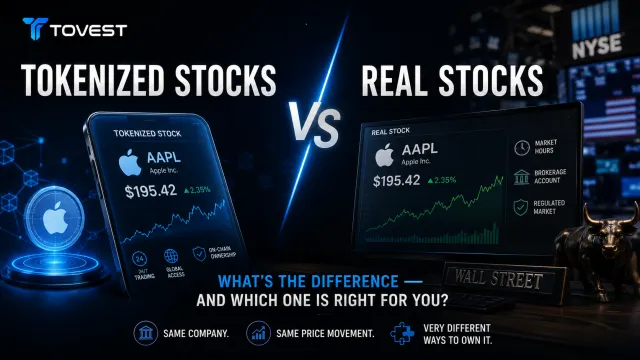
Imagine being able to gain exposure to companies like Tesla or Apple at any time of day, with just a small amount of capital, and manage those positions alongside your crypto assets. This is the promise of tokenized stocks — a financial innovation that blends traditional equities with blockchain technology. As global equity markets grow into the hundreds of trillions of dollars, access remains uneven. Many investors face high entry thresholds, geographic limitations, and restricted trading hours. Tokenized stocks are emerging as an alternative model designed to make equity exposure more flexible, accessible, and digitally native. At TOVEST, we explore tokenized stocks as part of a broader shift toward more open, technology-driven financial markets. What Are Tokenized Stocks? Tokenized stocks are blockchain-based tokens designed to reflect the market price of publicly traded shares. Instead of purchasing stocks through a traditional brokerage account, users gain economic exposure via tokens that can be traded on crypto platforms. In a typical structure: A regulated issuer purchases real shares through licensed brokers These shares are held in custody by regulated institutions Blockchain tokens are issued to represent the value of those shares, often on a 1:1 basis The token’s price follows the underlying stock through market supply, demand, and arbitrage mechanisms. Unlike traditional equities, these tokens can often be traded outside standard market hours and integrated with digital asset ecosystems. Main Models of Tokenized Stocks Asset-Backed Tokenized Stocks This model involves real shares held in custody and tokens issued against those holdings. 1:1 backing with underlying equities Higher transparency and stronger investor protection Commonly used by regulated providers Synthetic Tokenized Stocks Synthetic models track stock prices using smart contracts and price feeds without holding actual shares. No direct ownership of real equities Greater reliance on oracles and derivatives Higher structural and technical risk Today, most reputable platforms favor asset-backed structures due to their clearer legal and risk frameworks. Why Tokenized Stocks Are Gaining Attention Extended Trading Access Traditional stock markets operate on fixed schedules. Tokenized stocks can be traded beyond standard hours, allowing investors to react to global news and events without waiting for market openings. Fractional Exposure High share prices can limit participation. Tokenized stocks allow fractional investment, enabling users to allocate smaller amounts of capital across multiple companies and diversify more efficiently. Cross-Border Participation Tokenized stocks reduce friction for international investors. With a compatible wallet and access to a supported platform, users can gain exposure to global equities without navigating complex brokerage setups. Faster Settlement Blockchain-based transactions can settle within minutes rather than days. This reduces counterparty risk and improves capital efficiency compared to traditional settlement cycles. Compatibility with Digital Finance In some ecosystems, tokenized stocks can interact with decentralized finance tools, such as lending, liquidity provision, or portfolio automation — expanding how equity exposure can be managed. Key Risks to Consider Despite their advantages, tokenized stocks carry important risks: Regulatory uncertainty: Legal frameworks vary by jurisdiction and continue to evolve No shareholder rights: Token holders typically do not receive voting rights or governance participation Issuer and custodian risk: Proper backing depends on third-party institutions Technical risk: Smart contracts, price feeds, and infrastructure may fail or be exploited Liquidity constraints: Market depth may be lower than traditional equity markets TOVEST encourages investors to carefully evaluate these factors and align participation with their personal risk tolerance. How to Approach Tokenized Stocks For New Investors Start with small allocations Focus on well-known, highly liquid companies Understand the custody and redemption mechanisms For Experienced Crypto Users Use compatible wallets and networks Compare custody models and transaction costs Monitor pricing differences across platforms The TOVEST Perspective Tokenized stocks represent an early stage in the digital transformation of capital markets. While the sector is still developing, it highlights how blockchain infrastructure can reshape access, settlement, and asset usability. At TOVEST, we view tokenized stocks as part of a broader financial evolution — one that prioritizes transparency, flexibility, and global participation. As regulatory clarity improves and technology matures, this model may play an increasingly important role in how investors interact with traditional assets in a digital-first world.

blog banner
;
블로그 | ToVest