MetaMask vs. Coinbase Wallet: Which Is Better for Blockchain Stock Trading
January 30, 2026
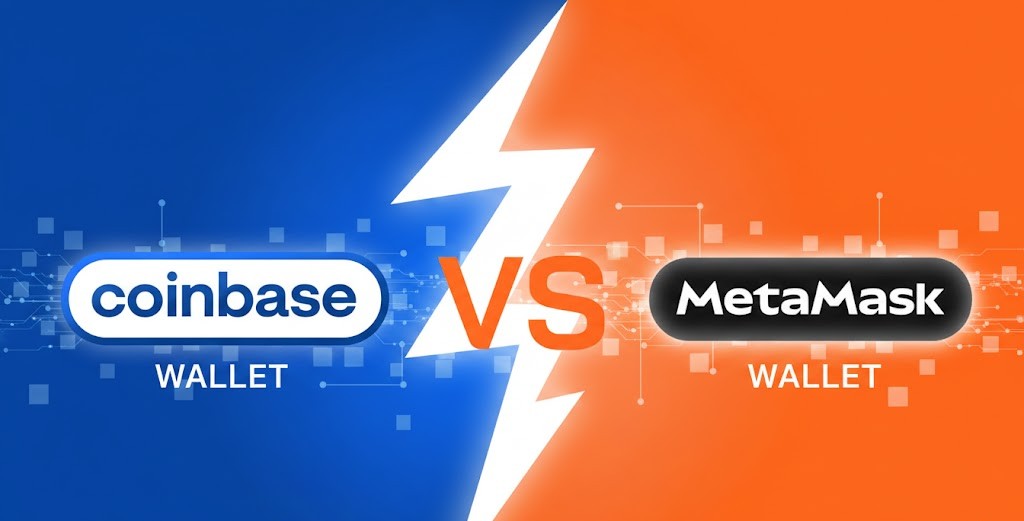
Choosing between MetaMask and Coinbase Wallet comes down to how and where you plan to trade tokenized stocks—digital representations of traditional equities issued on a blockchain. Neither wallet is a brokerage for traditional equities, but both can connect to decentralized apps (dApps) where tokenized stocks trade. In short: MetaMask excels for Ethereum and EVM-first protocols with extensive DeFi tooling, while Coinbase Wallet offers broader multi-chain reach (including Bitcoin and Solana) with a gentler learning curve. If you seek a regulated, end-to-end experience for tokenized U.S. stocks with fiat and stablecoin funding, ToVest provides 24/7 commission-free trading with secure on-chain custody and a compliance-first framework. Below, we break down how each wallet stacks up for blockchain stock trading.
Understanding Crypto Wallets and Blockchain Stock Trading
A crypto wallet is a digital tool for storing, sending, and receiving cryptocurrencies, and interacting with decentralized applications (dApps) on blockchains. Hot wallets remain connected to the internet for convenience, while cold wallets keep keys offline for stronger protection.
Blockchain stock trading typically refers to tokenized stocks—on-chain tokens that mirror traditional equities, often issued as ERC‑20 or other token standards. Importantly, MetaMask and Coinbase Wallet are not stock brokerages; they’re non-custodial crypto wallets designed to hold crypto and connect to dApps, not to trade traditional equities directly. You can, however, use them to access tokenized stock protocols where available. For a primer on what wallets do (and don’t do), see this practical overview from the Money.com guide to crypto wallets (Money.com).
Because tokenized equities remain an early market with uneven regulation, understand the risks, disclosures, and jurisdictional restrictions before trading. As Bankrate notes, tokenized stock trading carries unique regulatory and counterparty risks (Bankrate).
Key Features of MetaMask for Blockchain Stock Trading
MetaMask is the default gateway for Ethereum and most EVM-compatible chains. For tokenized stocks issued as ERC‑20s, its ubiquity across DeFi makes it the wallet most protocols integrate first. According to the CoinLedger comparison, MetaMask’s compatibility spans Ethereum, Polygon, BNB Chain, and other EVM networks where many tokenized assets live (CoinLedger).
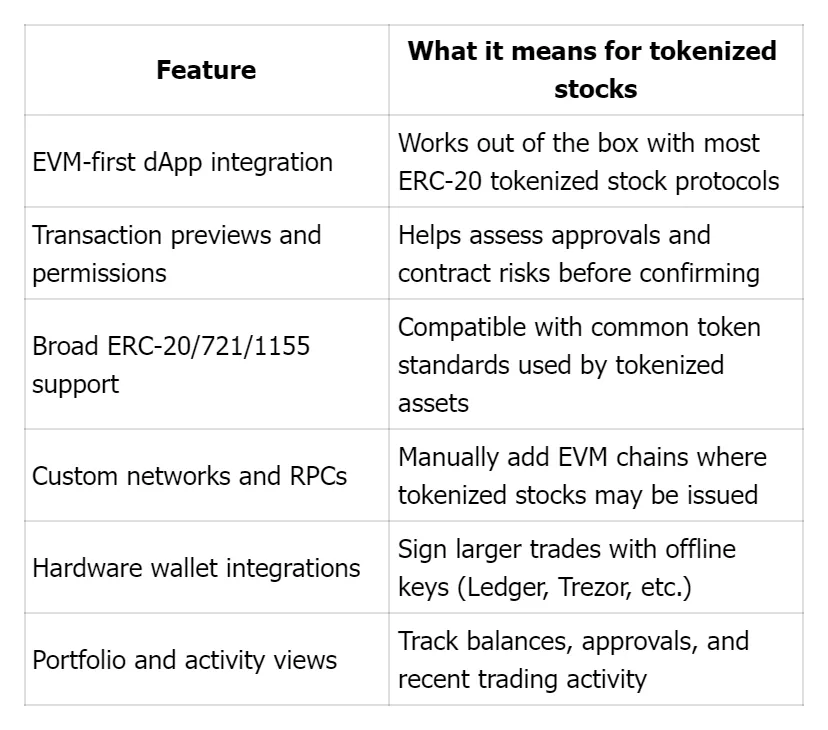
MetaMask is fully open source, with community oversight and transparent code paths. It stores your private keys locally by default and connects with top hardware wallets (Ledger, Trezor, and others) for added security. MetaMask Swaps offers aggregation with a flat service fee, and the wallet provides transaction previews to help users spot malicious contract calls (MetaMask FAQs).
MetaMask trading-related features at a glance:
Key Features of Coinbase Wallet for Blockchain Stock Trading
Coinbase Wallet emphasizes multi-chain access and a smoother onboarding experience. Beyond Ethereum, it supports networks like Bitcoin and Solana, which matters if tokenized assets exist outside EVM ecosystems (CoinLedger). The app’s interface is beginner‑friendly and integrates with Coinbase for fiat on-ramps and account funding. Optional encrypted backups to iCloud or Google Drive add recovery flexibility (CoinTracker review).
While Coinbase Wallet isn’t fully open source, it benefits from Coinbase’s consumer support and established security practices (CoinLedger). For tokenized asset traders, practical perks include:
- Multi-chain support (including Bitcoin and Solana) for broader asset access
- Direct fiat on-ramping through Coinbase integration
- Built-in swaps and basic dApp connectivity for common protocols
- Human-readable usernames and simple contact management
- Optional cloud backup for recovery convenience
Comparing Chain and Asset Support
Tokenized stocks are issued on specific chains. Your wallet must support the chain—and the token standard—where the asset lives.
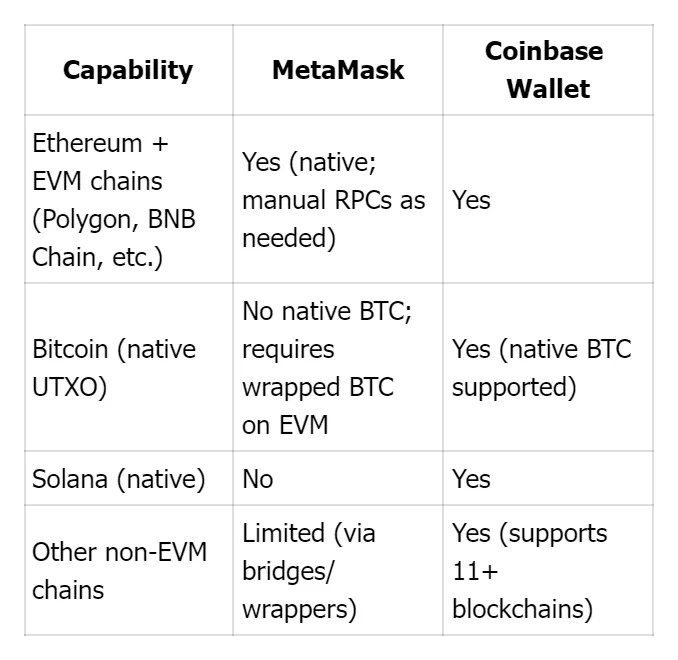
MetaMask users must use wrapped representations for Bitcoin (e.g., WBTC) since the wallet doesn’t support Bitcoin’s UTXO model (MetaMask and Bitcoin limitations). Coinbase Wallet can hold native BTC and SOL, which can simplify multi-chain exposure (CoinLedger). Always match your wallet to where the tokenized stock is issued—ERC‑20s require EVM support, while tokens on Solana or native Bitcoin rails require corresponding wallet compatibility.
dApp Integration and Trading Experience
MetaMask is the go-to wallet for most Ethereum dApps. If your tokenized stocks are ERC‑20s trading on EVM protocols, MetaMask’s near-universal compatibility and granular control over approvals and gas settings make it the preferred tool for advanced DeFi users (CoinLedger).
Coinbase Wallet also connects to EVM dApps and adds access to non‑EVM ecosystems. Its mobile UX is cleaner for newcomers, though it exposes fewer low-level knobs and may feel less customizable than MetaMask for complex DeFi tasks (CoinLedger).
Typical workflows:
- MetaMask (ERC‑20 tokenized stocks): Connect wallet → Select EVM network (e.g., Ethereum/Polygon) → Approve token spending → Swap or trade via a dApp → Confirm with transaction preview.
- Coinbase Wallet (multi-chain): Choose target network (e.g., Solana or Bitcoin if supported) → Fund via Coinbase or bridge assets → Connect to dApp or use in‑app swaps → Execute trade with simplified prompts.
Transaction Fees and Swap Execution
There are two cost layers when trading: wallet/swap service fees and blockchain network (gas) fees.
- MetaMask Swaps charges a flat 0.875% service fee on each swap (MetaMask FAQs).
- Coinbase Wallet’s in-app swap fees typically range from about 0.05% to 0.60%, depending on the aggregator and venue (Coinbase Wallet vs MetaMask fees).
- Network gas fees always apply, regardless of wallet, and vary by chain congestion (CoinLedger).
Illustrative trade costs (for example only; gas and quotes vary):
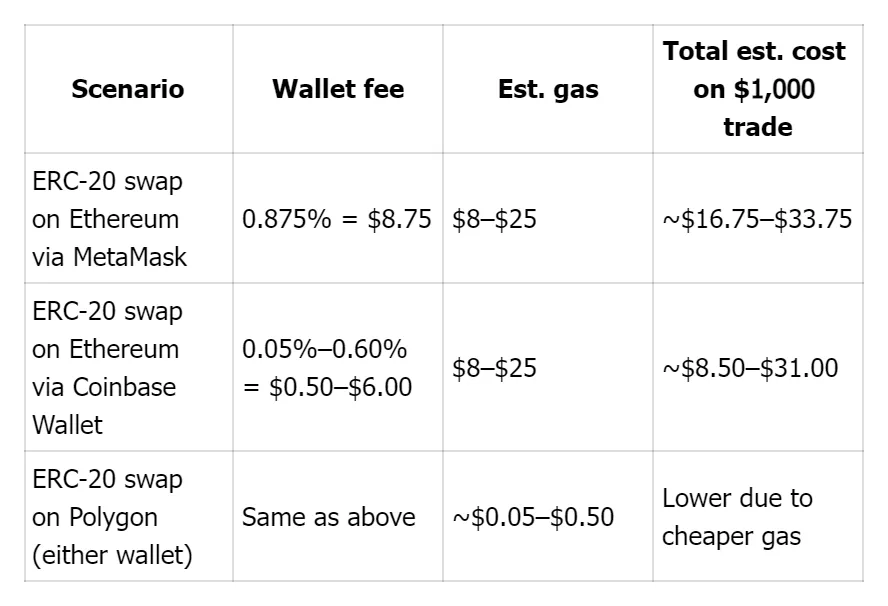
For larger or frequent trades, small fee differences compound—compare quotes across networks and aggregators.
User Experience and Wallet Recovery Options
Coinbase Wallet offers a cleaner, beginner-friendly interface, native multi-chain support, optional cloud backups (iCloud/Google Drive), and easy fiat on-ramping via Coinbase—features that streamline first-time tokenized asset trades (CoinTracker review; CoinLedger).
MetaMask skews more technical but provides transaction previews to warn against suspicious contract calls and stores your secret phrase locally by default, favoring user control (MetaMask FAQs; CoinLedger).
A wallet recovery method is how users regain access to assets if they lose their device, typically through a secret phrase or cloud backup.
Security Considerations for Blockchain Stock Trading
Both MetaMask and Coinbase Wallet are non-custodial—users control private keys—and both can pair with hardware wallets like Ledger and Trezor for stronger protection (MetaMask FAQs; Coinbase Wallet vs MetaMask fees). MetaMask’s open-source code benefits from community scrutiny, while Coinbase Wallet is backed by Coinbase’s security program and customer support (CoinLedger).
Common risks include phishing, malicious approvals, and irreversible on-chain mistakes. Practical safeguards:
- Use hardware wallets for significant balances and trade signing
- Verify dApp URLs; revoke stale token allowances periodically
- Simulate transactions and read contract prompts carefully before confirming
Practical Recommendations for Choosing a Wallet
- Choose MetaMask if you primarily trade ERC‑20 tokenized stocks on EVM chains and want deeper DeFi customization and tooling.
- Opt for Coinbase Wallet if you want multi-chain reach (including Bitcoin and Solana), easier fiat on-ramps, and a smoother onboarding experience.
- Use hardware wallets for sizeable positions and long-term custody.
- Always match your wallet to the chain and marketplace where the tokenized stock is issued.
If you prefer a regulated, streamlined path to tokenized U.S. stocks—with multi-currency funding (fiat and stablecoins), 24/7 commission-free trading, and secure on-chain custody—explore ToVest’s approach in this ToVest Academy guide .
Frequently asked questions
Can I trade tokenized stocks directly from crypto wallets?
Crypto wallets like MetaMask or Coinbase Wallet can’t trade traditional equities, but they can connect to dApps that list tokenized stocks on supported blockchains.
What are the main differences between hot wallets and cold wallets?
Hot wallets are internet-connected for convenience; cold wallets keep keys offline for stronger security against online threats.
How do I keep my crypto wallet secure while trading blockchain stocks?
Back up your secret recovery phrase, use a hardware wallet for large trades, and avoid untrusted links or dApps to prevent phishing and malicious approvals.
Is multi-chain support important for trading tokenized stocks?
Yes—multi-chain support broadens access to tokenized assets across ecosystems, so you can trade where the token is actually issued.
Can I use fiat currency to buy tokenized stocks on wallets like MetaMask or Coinbase Wallet?
Not directly inside the wallet; however, both can connect to exchanges or on-ramps to convert fiat to crypto for use in tokenized stock dApps.