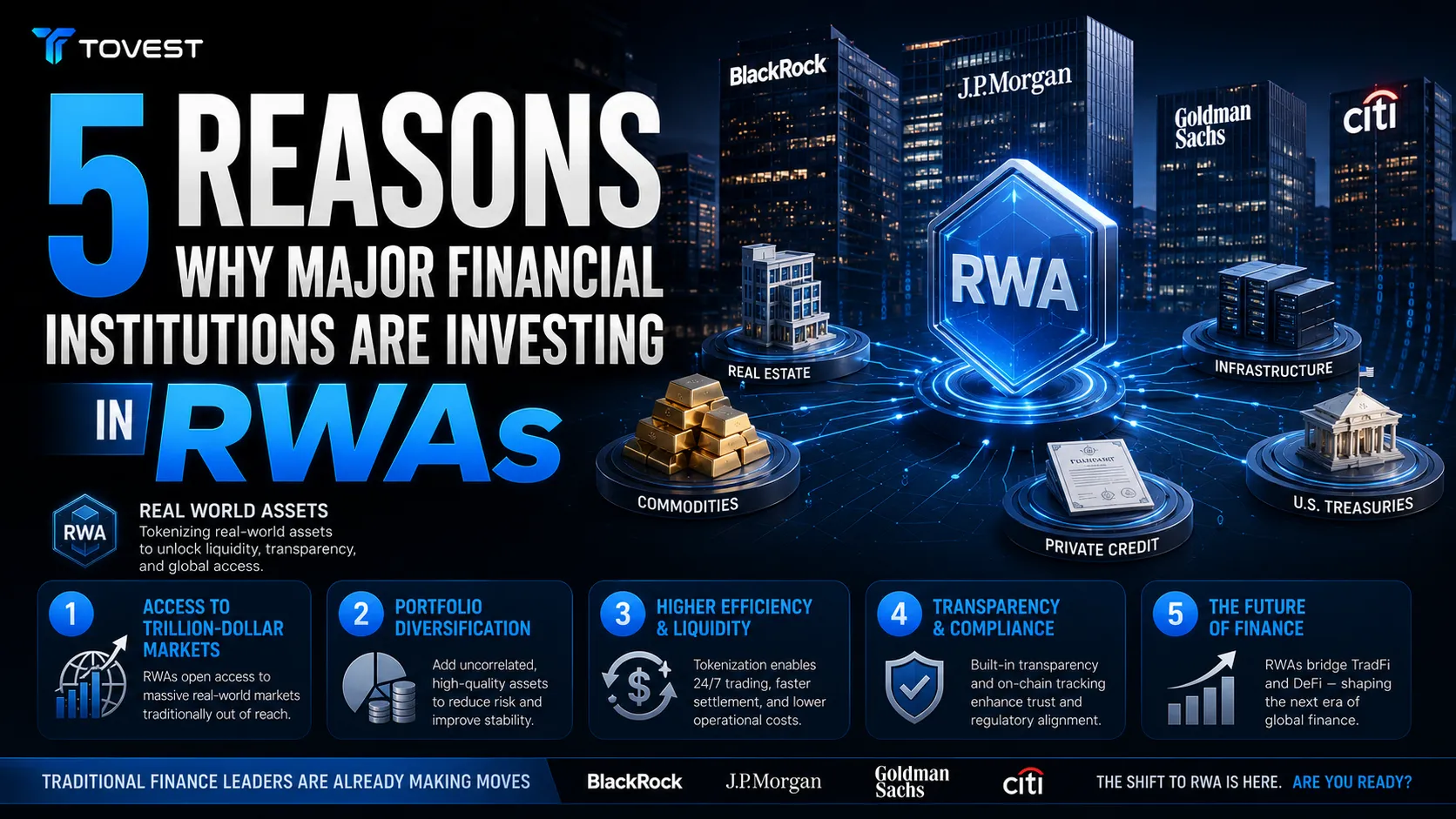
5 Reasons Major Financial Institutions Invest in RWA
July 1, 2026
RWA (Real-World Assets) is a term for real assets such as real estate, bonds, or commodities that are “tokenized” — converted into digital representations on a blockchain. This approach allows investors to own a fraction of an asset with higher liquidity, greater transparency, and 24/7 tradability like crypto, while still benefiting from the stability of traditional underlying assets.
By 2025, the RWA market is estimated to reach over $35.5 billion with more than 514,000 investors holding assets. Below are 5 reasons why major financial institutions are pouring capital into this space.
ToVest and Its Role in RWA Investing
ToVest is built as a transparent, secure, and user-friendly investment platform that connects real assets with blockchain. The platform allows users to own fractional U.S. equities and tokenized real-world assets, trading continuously via a mobile app with institution-grade security.
Thanks to strategic partnerships with Fireblocks and Chainlink, ToVest ensures user assets are custodied, verified, and priced transparently on-chain. The platform also addresses three common barriers of traditional markets: high entry costs, lack of transparency, and geographic restrictions. With multi-currency support and comprehensive compliance, ToVest helps both individual and institutional investors easily access real yields in RWA.

ToVest brings access to U.S. capital markets to every global user, expanding RWA investing with unprecedented transparency standards and a user-friendly experience.
Access to Real and Safe Yields
Real yield in RWA stems from real cash flows — U.S. Treasuries, rental real estate, or trust funds — rather than relying on price volatility. This makes RWA an attractive option for funds and banks seeking to optimize cash flows without increasing risk.
Data shows the on-chain tokenized value of U.S. Treasuries rose from $3.9 billion in early 2025 to $8.7 billion in early 2026, reflecting strong demand for safe yield products. Platforms such as ToVest, Ondo Finance, or Maple Finance allow institutions to invest directly in cash-flow-generating assets, thereby preserving capital while earning stable returns compared with traditional channels.
Liquidity and Asset Fractionalization
Fractionalization is a breakthrough that makes traditionally hard-to-access assets like real estate or private credit easier to buy and sell. Through tokenization, each asset can be divided into smaller parts, enabling both individual and institutional investors to participate.
By mid-2025, the RWA ecosystem on Solana had recorded over $413 million in tokenized assets, with 79 asset types and more than 51,000 holders. The overall market reached over $35.5 billion in tokenized value.
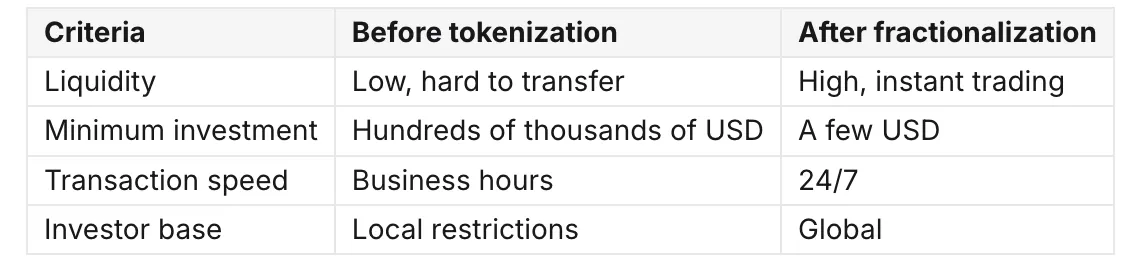
The RWA secondary market is growing rapidly, enabling more flexible and transparent trading than traditional asset models. ToVest provides an intuitive, transparent, and easy way to participate in fractionalization for both institutions and individuals.
Cut Operating Costs with Standardized Technology Infrastructure
Previously, developing an RWA system required investments of millions of USD, but today this cost is only about 100,000–500,000 USD for a minimum viable product (MVP). The popularity of white-label platforms, no-code tools like TokenFi, and standardized oracle infrastructure (such as Chainlink NAV Feed) helps institutions shorten time-to-market and significantly reduce operating costs.
Typical cost components for an RWA project:
- Smart contracts: 30,000–80,000 USD
- Oracle infrastructure: 30,000–110,000 USD (initial) + 20,000–50,000 USD/year (maintenance)
- KYC/AML integration: 30,000–130,000 USD
- Asset valuation & oracle connectivity: 60,000–200,000 USD
These standardizations pave the way for many banks and financial institutions to roll out RWA products faster, at lower cost, and compliant by design. ToVest has applied this model to deliver an efficient RWA infrastructure, enabling smooth, transparent trading to international standards.
Risk Management and Transparency Enabled by Oracles and Proof-of-Reserve
Oracles are bridges that bring real-world data (such as bond prices and asset valuations) onto the blockchain, while proof-of-reserve ensures each token is fully collateralized by real assets. Around 40% of security risks in RWA are linked to weak oracles, so choosing a reputable provider is crucial.
Chainlink is now the market standard, securing over 93 billion USD in value and accounting for 67% of the oracle market share for RWA. Its NAV Feed and Proof-of-Reserve tools allow instant verification and reduce valuation fraud.
Risk management checklist for an RWA project:
- Trusted oracle provider
- Periodic NAV feed integration
- On-chain proof-of-reserve
- Independent periodic audits
Thanks to this technology, financial institutions can report more transparently and shorten asset verification cycles. ToVest natively integrates proof-of-reserve and oracle data reconciliation, ensuring investors understand asset status in real time.
Regulatory Compatibility and Multi-Chain Infrastructure Supporting Market Expansion
Multi-chain infrastructure allows tokenized assets to operate across multiple blockchains, flexibly meeting regional regulations and optimizing liquidity. Since 2025, the ERC-3643 standard has been officially recognized for legally controlled tokens, supported by systems such as Hedera and Securitize in Europe.
Compliance features now come built-in: allowlists of permitted addresses, transfer restrictions, and automated KYC/AML modules. In addition, Chainlink CCIP enables cross-chain connectivity at a cost of 15,000–30,000 USD.
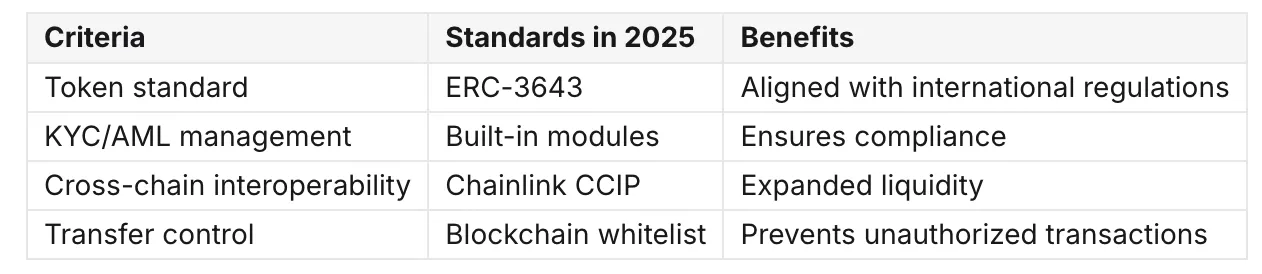
Thanks to these improvements, modern RWA platforms can scale globally while maintaining compliance and security. ToVest leverages a multi-chain architecture to connect investors across regions, opening a transparent and efficient global RWA market.
Frequently Asked Questions
- What is RWA and how is it different from traditional crypto?
RWA are real assets tokenized on the blockchain, unlike pure crypto such as Bitcoin because they are tied to the value of physical assets.
- Why are major financial institutions highly interested in RWA?
Because RWA offers real cash flows, high liquidity, and comprehensive transparency in investment management.
- What are the risks and challenges when investing in RWA?
Legal, security, and liquidity factors need to be carefully controlled through trusted partners and platforms like ToVest.
- What is the size and growth potential of the RWA market?
The global RWA market is heading toward trillions of USD in value as more institutions bring traditional assets onto the blockchain.
- Opportunities for financial institutions in Vietnam with RWA?
This is an opportunity to digitize assets, diversify portfolios, and expand access to international investors through a transparent platform like ToVest.