Kredivo Launchpad
Pre-Launch Perpetuals Discount Offer

$1.60
Subscribe up to 50% off
$10,000
Remaining $9,979
3
Growing
1days
Flexible
Subscription Progress0%
2026-10-09Max Limit $10,000
Market Trend
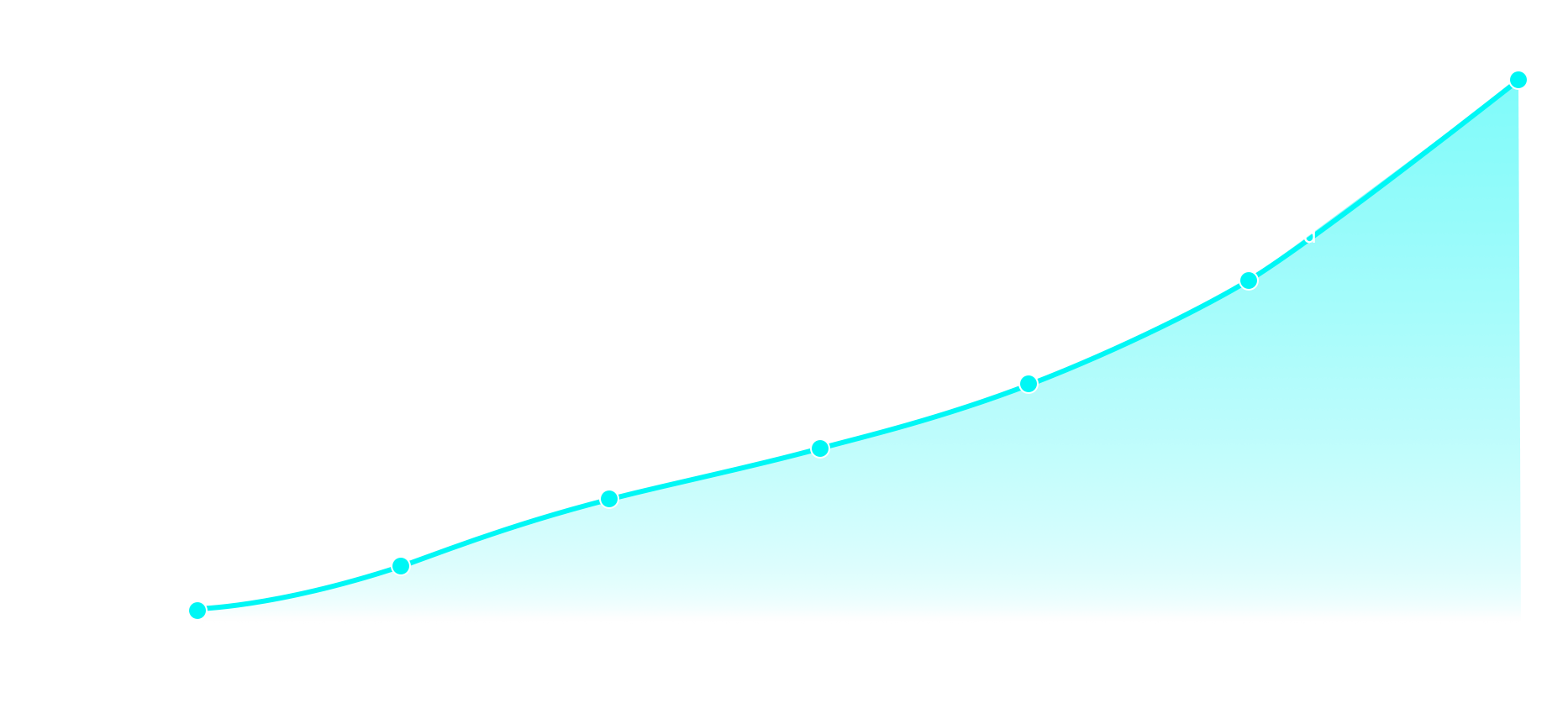
Upcoming Market Events and Key Developments
Illustrative Category Weight Distribution
Disclosure note: A reliable consolidated revenue breakdown was not identified in the reviewed sources. The categories below describe business activities rather than audited, mutually exclusive reporting segments. The approximate weights below are illustrative allocations, not verified revenue shares.
Business Segment Details
| Business Segment | Illustrative Weight | Details |
|---|---|---|
| Consumer Credit / BNPL | Illustrative Weight~55% | DetailsFinancing for online and offline purchases. This allocation includes consumer interest, purchase-related service charges, and merchant fees attributable to BNPL. Kredivo identifies purchase financing as a flagship offering, and its product disclosures confirm interest- and fee-based monetization. |
| Personal Loans | Illustrative Weight~25% | DetailsCash-loan activities through Kredivo and KrediFazz, including applicable interest, administration, and platform fees retained by the group. Kredivo’s official FAQ describes personal loans as a separate product with interest and upfront administration charges. |
| Digital Banking — Krom | Illustrative Weight~18% | DetailsPrimarily Krom Bank in Indonesia, with Timo’s Vietnamese banking-platform activities following its 2026 acquisition. Krom reported IDR 1.85 trillion in net interest income for FY2025, demonstrating that banking is already a material business rather than a negligible side activity. |
| Earned Wage Access — GajiGesa | Illustrative Weight~2% | DetailsAn assumed small contribution from GajiGesa and other ancillary activities. Kredivo announced its acquisition of the earned-wage-access platform in February 2025; the announcement did not provide a segment revenue figure. |
Business Lines
| Function | Weight / Scale |
|---|---|
| Core Consumer Credit | Weight / ScaleFlagship business: purchase financing and personal loans. A current consolidated revenue percentage was not verified. |
| Consumer Expansion | Weight / ScaleDBS’s January 2026 announcement described a goal of reaching 20 million Indonesian users in the coming years. This is a target, not a verified current user count. |
| Merchant / Embedded Financing | Weight / ScaleFinancing integrated into online and offline purchases; no reliable current merchant-derived revenue percentage was identified. |
| Digital Banking | Weight / ScaleKrom in Indonesia and the acquired Timo platform in Vietnam broaden the group’s financial-services offering. |
| Employer / Employee Services | Weight / ScaleAt the February 2025 acquisition announcement, GajiGesa reported 400+ enterprise employers and 350,000+ employees served. These are historical figures, not verified September 2026 totals. |
Contract Methodology
Illustrative terms only: The one-billion-reference-unit convention, mark-price formula, and rebase procedures below are proposed terms, not verified Kredivo facts or confirmed platform specifications.
- 1Contract Pricing Basis
The proposed KRDV-USDT Pre-IPO Perpetual Contract would reference market expectations of Kredivo Group’s equity valuation. Under an illustrative one-billion-reference-unit convention: Contract Price × 1,000,000,000 Reference Units = Contract-Implied Equity Valuation The denominator must be labeled a synthetic reference-unit count, not Kredivo’s actual or estimated share count unless independently substantiated. The platform must identify the precise reference legal entity, equity class, currency convention, and treatment of dilution. Contract prices would not constitute an officially recognized company valuation.
- 2Price Discovery Mechanism
If the platform adopts the supplied template, the pre-IPO Mark Price would use the average of eligible trade prices over the preceding 10 seconds, subject to a ±1% per-second movement limit. Final specifications must define trade eligibility, weighting, low-volume periods, stale prices, manipulation controls, and fallback pricing. The averaging window and movement limit should not be described as eliminating volatility or liquidation risk. Following a qualifying IPO, the contract could transition to a public-equity reference mechanism only under published platform rules, including market-hours, foreign-exchange, and corporate-action treatment.
- 3Reference-Unit Adjustment / Rebase
If verified listing information requires a different reference-unit count, the platform could apply a proportional rebase. For an adjustment factor of R: New position quantity = Old position quantity × R New contract price = Old contract price ÷ R This preserves position notional mathematically at the adjustment instant. The implementation must also address entry prices, margin, liquidation thresholds, pending orders, and rounding. A trading pause of approximately five minutes and proportional order adjustments may be retained from the template only if the platform confirms those procedures.
- 4Cash Settlement — No Equity Delivery
Under the proposed design, the contract would be USDT cash-settled and would not deliver Kredivo shares, voting rights, dividends, or other shareholder entitlements. Use of the Kredivo name would not imply affiliation, partnership, or endorsement. Any post-IPO conversion, early termination, or cash settlement must follow binding contract terms. Conversion to an equity-linked perpetual should not be presented as guaranteed.
- 5Key Risk Disclosures
① IPO Uncertainty: No listing date, issue price, or final share count is assumed. ② Price Volatility: The proposed pre-IPO pricing mechanism does not ensure fair value or prevent abrupt price changes. ③ Valuation Gap: Contract-implied value may differ substantially from financing, acquisition, or eventual public-market values. ④ Liquidity Risk: Market depth and the ability to exit positions are not guaranteed. ⑤ Reference-Unit Risk: The illustrative one-billion-unit denominator is not a verified company share count. ⑥ Leverage and Liquidation Risk: Final terms must explain margin requirements, liquidation triggers, and potential losses. ⑦ Platform and Settlement Risk: Final terms must address exchange failure, operational interruptions, custody arrangements, and USDT-related settlement risks.
Subscription Eligibility
Users must meet all of the following conditions to participate:
- 1Registered platform account
- 2Completed KYC identity verification
- 3Account in good standing (not frozen or restricted)
- 4Sufficient USDT balance in account
Tier Requirements
- Explorer (Max Purchase: 10 USDT): No requirement
- Trader (Max Purchase: 20 USDT): ≥$100K traded or 3 invite
- Elite (Max Purchase: 30 USDT): ≥$1M traded or 10 invite
- Genesis (Max Purchase: 50 USDT): ≥$10M traded or 30 invite
Friends should complete their first trade.
Category Weight Distribution
- Cumulative subscription amount must not exceed tier cap or remaining project quota
- No subscriptions allowed after project deadline
- Same user may subscribe multiple times; each subscription is calculated independently
- When membership tier changes, existing share price and quantity remain unchanged; only available subscription quota adjusts with tier
Share Allocation
- Upon successful subscription, the system locks the corresponding funds
- After project launch, token shares are automatically allocated proportionally
- Allocation rules will be clearly displayed on the results or information page
- If the project fails to meet establishment conditions (e.g., minimum funding not reached), the system will automatically refund to user accounts
Risk Disclosure
The following is proposed disclosure language for a hypothetical Kredivo-linked contract, not a description of verified exchange rules.
Market and Credit Risk
Kredivo’s business includes consumer purchase financing and personal loans. Relevant risk factors include borrower affordability, repayment performance, competition, and the availability of funding. Indonesia’s finance-company BNPL sector recorded a 3.03% gross non-performing financing ratio in July 2026, but that figure must not be substituted for Kredivo’s own credit performance. Investors should consider scenarios in which rising defaults, weaker demand, or tighter underwriting reduce growth and earnings. Past performance does not guarantee future returns.
IPO Uncertainty Risk
The previously proposed SPAC transaction was terminated in March 2022. A new public listing should not be assumed merely because the company previously pursued one. No confirmed IPO date, issue price, or final listing share count was identified for this draft. The proposed contract should explicitly address an indefinitely delayed IPO, acquisition, restructuring, or cancellation of listing plans. Any settlement or delisting right must be defined in the platform’s binding rules.
Funding and Liquidity Risk
Kredivo uses bank partnerships to support credit distribution, including the expanded DBS facility announced in January 2026. Changes to such arrangements are therefore relevant to assessing its funding capacity. Contract-market liquidity must be assessed separately. This draft does not establish that an active Kredivo-linked market exists or has sufficient depth. The final disclosure should warn of possible wide spreads, slippage, trading interruptions, and difficulty closing positions.
Valuation Gap Risk
The US$2.5 billion figure associated with the abandoned 2021 SPAC transaction was a proposed pro forma equity value—not a completed current-market valuation. The May 2026 capital-raising announcement did not disclose a replacement valuation. A contract-implied valuation should therefore be described as a market-derived indication, not an official company valuation. Share-class rights, dilution, conversion terms, and the fully diluted share count require verification before comparisons with private financing or IPO prices.
Regulatory Risk
Kredivo’s Indonesian BNPL activities operate within an evolving framework that includes POJK No. 32 of 2025 and related consumer-protection requirements. Regulation of the underlying lending business must be distinguished from authorization to offer a separate company-linked derivative. Before publication or launch, obtain jurisdiction-specific legal review of the contract’s classification, licensing, marketing, and customer eligibility. Do not claim that cash settlement or the absence of equity delivery automatically places it outside securities or derivatives regulation.